
- Email us at
[email protected] - Questions? Give us a call
503-773-6949
Safe Utility Potholing – Vacuum Excavation in Oregon City, OR
Precision Underground Utility Location for the First Incorporated City West of the Rockies
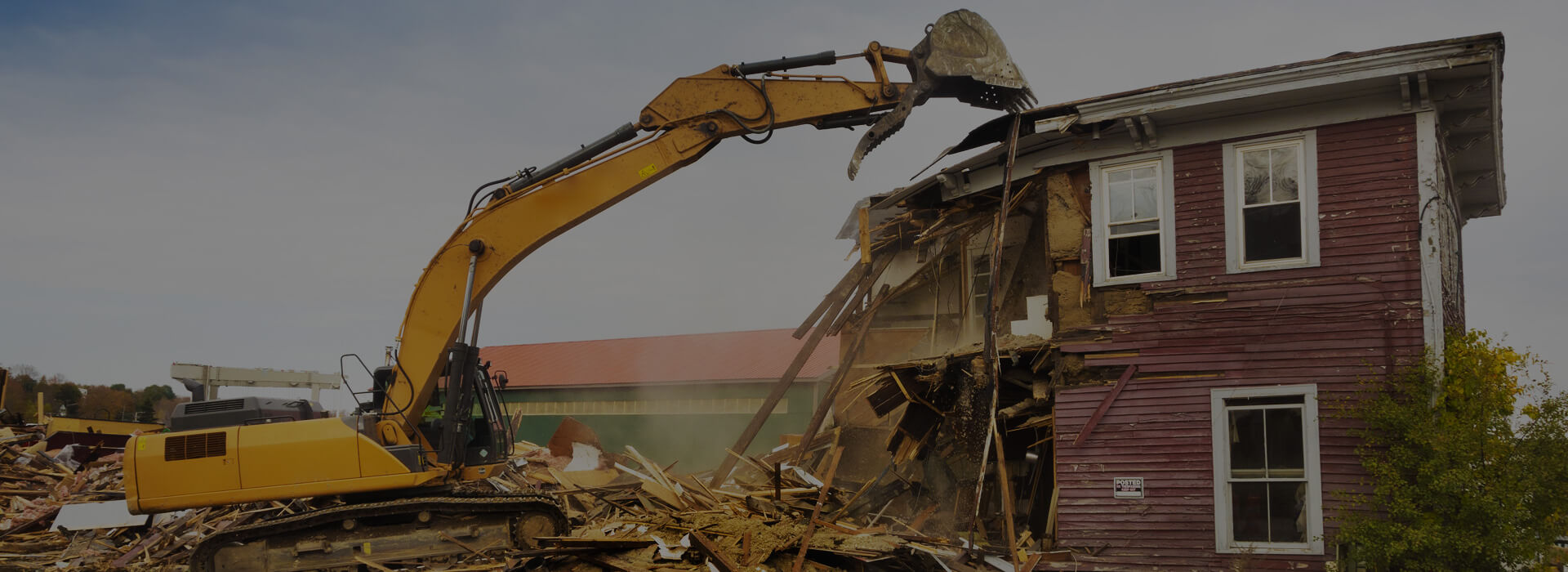
Oregon City’s dramatic basalt bluffs divide the upper and lower city, creating a two-tiered landscape where utilities navigate steep grades, ancient lava, and flood-prone lowlands along the Willamette River. Prodan Construction provides utility potholing and vacuum excavation across Oregon City, safely exposing buried infrastructure in Canemah basalt, Missoula Flood alluvium, and heavy clay.
- Licensed Oregon contractor — CCB #176278 — fully bonded and insured
- Non-destructive vacuum excavation protects gas, water, electric, and telecom lines
- Operating from Damascus, approximately eighteen minutes from Oregon City via OR-213
What Is Utility Potholing?
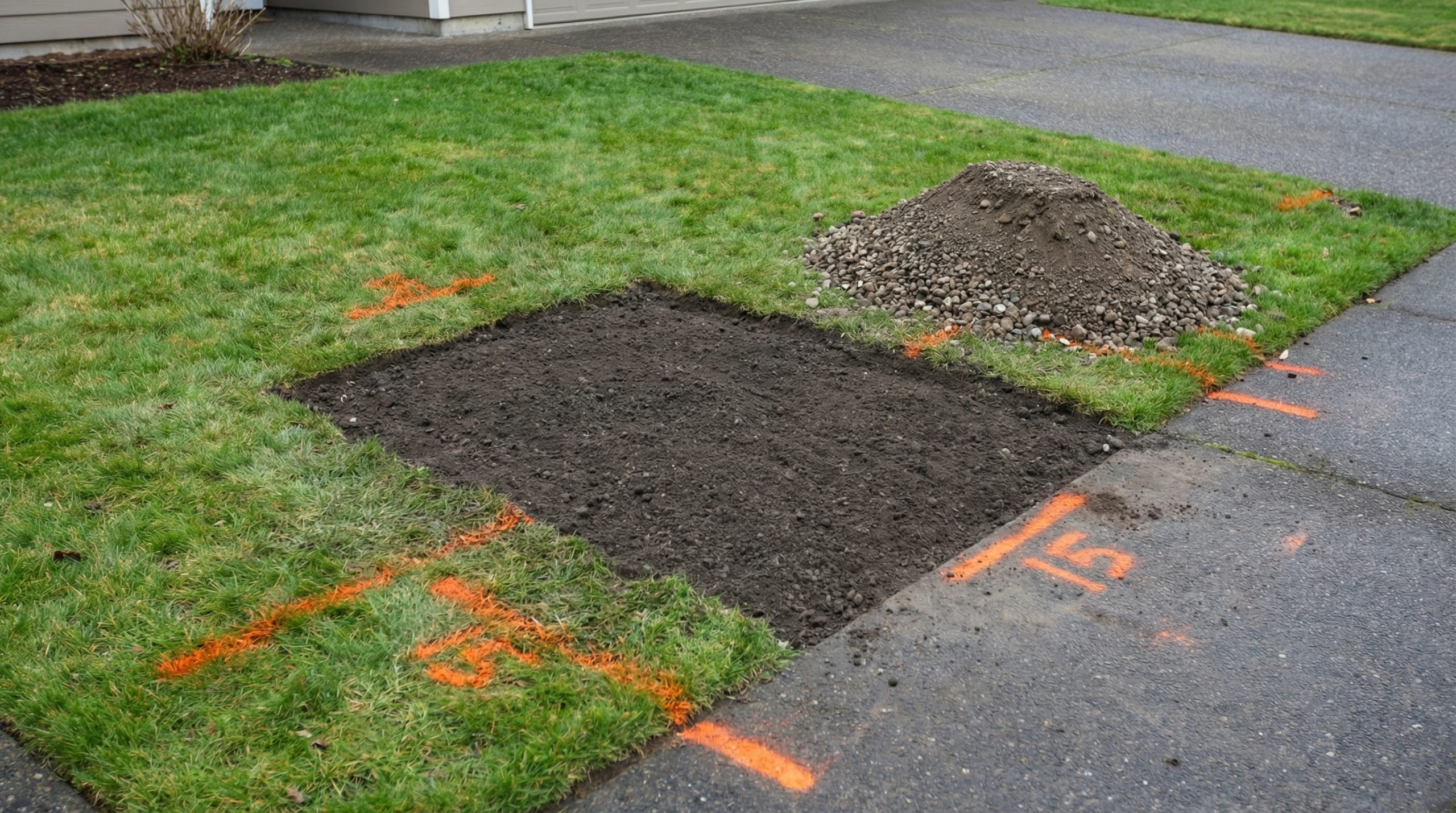
Utility potholing is the practice of creating small, deliberate openings in the ground to visually confirm the exact location of buried utility lines. Rather than digging with a mechanical bucket that can sever pipes on contact, vacuum excavation draws loosened soil upward through suction — leaving buried infrastructure untouched.
Soft digging encompasses two techniques for breaking soil apart before vacuuming. Hydro excavation applies a concentrated water jet that cuts through Oregon City’s basalt-derived clay. Air excavation replaces water with compressed air — essential near energized electrical conduit or fiber optic cables along McLoughlin Boulevard. Our trucks carry both systems, switching based on ground conditions and adjacent utilities.
For contractors working between Oregon City’s upper and lower levels — routing new water service up the bluff face or extending gas mains into the expanding South End — potholing eliminates the guesswork that outdated as-built drawings invite. Many utilities in the McLoughlin and Canemah neighborhoods were installed in the early twentieth century, long before digital mapping.
Potholing vs. Daylighting Utilities: What You Need to Know
Contractors in Oregon City encounter both terms regularly, but the applications differ. The terrain’s extreme elevation changes and the age of the utility network influence which technique fits a given project — whether it is a single crossing check on Molalla Avenue or a full corridor exposure along the Beavercreek Road expansion.
1. Targeted Utility Potholing
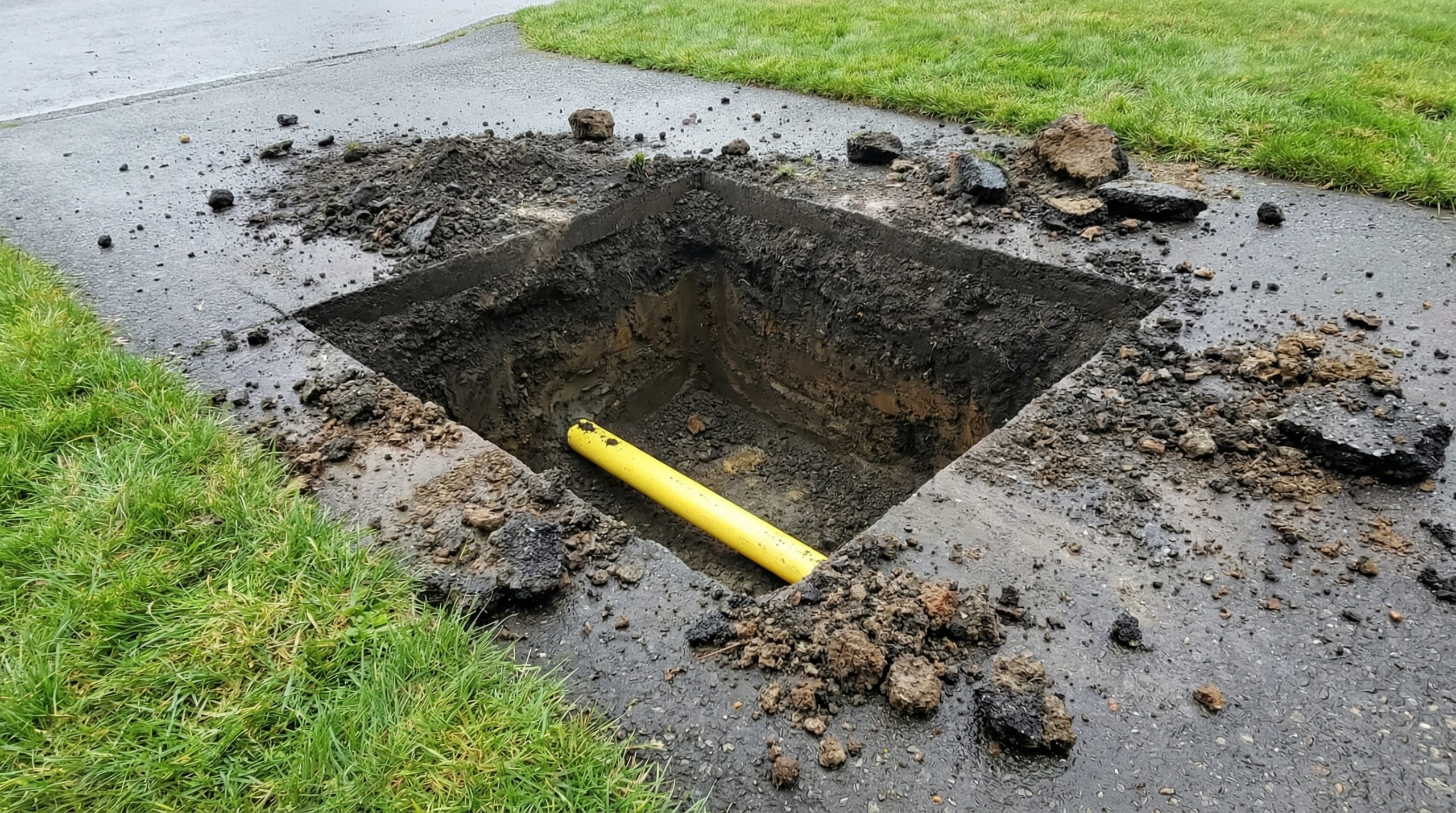
A targeted pothole opens a focused twelve-to-eighteen-inch window directly over a suspected utility. The purpose is straightforward: confirm depth, pipe material, and horizontal alignment at one specific location.
2. Utility Daylighting
Daylighting exposes a continuous section of buried utility, sometimes extending several feet, to allow visual inspection or facilitate repair and connection work. In Oregon City’s lower town, where Missoula Flood alluvium blankets older infrastructure near the Willamette riverfront, daylighting reveals not only the target utility but also the soil conditions surrounding it — information that engineers need for designing stable backfill and bedding in flood-prone ground.
The Benefits of Non-Destructive Excavation
Utility strikes in Oregon City carry amplified consequences. A broken water main on the upper bluff sends cascading water downslope, undermining retaining walls and triggering landslides on clay-under-basalt formations.
1. Damage Prevention & Safety
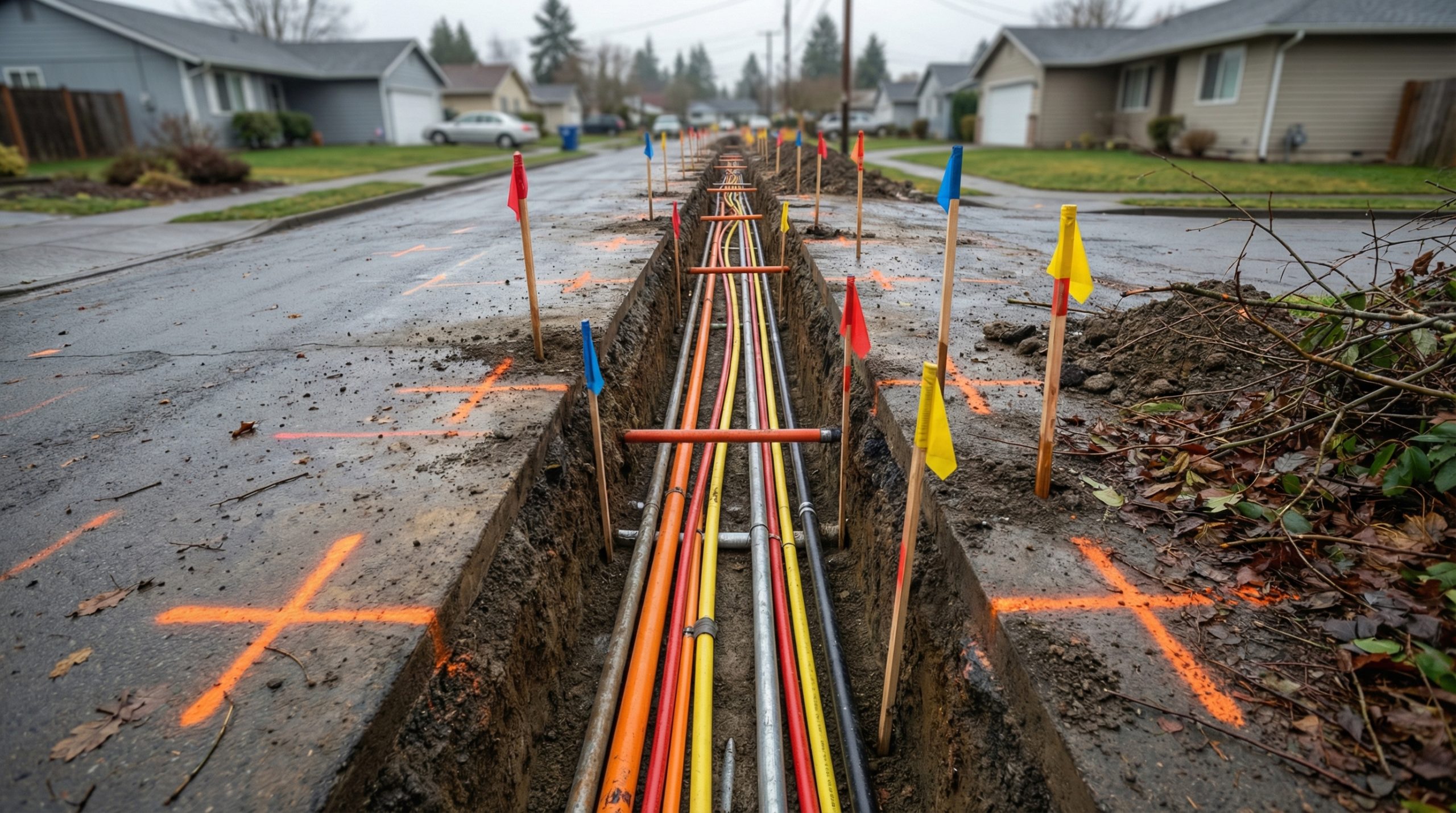
Oregon City’s bluff neighborhoods stack utilities vertically. A sewer lateral may drop steeply from an upper-level home, crossing gas and water lines within a few vertical feet. Vacuum excavation peels away soil layer by layer, exposing each line without disturbing the ones below.
2. Cost Savings
A damaged gas main on a steep Oregon City street triggers evacuation, emergency response, and potentially road closure on routes with no viable detour. The financial exposure dwarfs the cost of a pre-excavation pothole.
3. Precision in Tight Spaces
Oregon City’s upper-level neighborhoods feature homes perched on narrow lots carved into the bluff, with retaining walls on two or three sides and utility easements squeezed between structures. Full-size excavators cannot physically access many of these spaces.
Our Vacuum Excavation Equipment and Methods
Our truck-mounted vacuum units generate over 5,000 CFM of suction with variable-pressure water jets calibrated for Oregon City’s geology. Lower pressures handle soft alluvial soils in Two Rivers; maximum pressure with rotary nozzles addresses dense Canemah basalt on upper-bluff parcels.
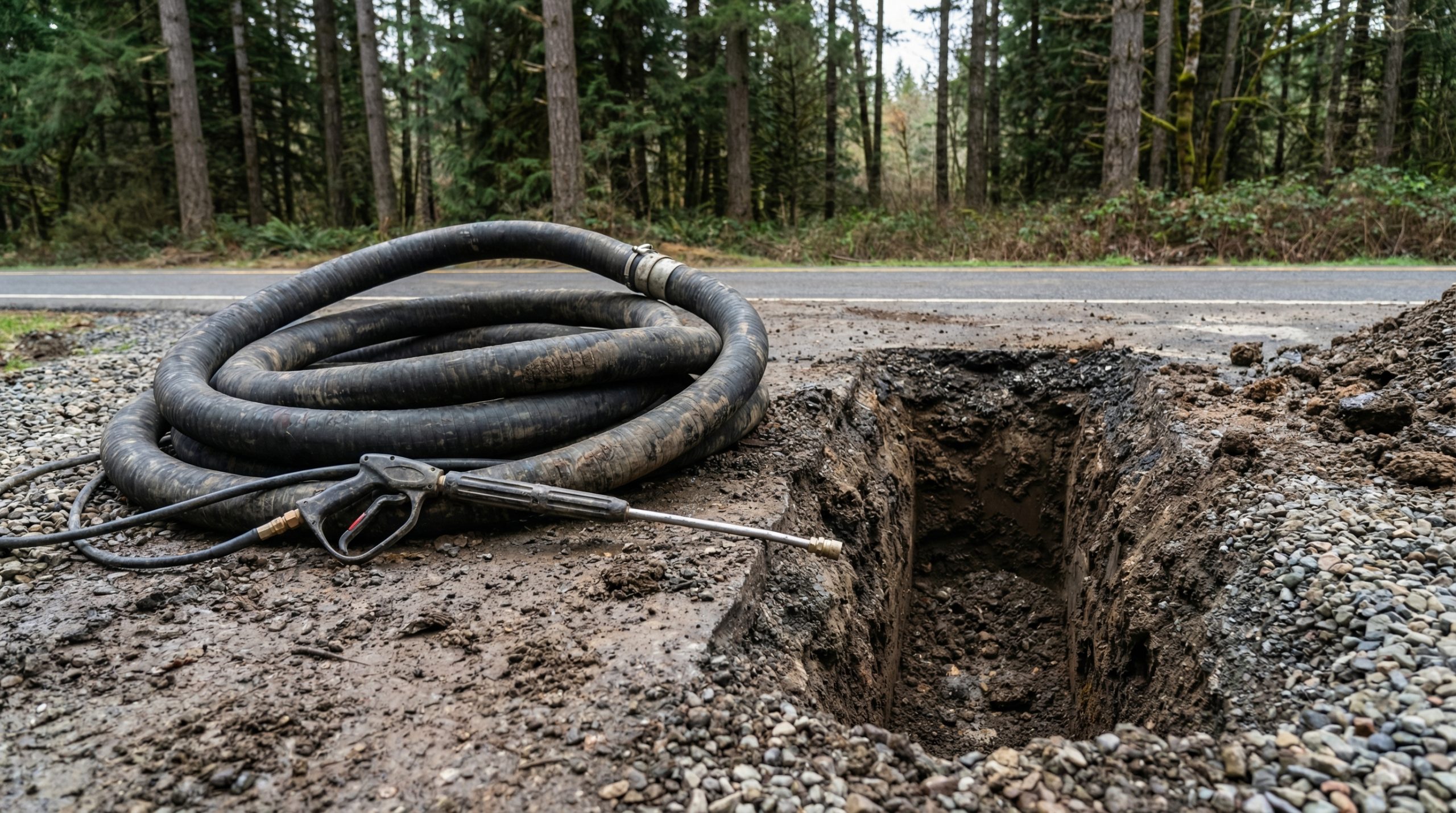
Extension wands and specialty nozzle attachments enable our operators to work at the depths Oregon City’s terrain demands. Potholing through the bluff face for utility crossings or probing beneath retaining-wall footings requires reaching ten feet or more below grade — our equipment maintains full suction and cutting power at those depths.
Our Utility Exposure Process
Every Oregon City potholing project follows a disciplined four-step sequence calibrated to the city’s unique combination of steep terrain, historic utilities, and variable geology.
Step 1: Site Assessment & Locating
We review OUNC locate markings, any available as-built records, and municipal GIS data. In Oregon City’s older neighborhoods — Canemah, McLoughlin, and the lower-town commercial district — original utility records may be incomplete or nonexistent.
Step 2: Safe Excavation
Excavation begins with the method matched to conditions. Alluvial soils near the river respond to moderate hydro pressure; the basalt cap on upper parcels requires higher pressure and rotary nozzles, adjusting in real time as clay transitions to rock.
Step 3: Verification
We record each utility’s depth, horizontal offset from permanent surface markers, pipe material, diameter, and visible condition. Photographs paired with GPS coordinates create a permanent verification record.
Step 4: Backfilling & Site Cleanup
Backfill is placed in compacted lifts matched to surrounding soil density. On hillside sites, we take additional care to restore drainage paths so that water does not pool above impervious basalt layers — a condition that contributes to slope instability throughout Oregon City.
Trusted Excavation Experts in Oregon City
Prodan Construction LLC (CCB #176278) partners with general contractors, civil engineers, public utilities, and developers throughout Oregon City. We also provide demolition, land clearing, and retaining wall construction — an especially relevant combination in a city where hillside site preparation often requires all three services on the same project.
From Damascus, about eighteen minutes east on OR-213, we reach any Oregon City neighborhood quickly. Our crews know Canemah basalt on the upper bluffs and soft alluvium along the riverfront. When you need reliable utility verification in Oregon City, call Prodan Construction.
Frequently Asked Questions About Potholing & Soft Digging in Oregon City
Can vacuum excavation penetrate Oregon City’s basalt bluffs?
Yes. Our hydro excavation equipment operates at pressures sufficient to cut through Canemah basalt using rotary nozzles. Production rates are slower in solid rock than in alluvial soil, but our equipment handles the material effectively.
Do I need potholing on the lower-town riverfront where soils are soft?
Soft soil does not mean safe soil. The Missoula Flood alluvium in Oregon City’s lower town is easy to dig but also easy to over-excavate, and utilities in floodplain areas may have shifted over time due to soil settlement and seasonal water-table fluctuations.
How does Oregon City’s steep terrain affect potholing logistics?
Our vacuum trucks can operate from the street while extending hoses to hillside work areas, eliminating the need to position heavy equipment on steep slopes. Flexible hose extensions reach between retaining walls and along narrow easements that are common on Oregon City’s bluff-face properties.
How far in advance should I schedule potholing for an Oregon City project?
We typically schedule standard projects within two to three business days. Urgent utility exposure tied to active construction or suspected damage can often be arranged same-day or next-day. Call us at (503) 773-6949 to coordinate timing with your project schedule.
Schedule Your Utility Potholing Service in Oregon City Today
Oregon City’s terrain and layered history create a subsurface unlike any other metro community. Whether building in Park Place, running service up the basalt bluffs, or verifying aging alignments in lower town, Prodan Construction provides the precise potholing Oregon City’s geology demands.
Call us at (503) 773-6949 or send us a message to request your free utility potholing estimate in Oregon City.
Quick Links
Services
Contact Us
- Address:
20500 SE Hwy 212, Damascus, OR 97089 - Phone:
503-773-6949 - Email:
[email protected]

Oregon CCB # 176278