
- Email us at
[email protected] - Questions? Give us a call
503-773-6949
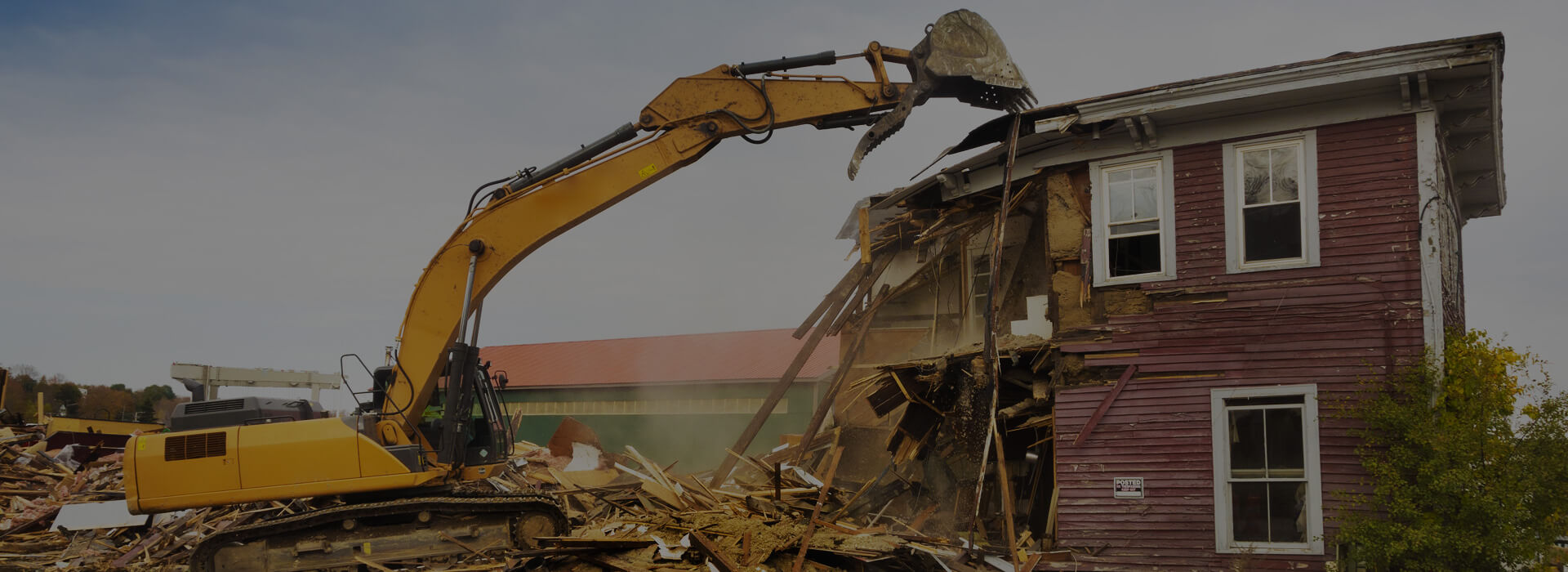
Safe Utility Potholing – Vacuum Excavation in Milwaukie, OR
Reliable Underground Utility Location for Milwaukie’s Evolving Neighborhoods
Milwaukie’s mid-century neighborhoods sit on thick Missoula Flood silt deposits that have absorbed decades of utility installations — water, sewer, gas, electric, and telecom lines threaded through soft alluvial ground shaped by catastrophic ice-age flooding. Add Johnson Creek’s persistent flood cycles, Kellogg Creek’s restoration work, and a surge of cottage-cluster and ADU construction driven by recent code changes, and the demand for verified utility positions has never been higher.
- Licensed Oregon contractor — CCB #176278 — fully bonded and insured
- Non-destructive vacuum excavation protects gas, water, sewer, and fiber optic lines
- Dispatching from Damascus, approximately sixteen minutes from downtown Milwaukie
What Is Utility Potholing?
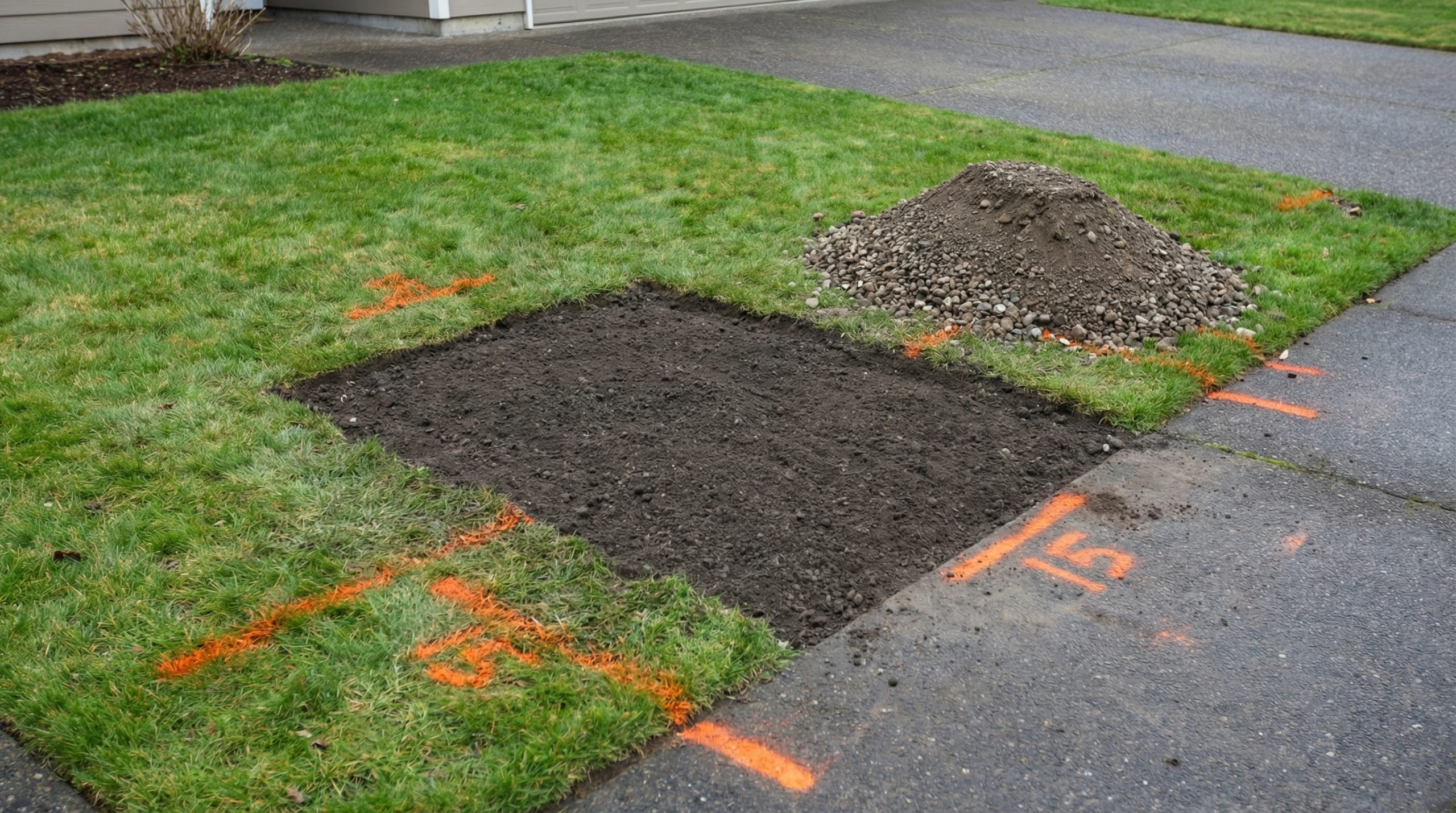
Utility potholing involves creating a small, controlled excavation to physically see and measure a buried utility line. The technique relies on vacuum extraction — pulling loosened soil through a hose under strong suction — rather than scraping it away with a mechanical bucket.
Soft digging uses two approaches to break soil loose before vacuuming. Hydro excavation slices through Milwaukie’s waterlogged silt and clay, though water volume must be controlled near Johnson Creek. Air excavation replaces water with compressed air near live electrical lines and fiber optic conduit serving the MAX Orange Line corridor.
With cottage clusters and ADUs appearing across Ardenwald-Johnson Creek, Lewelling, and Linwood at twice last year’s pace, builders need confirmed utility positions before trenching. Many Milwaukie lots carry utility alignments from the 1950s that predate accurate mapping.
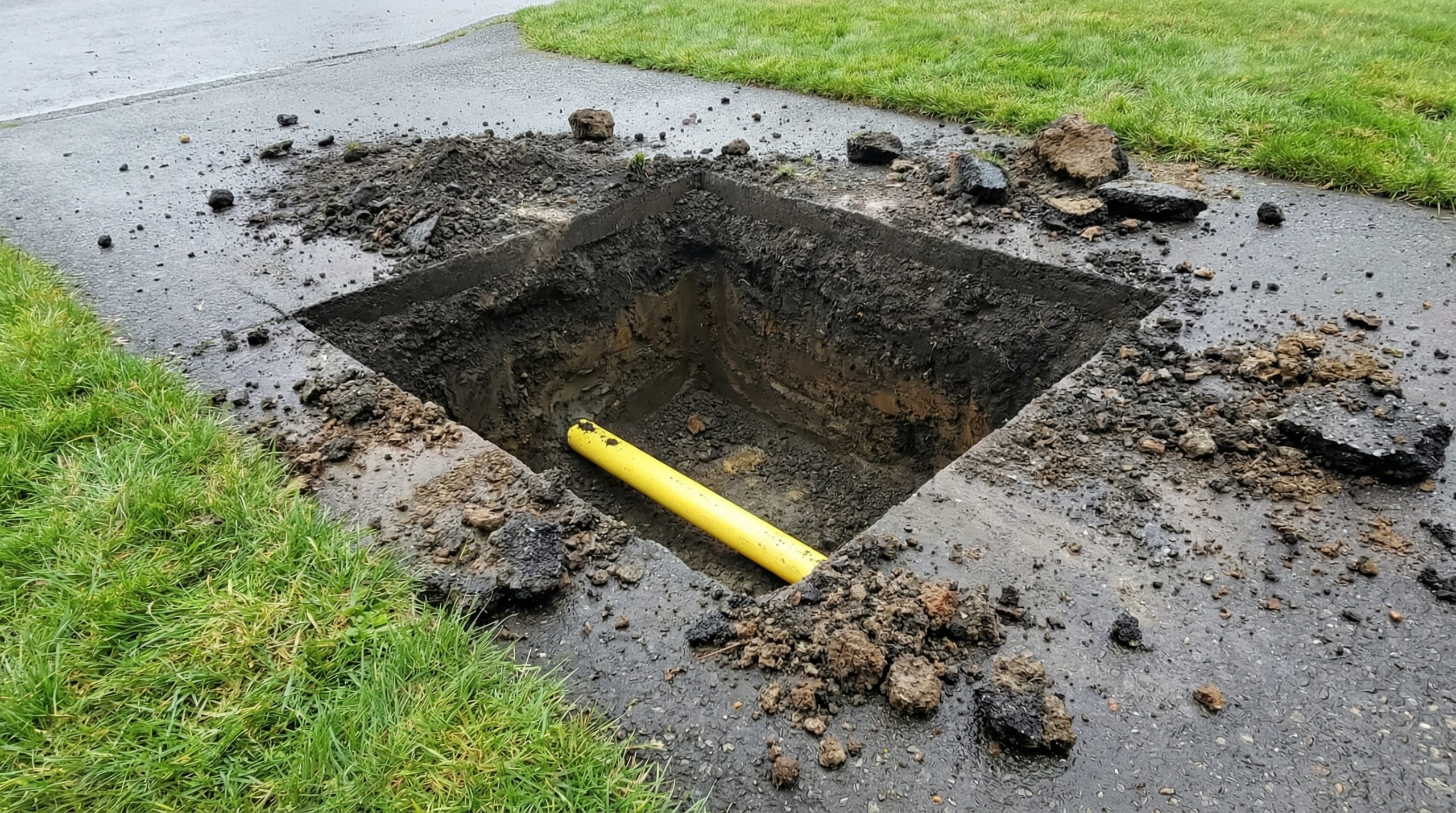
Potholing vs. Daylighting Utilities: What You Need to Know
Milwaukie contractors encounter both techniques regularly. A single crossing check beneath Lake Road calls for potholing; a full sewer-lateral exposure for a cottage-cluster tie-in calls for daylighting.
1. Targeted Utility Potholing
Targeted potholing creates a focused hole — roughly twelve to eighteen inches across — over a suspected utility to verify its depth, material, and alignment at one point. In Milwaukie’s silt-dominant soils, a single pothole completes in thirty to forty-five minutes because the material loosens readily under moderate water pressure.
2. Utility Daylighting
Daylighting exposes a longer run of buried pipe or conduit for visual inspection, condition assessment, or connection planning. Along the Kellogg Creek restoration corridor, daylighting reveals not only the target utility but also the surrounding soil moisture and stability — factors that influence trench design in Milwaukie’s flood-prone lowlands.
The Benefits of Non-Destructive Excavation
Milwaukie’s saturated floodplain soils amplify strike consequences. A nicked water main in waterlogged ground sends water laterally through permeable silt, undermining foundations before the leak is detected. Prodan’s vacuum methods remove mechanical contact from the equation entirely.
1. Damage Prevention & Safety
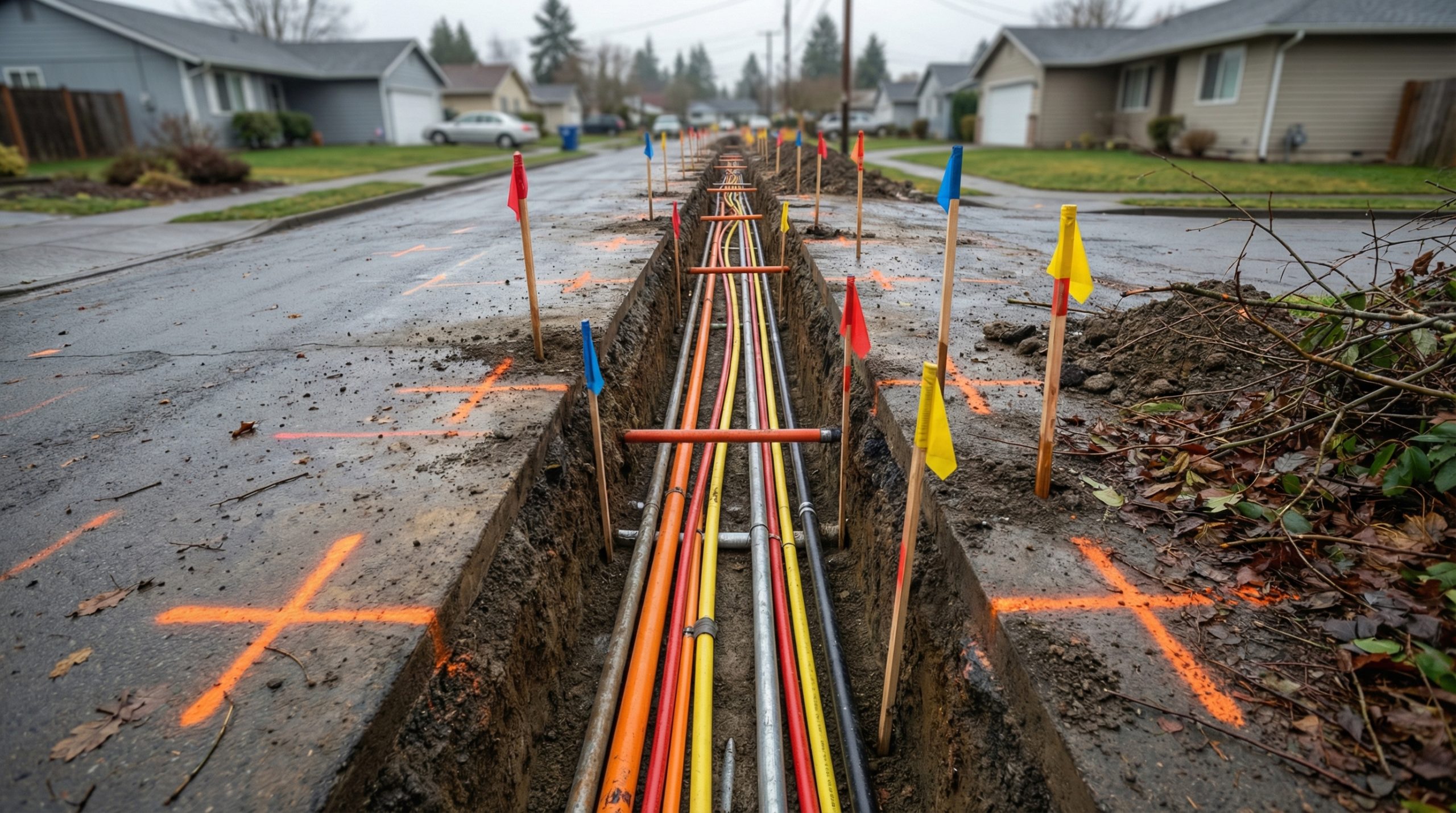
Beneath a typical Milwaukie residential street you may encounter a 1950s ductile-iron water main, a clay sewer lateral of similar vintage, a natural-gas line from the 1970s, and modern fiber optic cable installed for the Orange Line — all compressed into a utility corridor barely four feet wide. Vacuum excavation separates soil from pipe without force.
2. Cost Savings
Repairing a broken sewer main in Milwaukie’s high-water-table zones requires dewatering, emergency bypass pumping, and road closure — expenses that dwarf the cost of advance potholing. Builders adding ADUs and cottage clusters budget potholing as a standard site-preparation line item because a single verified hole prevents the kind of surprise that derails schedules and budgets on tight infill lots.
3. Precision in Tight Spaces
Milwaukie’s established neighborhoods were platted with lot widths and setbacks typical of the mid-twentieth century, leaving little room for modern excavation equipment. Our vacuum hose threads between garages, under deck overhangs, and along narrow side yards — spaces where a mini-excavator would damage landscaping, fencing, or the adjacent structure.
Our Vacuum Excavation Equipment and Methods
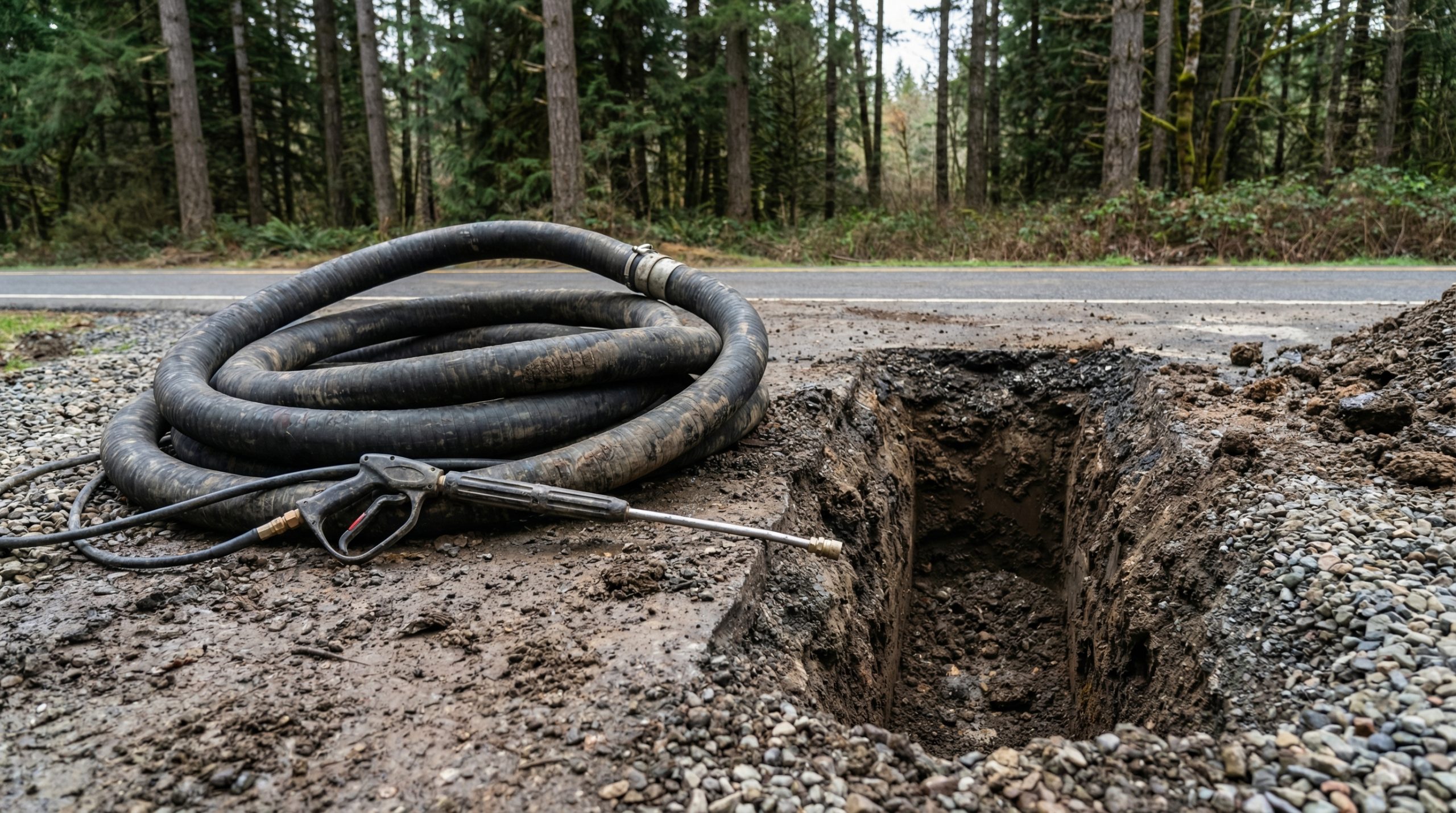
Our truck-mounted vacuum units deliver over 5,000 CFM of suction with variable-pressure water jets tuned for Milwaukie’s soft geology. Lower pressure handles waterlogged silt along Johnson Creek; higher pressure addresses basalt-andesite cobbles in creek-bed deposits near the Willamette confluence.
Flexible extension wands and narrow-profile nozzles reach utility crossings beneath driveways and sidewalks without large access holes. Along Johnson Creek Boulevard or SE 17th Avenue, our equipment enters through minimal openings, reducing traffic impact and restoration scope.
Our Utility Exposure Process
Every Milwaukie project follows a consistent four-step protocol that accounts for the city’s high water table, soft soils, and aging utility network.
Step 1: Site Assessment & Locating
We start with OUNC locate markings and available as-built records. In older neighborhoods where records are sparse, we supplement with electromagnetic scanning and ground-penetrating radar.
Step 2: Safe Excavation
Excavation proceeds with the method suited to the immediate subsurface. Hydro excavation at controlled pressure handles Milwaukie’s silt efficiently while limiting excess water introduction in already-saturated ground.
Step 3: Verification
Every exposed utility receives full documentation: depth, horizontal offset, pipe material, diameter, and condition. GPS-referenced photographs produce reports integrating with engineering plans. In floodplain zones, we note water-table depth so engineers can factor groundwater into trench design.
Step 4: Backfilling & Site Cleanup
Backfill is placed in compacted lifts, density matched to prevent settlement that could stress the utility below. Paved surfaces receive cold-patch repair. Every project ends with a clean site and no open excavations.
Trusted Excavation Experts in Milwaukie
Prodan Construction LLC (CCB #176278) serves general contractors, civil engineers, plumbers, and municipal agencies across Milwaukie. We also offer demolition, land clearing, and retaining wall construction — a comprehensive site-preparation contractor for projects ranging from single ADUs to multi-lot cottage-cluster developments.
From Damascus, about sixteen minutes via OR-224, we reach any Milwaukie neighborhood without delay. Our crews know the city’s flood-silt soils from the riverfront to the Linwood uplands. When you need potholing in Milwaukie, call Prodan Construction.
Frequently Asked Questions About Potholing & Soft Digging in Milwaukie
How does Milwaukie’s high water table affect vacuum excavation?
Our vacuum equipment extracts both soil and groundwater simultaneously. In saturated floodplain areas near Johnson Creek and Kellogg Creek, groundwater enters the hole as digging proceeds — the vacuum removes it in real time, maintaining visibility for the operator.
Do I need potholing before building an ADU or cottage cluster in Milwaukie?
Oregon law requires calling OUNC before any excavation, but surface paint marks indicate approximate horizontal position only — not depth, material, or condition. Potholing provides the verified three-dimensional data that protects your project from accidental strikes, especially on older lots where original utility alignments were never recorded digitally.
What if the utility has shifted from its mapped position due to flooding?
Utility migration is a documented concern in Milwaukie’s floodplain zones. Seasonal cycles of saturation and drying can move flexible pipe and even rigid mains over time.
How quickly can Prodan respond to a potholing request in Milwaukie?
We schedule standard potholing projects within two to three business days. Emergency requests tied to active construction or suspected utility damage are often accommodated within twenty-four hours. Reach us at (503) 773-6949 to discuss your Milwaukie project timeline.
Schedule Your Utility Potholing Service in Milwaukie Today
Milwaukie’s mid-century utilities, flood-prone creeks, and accelerating infill create conditions where assumptions carry real cost. Whether connecting cottage clusters in Ardenwald-Johnson Creek, verifying sewer alignments along Kellogg Creek, or routing fiber near the MAX Orange Line, Prodan Construction provides the accurate potholing Milwaukie builders depend on.
Call us at (503) 773-6949 or send us a message to request your free utility potholing estimate in Milwaukie.
Quick Links
Services
Contact Us
- Address:
20500 SE Hwy 212, Damascus, OR 97089 - Phone:
503-773-6949 - Email:
[email protected]

Oregon CCB # 176278