
- Email us at
[email protected] - Questions? Give us a call
503-773-6949
Safe Utility Potholing – Vacuum Excavation in Lake Oswego, OR
Premium Underground Utility Location for One of Oregon’s Most Valued Communities
Lake Oswego’s hilly, wooded landscape conceals a complex web of utilities installed across seven decades of residential development — from mid-century Mountain Park condominiums to multi-million-dollar custom homes rising on tear-down lots throughout First Addition and Palisades. Beneath the city’s iron-enriched volcanic soils lie gas mains, water service, storm drains, electrical conduit, and telecom fiber, much of it routed through steep terrain where Columbia River Basalt sits close to the surface.
- Licensed Oregon contractor — CCB #176278 — fully bonded and insured
- Non-destructive vacuum excavation safeguards gas, water, electric, and fiber optic infrastructure
- Based in Damascus, roughly twenty-five minutes from Lake Oswego via I-205 and OR-43
What Is Utility Potholing?
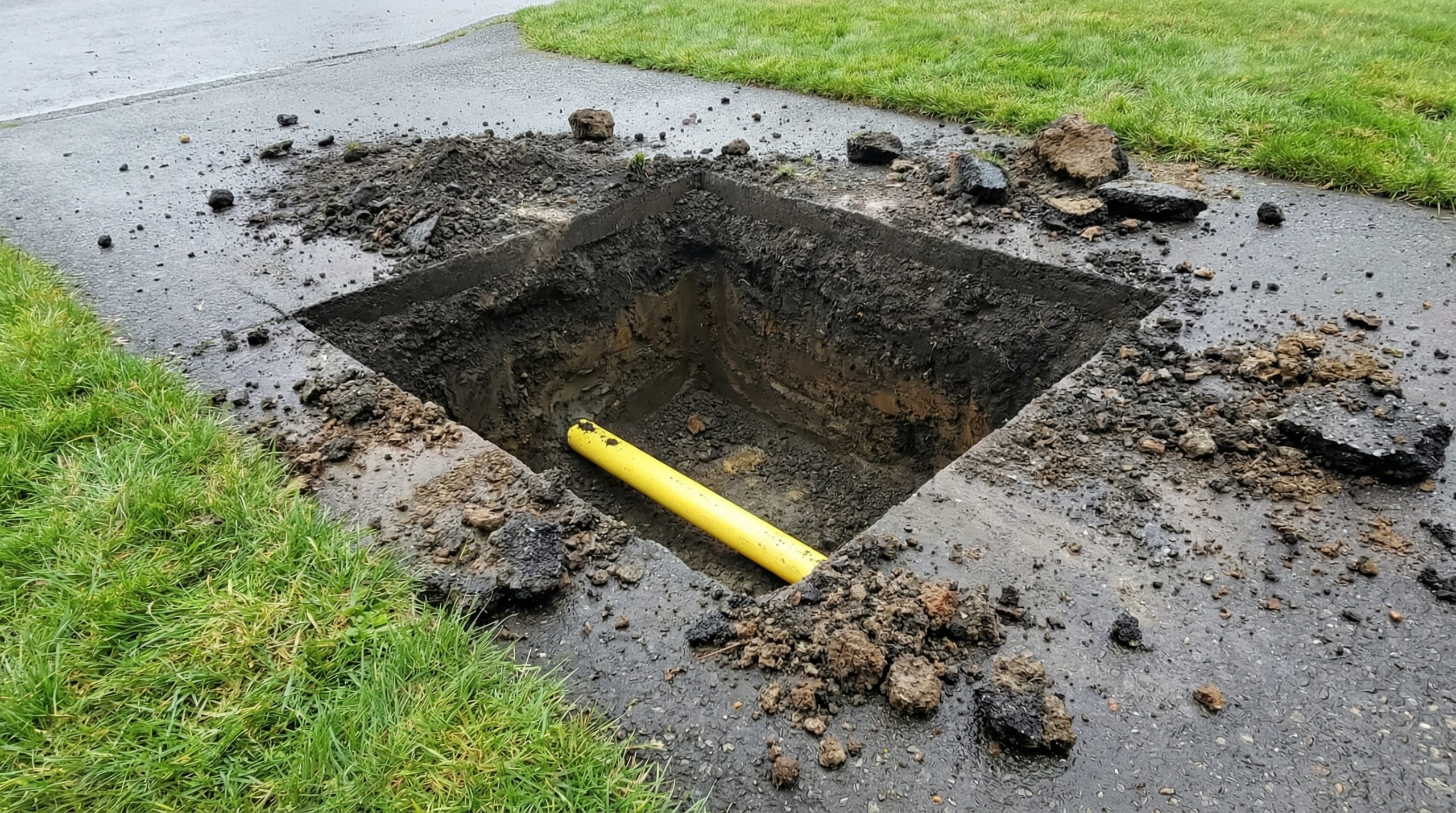
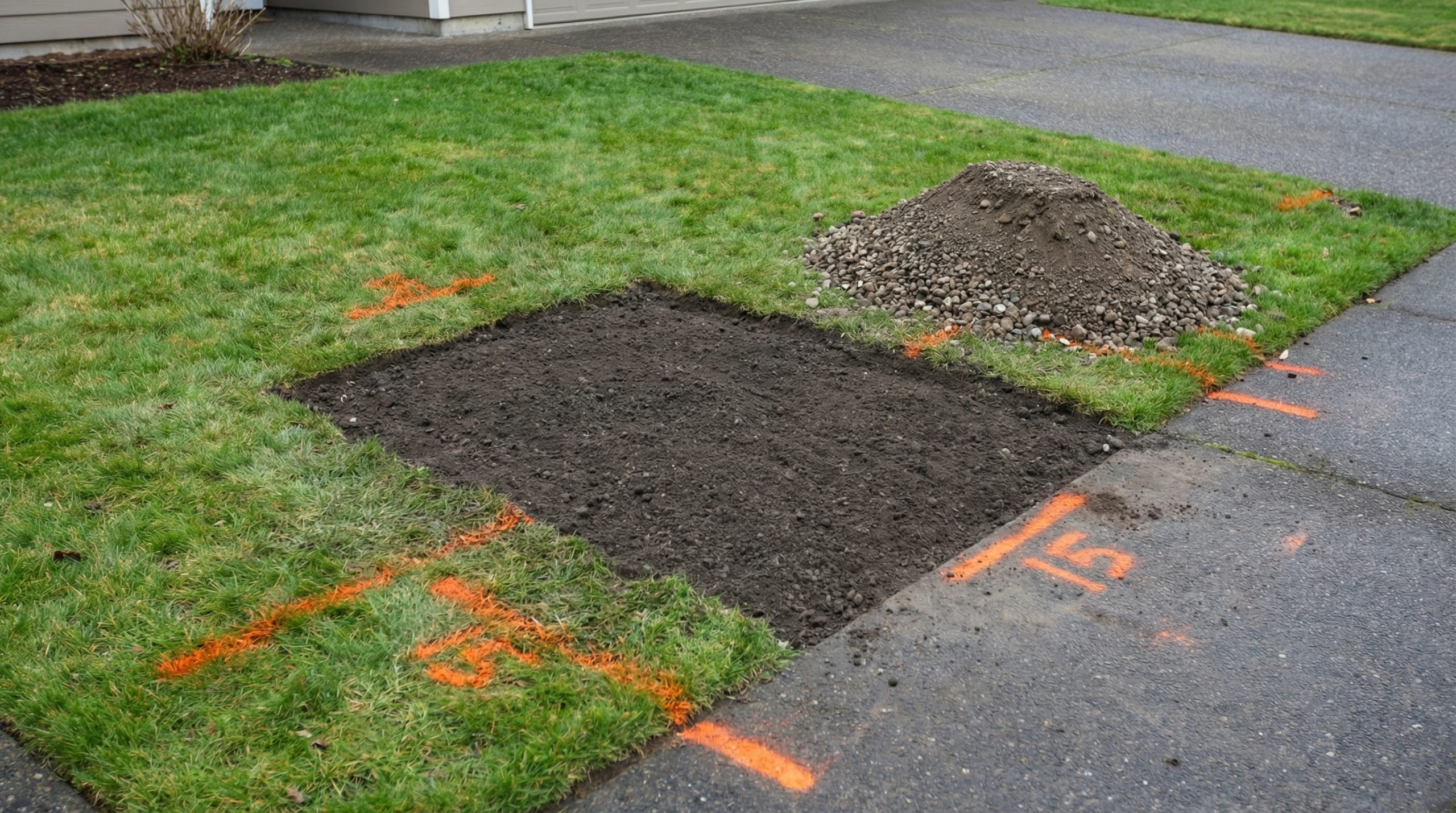
Utility potholing creates a small excavation allowing buried utilities to be visually identified, measured, and photographed without mechanical contact. Vacuum extraction pulls loosened earth upward through suction.
Soft digging uses either pressurized water (hydro excavation) or compressed air (air excavation) to break apart soil before the vacuum removes it. Hydro excavation is highly effective against Lake Oswego’s iron-enriched clay derived from weathered Columbia River Basalt — a dense, sticky material that resists hand tools and light equipment.
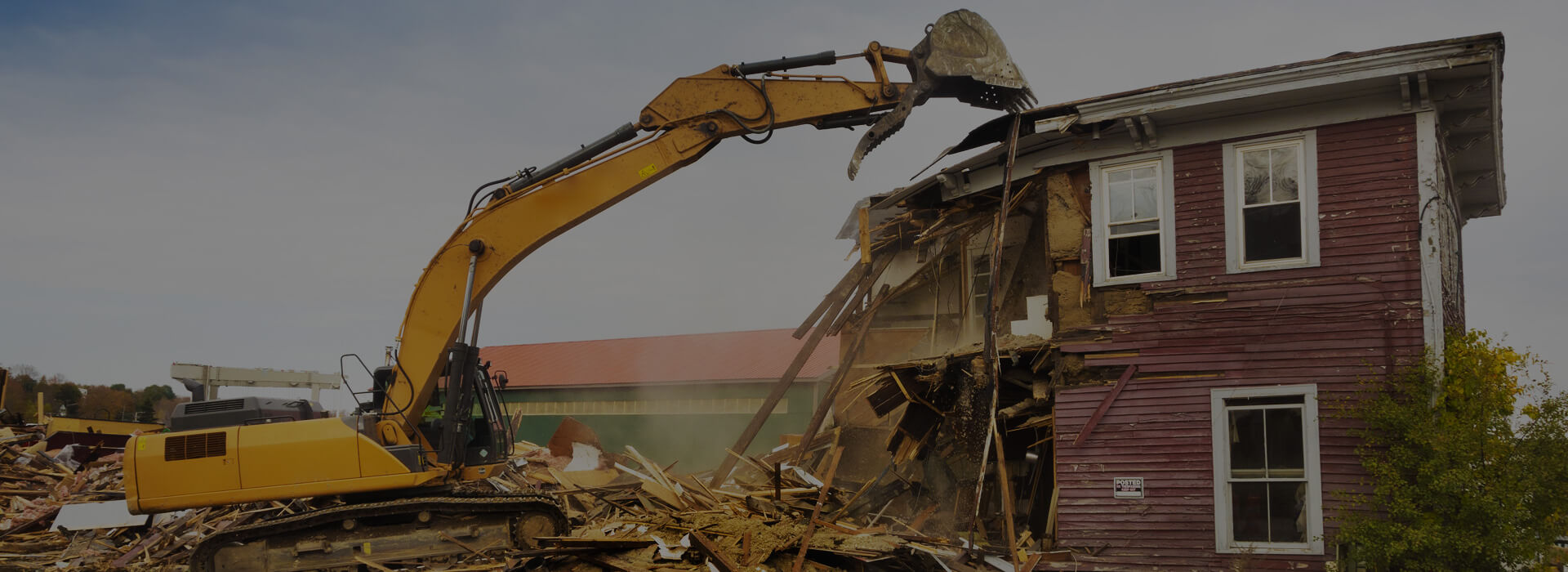
For tear-down-and-rebuild projects in Lake Oswego, potholing answers questions demolition plans cannot. The outgoing structure’s connections may not match records, and the new footprint often shifts service entry points.
Potholing vs. Daylighting Utilities: What You Need to Know
Lake Oswego contractors use both techniques depending on whether the goal is a single-point verification beneath Country Club Road or a full-length exposure of a sewer lateral feeding a tear-down rebuild on the lakefront. Understanding the distinction ensures the right scope — and the right cost — for each project.
1. Targeted Utility Potholing
A targeted pothole opens a compact twelve-to-eighteen-inch window directly above a suspected utility to confirm its depth, material type, and horizontal alignment at one specific point. On Lake Oswego’s hilltop lots where basalt lies close to the surface, the small footprint minimizes disturbance to mature landscaping and established tree-root zones — a critical consideration in a city with some of the region’s strictest tree-protection codes.
2. Utility Daylighting
Daylighting exposes a longer continuous section of pipe or conduit for inspection, condition evaluation, or tie-in design. In the Glenmorrie and Hallinan Heights neighborhoods, where aging sewer laterals descend steep slopes to reach trunk mains, daylighting reveals both the utility and the surrounding soil stability.
The Benefits of Non-Destructive Excavation
Underground utility strikes on Lake Oswego properties carry consequences disproportionate to the physical damage. A ruptured water main on a hillside lot can saturate the slope and trigger soil movement affecting neighboring homes below.
1. Damage Prevention & Safety
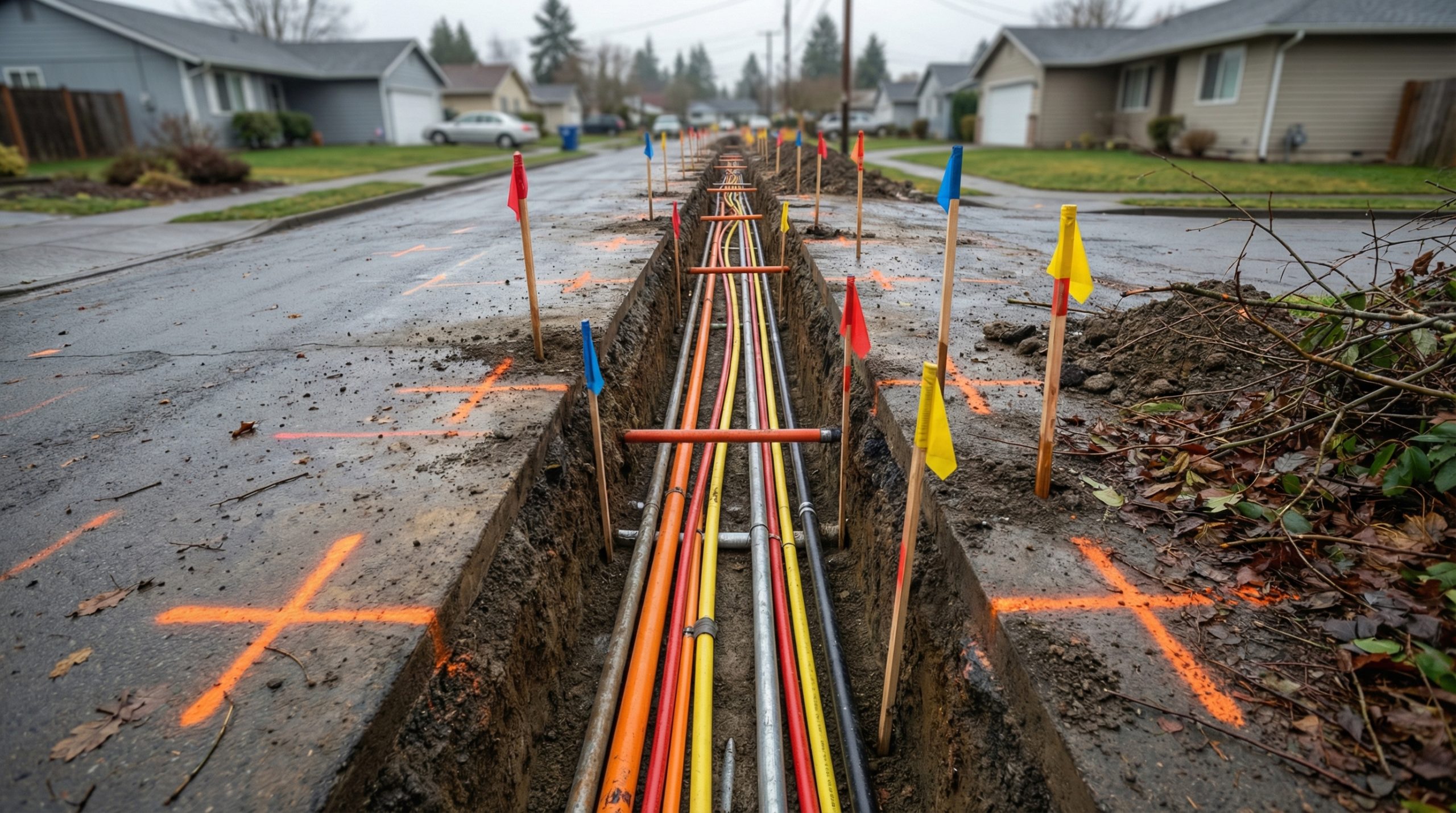
A single Lake Oswego lot may carry a high-pressure gas main, copper water service, a sixty-year-old clay sewer lateral, primary electrical feed, and cable or fiber optic — all within a utility easement no wider than a sidewalk. On properties bordering Oswego Lake, storm-drain infrastructure adds another layer.
2. Cost Savings
Striking a gas main on a Lake Oswego hillside triggers evacuation, fire response, and closure of narrow streets with no alternative route. Delays compound rapidly when damage occurs early in construction. A pre-excavation pothole eliminates the scenario at a fraction of repair cost.
3. Precision in Tight Spaces
Lake Oswego lots are defined by mature trees, dense landscaping, and narrow setbacks between structures — all of which restrict equipment access. Our flexible vacuum hose navigates between retaining walls, beneath overhead canopy, and alongside foundations without tree removal.
Our Vacuum Excavation Equipment and Methods
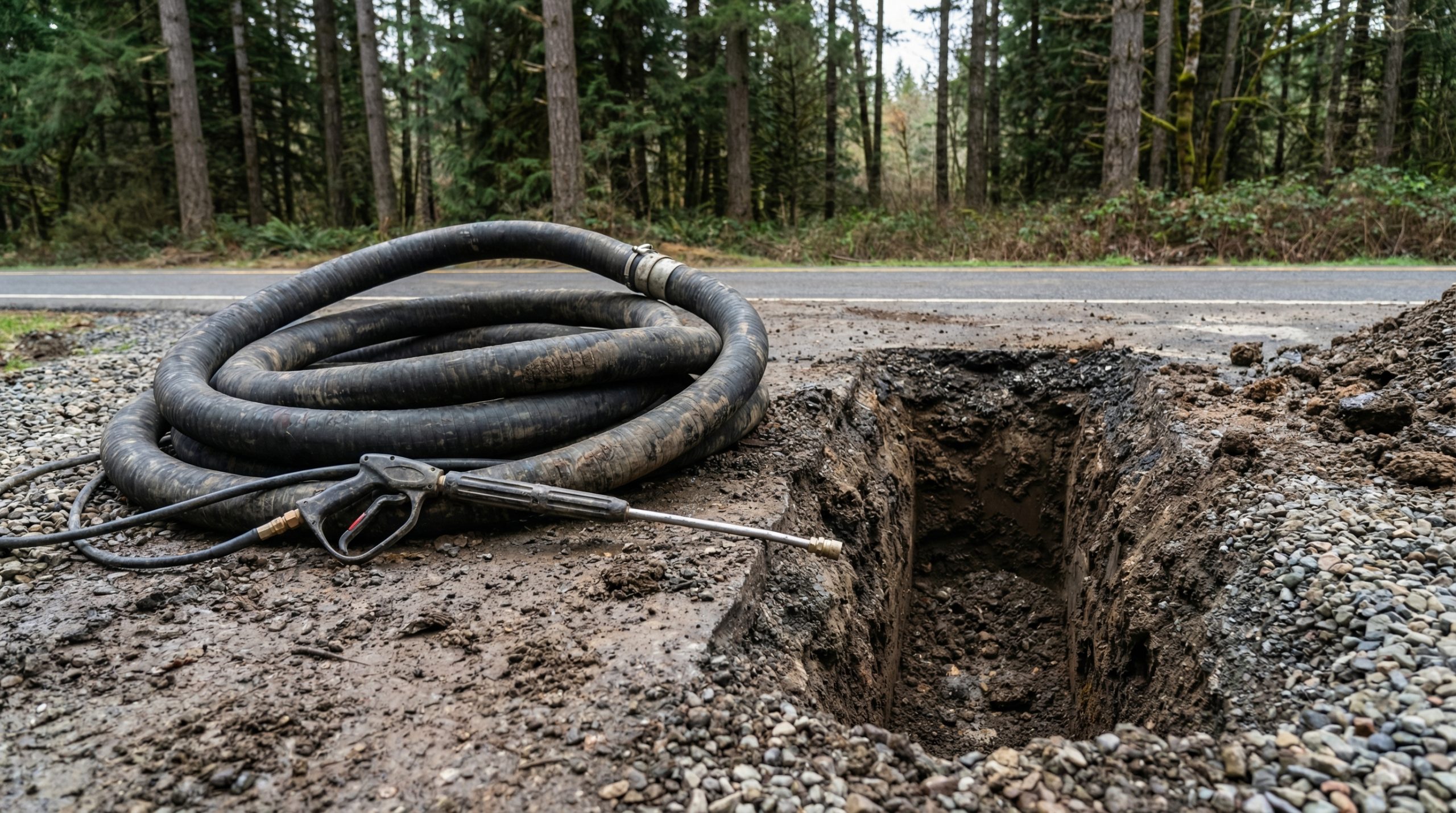
Our truck-mounted vacuum units produce over 5,000 CFM of suction with variable-pressure water jets engineered for the geology Lake Oswego presents. Lower settings handle the Missoula Flood silt found in lower-elevation neighborhoods near the Tualatin River.
Narrow-bore extension wands and precision nozzles work through compact openings — critical where every square foot of driveway and landscaping represents significant investment. Our equipment reaches targets beneath patios and alongside retaining walls without collateral surface damage.
Our Utility Exposure Process
Every Lake Oswego project follows a four-step protocol refined for high-value properties, sensitive landscapes, and the city’s rigorous development review standards.
Step 1: Site Assessment & Locating
We begin with OUNC locate markings, available as-built records, and the city’s GIS data. In Lake Oswego’s older neighborhoods — First Addition, Old Town, and Mountain Park — original utility maps may predate digital systems.
Step 2: Safe Excavation
Excavation uses the method matched to subsurface conditions at each specific location. Hydro excavation at controlled pressure handles iron-clay soils efficiently on hilltop lots.
Step 3: Verification
Each exposed utility is documented: depth, horizontal offset, pipe material, diameter, and condition. GPS-referenced photographs produce comprehensive reports suitable for engineering drawings and Lake Oswego’s planning department requirements.
Step 4: Backfilling & Site Cleanup
We replace excavated material in compacted lifts matched to the surrounding soil profile. On hillside lots, drainage paths are restored carefully to prevent water ponding above basalt layers — a condition that accelerates slope creep on Lake Oswego’s iron-clay hillsides.
Trusted Excavation Experts in Lake Oswego
Prodan Construction LLC (CCB #176278) serves custom-home builders, general contractors, civil engineers, and utility installers across Lake Oswego. We also provide demolition, land clearing, and retaining wall construction — a full-service site-preparation partner for the tear-down-and-rebuild projects that define Lake Oswego’s construction market.
From our Damascus base, roughly twenty-five minutes via I-205 and OR-43, we mobilize to any Lake Oswego neighborhood efficiently. Our operators know the city’s iron-rich clay, hilltop basalt, and demanding access constraints.
Frequently Asked Questions About Potholing & Soft Digging in Lake Oswego
Does Lake Oswego’s iron-enriched soil affect utility locating accuracy?
Iron minerals in weathered Columbia River Basalt can interfere with electromagnetic locate signals, causing surface marks to deviate from true utility positions. This is precisely why potholing — physical visual confirmation — is essential in Lake Oswego.
Will potholing damage mature trees or landscaping on my Lake Oswego property?
Our vacuum process removes soil through a narrow opening that avoids root zones and established plantings. We coordinate pothole placement with the project arborist when working near protected trees.
Is air excavation or hydro excavation better for Lake Oswego’s basalt soils?
Hydro excavation is more efficient against the dense iron-clay and basalt soils found on Lake Oswego’s hilltops. Air excavation is preferred near live electrical feeds and fiber optic lines because compressed air cannot conduct current.
How do I schedule potholing for a Lake Oswego tear-down rebuild?
Contact us as early as possible in the project timeline — ideally before demolition, so we can verify utility positions while the existing structure still provides reference points. Standard scheduling is two to three business days. Rush service is available for active construction.
Schedule Your Utility Potholing Service in Lake Oswego Today
Lake Oswego’s high property values, volcanic soils, and dense utility networks make verified positions non-negotiable. Whether breaking ground on a lakefront home, extending ADU service in Mountain Park, or verifying clearances along Boones Ferry Road, Prodan Construction delivers the meticulous potholing Lake Oswego demands.
Call us at (503) 773-6949 or send us a message to request your free utility potholing estimate in Lake Oswego.
Quick Links
Services
Contact Us
- Address:
20500 SE Hwy 212, Damascus, OR 97089 - Phone:
503-773-6949 - Email:
[email protected]

Oregon CCB # 176278