
- Email us at
[email protected] - Questions? Give us a call
503-773-6949

Safe Utility Potholing – Vacuum Excavation in Hillsboro, OR
Professional Subsurface Utility Verification for Oregon’s Fifth-Largest City
Hillsboro’s rapid growth has layered modern infrastructure over agricultural-era utilities across the valley floor. With 112,000 residents and South Hillsboro adding thousands of homes, subsurface verification is critical. Prodan Construction delivers utility potholing and vacuum excavation throughout Hillsboro, navigating heavy clay and Missoula Flood silt extending over 300 feet deep.
- Licensed Oregon contractor — CCB #176278 — fully bonded and insured
- Non-destructive vacuum excavation protects gas, water, electric, and telecom lines
- Serving all Hillsboro neighborhoods from Damascus, about 40 minutes via US-26
What Is Utility Potholing?
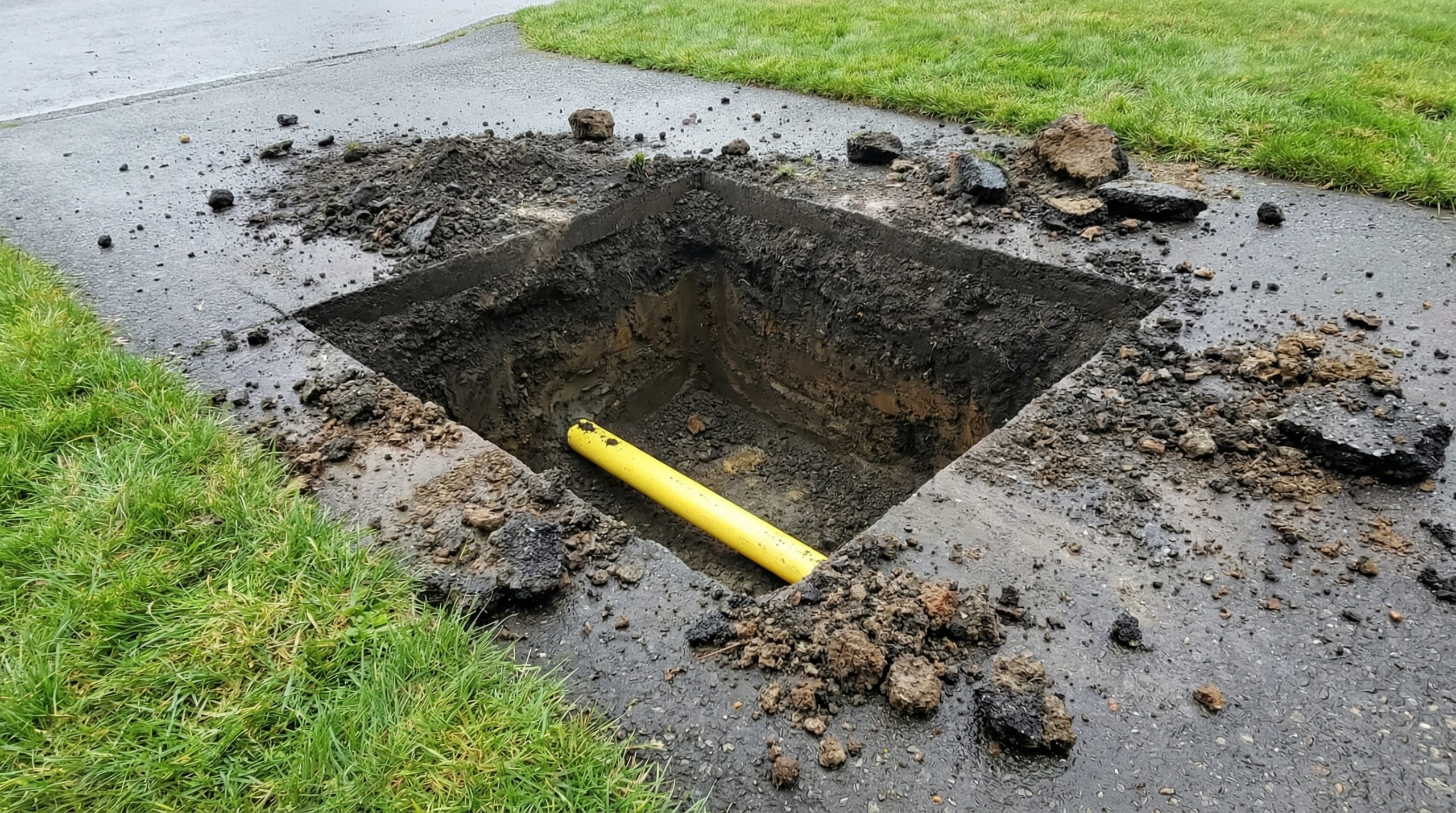
Utility potholing creates a small excavation to visually verify buried utility positions. Vacuum extraction pulls soil upward under suction, leaving pipes untouched. In Hillsboro, where agricultural-era water lines share corridors with fiber optic trunks serving tech campuses, this non-contact method is the responsible standard.
Soft digging uses pressurized water or compressed air to disaggregate soil ahead of the vacuum. Hydro excavation excels in Hillsboro’s heavy clay, where moisture varies dramatically between seasons — baked solid through August and saturated by November. Air excavation is selected near live electrical feeds or fiber optic junctions because compressed air carries no conductive risk.
For Hillsboro contractors, potholing provides positional certainty that locators and GPR can only approximate. Whether routing drainage through Reed’s Crossing, connecting mains in Butternut Creek, or verifying sewer beneath Tualatin Valley Highway, physical exposure is definitive. The building division expects documented verification in congested zones.
Potholing vs. Daylighting Utilities: What Hillsboro Contractors Should Understand
Both terms describe vacuum-assisted excavation at different scales. The distinction matters when specifying services — whether confirming one gas main crossing under Century Boulevard or revealing fifty linear feet of combined utilities for a South Hillsboro subdivision backbone.
1. Targeted Utility Potholing
A targeted pothole is a compact excavation — twelve to eighteen inches in diameter — placed above a suspected utility to verify depth, material, and lateral position. We commonly perform these ahead of directional drilling where bore paths must thread between water, gas, and HiLight fiber conduit. In the valley’s stubborn clay, a single hole typically finishes in under an hour.
2. Utility Daylighting
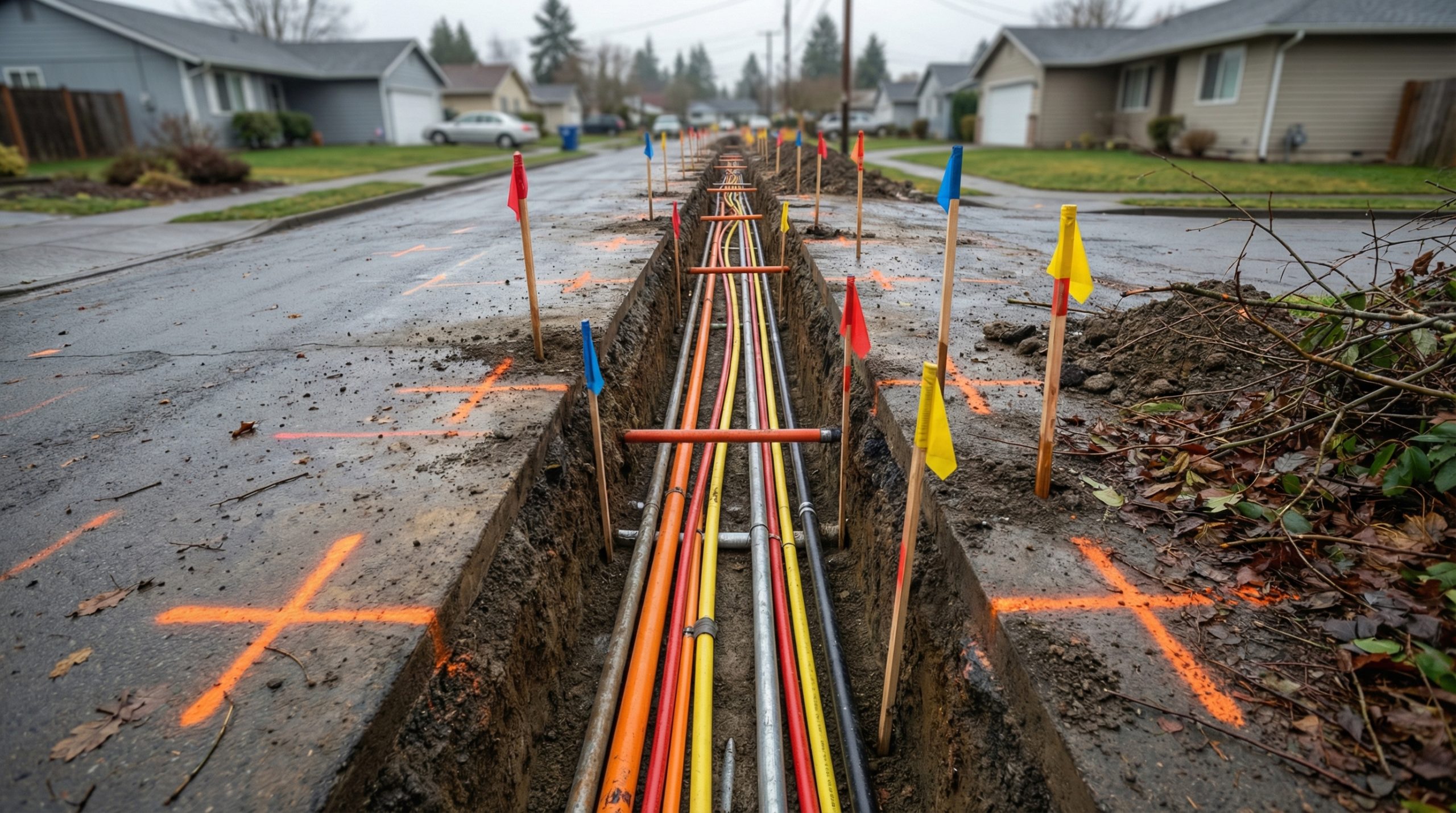
Daylighting exposes a continuous length of buried utility for condition assessment or tie-in construction. South Hillsboro’s new neighborhoods connect into trunk lines originally sized for agricultural irrigation, creating demand for visual evaluation before capacity upgrades. Our vacuum process reveals the entire pipe surface without vibration that mechanical excavation transmits through clay.
The Benefits of Non-Destructive Excavation
Oregon records thousands of underground utility strikes annually. In a city growing as fast as Hillsboro, buried infrastructure density multiplies collision risk with every development phase. Vacuum excavation addresses this by eliminating mechanical contact with subsurface assets.
1. Damage Prevention & Safety
Hillsboro’s corridors carry gas lines, water mains, sewers, power, and dense telecom fiber serving Intel. A backhoe tooth risks catastrophic damage. Vacuum extraction removes soil particle by particle, never contacting the utility. For crews near Ronler Acres or 185th Avenue, this precision is the baseline standard.
2. Cost Savings
Severing a fiber trunk serving a semiconductor facility triggers business interruption claims dwarfing residential incidents. Even striking a water main in Rosedale Parks generates emergency costs. A pothole verification costs a fraction of any repair. For the scale of South Hillsboro, systematic potholing is sound economics.
3. Precision in Tight Spaces
Transit-oriented projects near Orenco Station and Block 67 pack buildings and utilities into compact footprints. Amberglen’s corridors leave minimal clearance. Our flexible vacuum hose extensions operate in gaps where tracked equipment cannot fit, delivering verified positions in the tightest conditions.
Our Vacuum Excavation Equipment and Methods
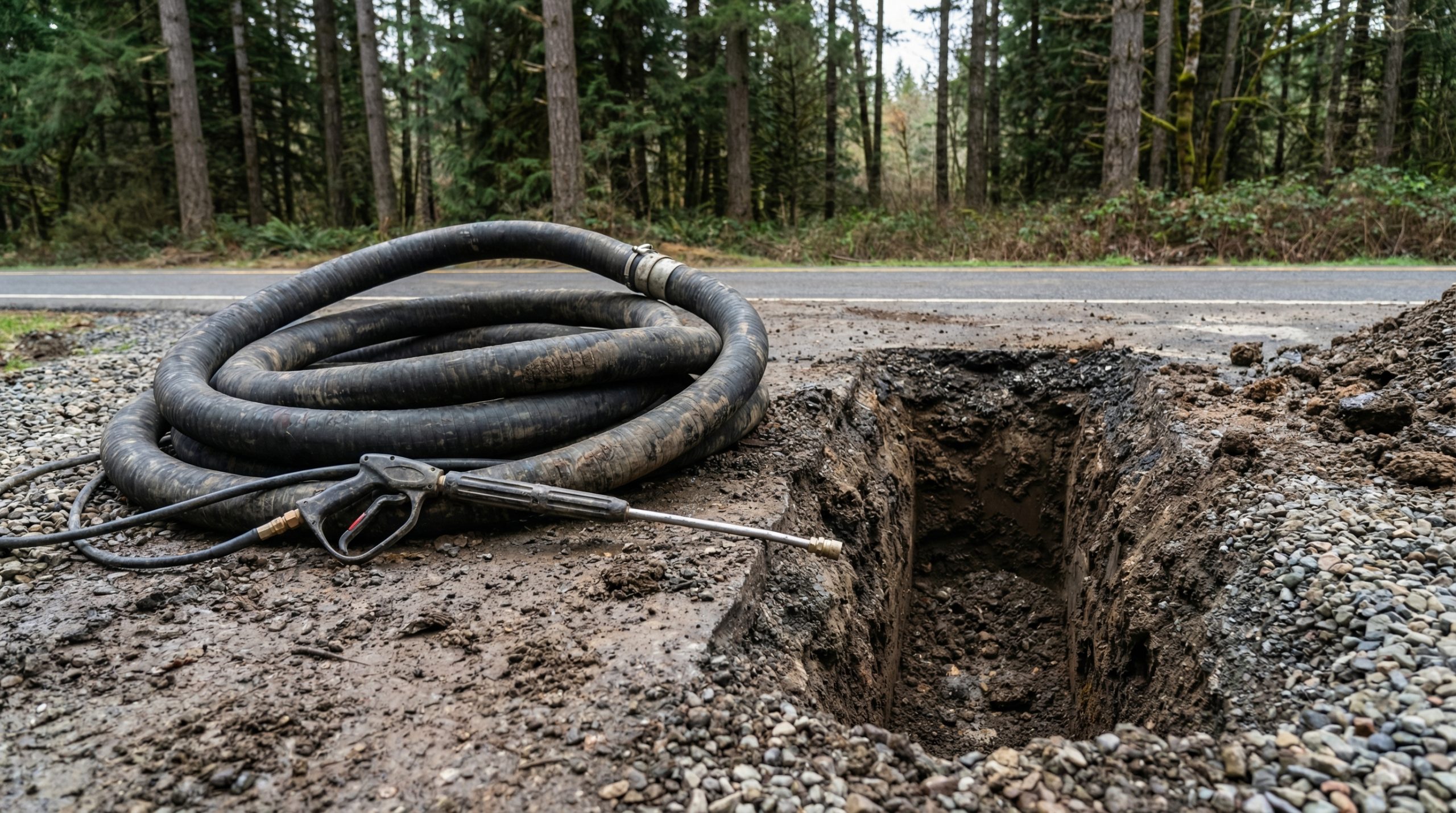
Our truck-mounted systems deliver over 5,000 CFM with variable-pressure water jets. Hillsboro’s clay demands higher pressure than volcanic soils east of Portland — enough to fracture compacted clay without exceeding thresholds near fiber or gas pipe. Onboard spoil tanks keep sites clean.
Extended-reach wands and narrow nozzle tips enable work at depths exceeding ten feet. When potholing beneath Cornelius Pass Road or along the Rock Creek corridor, our equipment works through minimal surface openings, preserving pavement and reducing traffic control requirements on busy Hillsboro arterials.
Our Utility Exposure Process
Every Hillsboro potholing project follows a disciplined four-step process ensuring accurate documentation and strict safety adherence.
Step 1: Site Assessment & Locating
We begin with OUNC locate markings, as-built drawings, and GIS data from the City of Hillsboro and Washington County. Electromagnetic and GPR scans supplement surface marks. Hillsboro’s deep Missoula Flood silt absorbs GPR signal at unexpected rates, so our technicians calibrate instrument sensitivity to local soil conductivity — particularly near Dairy Creek and the Tualatin River floodplain.
Step 2: Safe Excavation
Test holes are created using hydro or air methods matched to conditions. The heavy clay demands sustained jet pressure to break the cohesive structure without displacing bedding. In South Hillsboro areas where the seasonal water table rises near grade during winter, our vacuum handles additional groundwater while maintaining operator visibility.
Step 3: Verification
Each exposed utility is measured for depth, offset, material, diameter, and condition. All data is georeferenced and compiled into formal pothole reports that integrate with engineering plans and align with Hillsboro’s updated Design and Construction Standards for seamless handoff to designers and reviewers.
Step 4: Backfilling & Site Cleanup
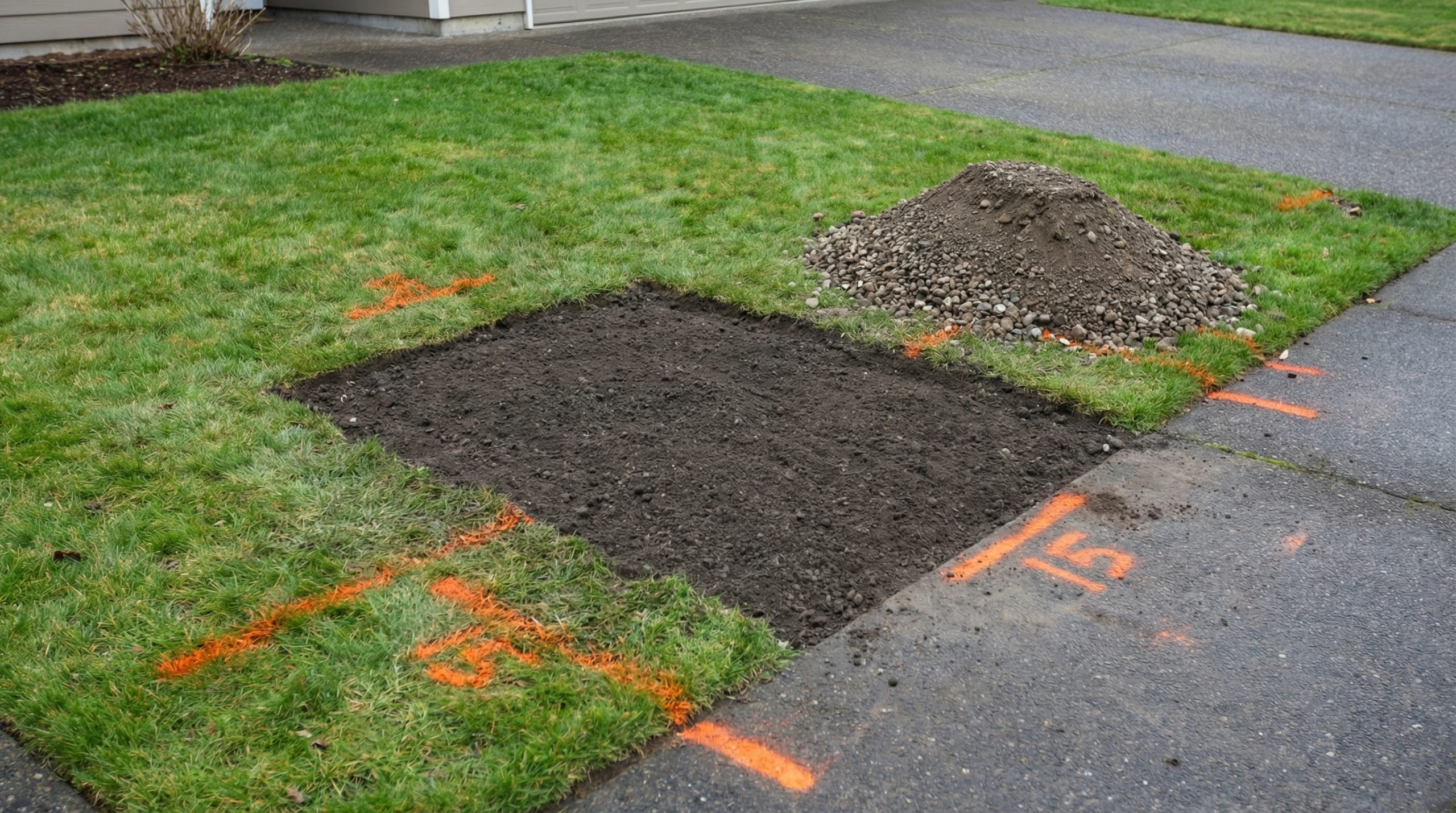
Holes are backfilled in compacted lifts using screened native material or specified fill. Paved surfaces are patched or scheduled for permanent repair. Landscape areas are restored to grade. Our crews leave every Hillsboro site fully restored — no spoil mounds, no standing water, no equipment impressions.
Trusted Excavation Experts in Hillsboro
Prodan Construction LLC (CCB #176278) partners with general contractors, engineering firms, municipal agencies, and developers across Hillsboro. We also perform demolition, land clearing, and retaining wall construction — comprehensive site preparation under one contractor.
From Damascus, we reach Hillsboro in approximately forty minutes via US-26. Our crews understand the valley’s clay, the seasonal water table, and the infrastructure density surrounding Intel and South Hillsboro’s growth corridor. When accurate utility positions matter, reach out to Prodan Construction.
Frequently Asked Questions About Potholing & Soft Digging in Hillsboro
How does Hillsboro’s seasonal water table affect potholing?
During winter, the water table rises close to the surface in low-lying areas near Dairy Creek and the Tualatin River. Our vacuum equipment extracts groundwater alongside loosened soil, maintaining a clear view of the utility. We stabilize sidewalls in saturated conditions to ensure accurate measurements year-round.
Do you provide potholing for South Hillsboro’s new developments?
Yes. Rosedale Parks, Reed’s Crossing, Butternut Creek, and Witch Hazel Village involve extensive new utility installation connecting into existing trunk infrastructure. We pothole at tie-in points, road crossings, and corridors where new construction parallels established mains to prevent conflicts during grading.
Can vacuum excavation handle Hillsboro’s deep Missoula Flood silt?
While Missoula Flood deposits in the Tualatin Valley extend hundreds of feet, utilities sit within the upper ten to fifteen feet. The silt-dominated upper layers respond well to hydro excavation. Even where clay content increases with depth, our variable-pressure system maintains effective soil removal without difficulty.
What areas of Hillsboro do you serve?
All of Hillsboro — from Orenco Station and Tanasbourne in the east to agricultural-transition areas along the western boundary. South Hillsboro, downtown, Amberglen, Jackson School, and every neighborhood between. Call (503) 773-6949 to schedule service anywhere in Hillsboro or surrounding Washington County.
Schedule Your Utility Potholing Service in Hillsboro Today
Hillsboro’s transformation to Oregon’s fifth-largest city compressed generations of infrastructure into shared corridors. South Hillsboro alone adds three thousand homes needing verified connections. Whether building in Reed’s Crossing, upgrading trunks along Cornell Road, or verifying clearance near the Hops Stadium, Prodan Construction provides the precise answers your plans require.
Call us at (503) 773-6949 or send us a message to request your free utility potholing estimate in Hillsboro.
Quick Links
Services
Contact Us
- Address:
20500 SE Hwy 212, Damascus, OR 97089 - Phone:
503-773-6949 - Email:
[email protected]

Oregon CCB # 176278