
- Email us at
[email protected] - Questions? Give us a call
503-773-6949
Safe Utility Potholing – Vacuum Excavation in Damascus, OR
Non-Destructive Utility Location from Our Home Base in the Cascade Foothills
Damascus is where Prodan Construction lives and works. Our headquarters at 20500 SE Highway 212 sits within this 11,000-person Clackamas County community, and we know its heavy clay soils, volcanic bedrock, and evolving infrastructure as well as anyone in the industry.
- Licensed Oregon contractor — CCB #176278 — fully bonded and insured
- Headquartered in Damascus — zero travel time to any project in the community
- Specialized equipment for heavy clay and Boring Lava basalt excavation
What Is Utility Potholing?
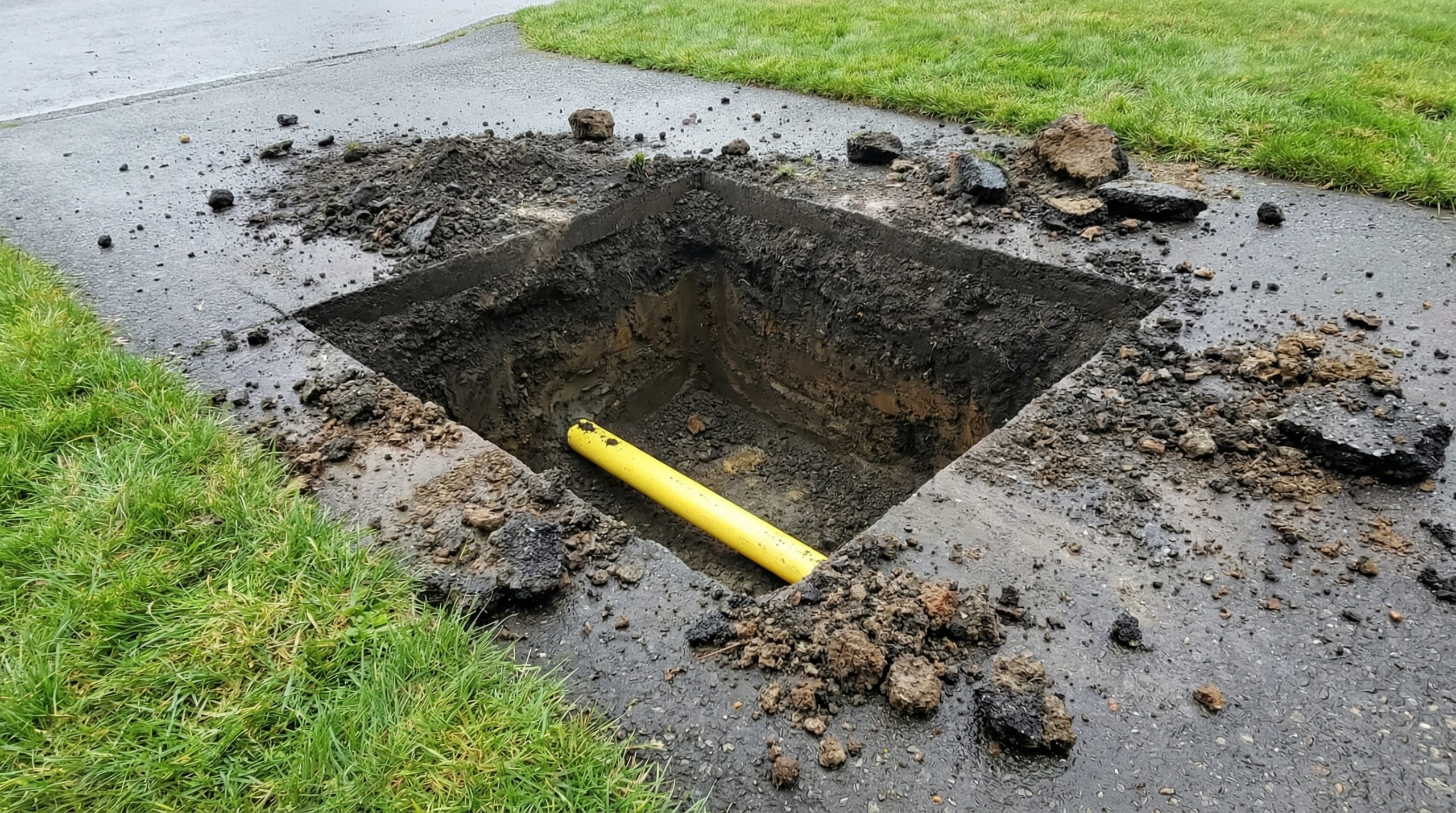
Utility potholing is the process of creating a small, precise opening in the ground to visually confirm the location of buried utility infrastructure. Instead of using a mechanical excavator that can sever a gas main or crush a water line, potholing employs vacuum extraction — drawing soil away from utilities with powerful suction.
Soft digging refers to the broader family of vacuum-assisted excavation techniques. Hydro excavation loosens soil with a pressurized water jet while a vacuum simultaneously extracts the resulting slurry.
For Damascus property owners and builders, potholing resolves a fundamental problem: much of the community’s private infrastructure predates modern mapping standards. Land-banked parcels acquired after the 2002 urban growth boundary expansion may carry utility installations from the original rural homesteads, overlaid with newer connections added during tentative development planning.
Potholing vs. Daylighting Utilities: What You Need to Know
Both potholing and daylighting employ non-destructive vacuum excavation, but they target different project needs. In Damascus, the distinction matters because the community’s mix of rural legacy infrastructure and newer installations creates situations requiring both pinpoint verification and extended exposure.
1. Targeted Utility Potholing
A targeted pothole is a focused test hole — typically twelve to eighteen inches in diameter — drilled directly over a suspected utility to confirm its depth, material, and horizontal position. On Damascus properties where a new custom home foundation must clear an existing water main or where a driveway extension crosses a gas service line, one or two targeted potholes provide the engineering data needed to proceed safely.
2. Utility Daylighting
Daylighting exposes a continuous length of buried utility for inspection, condition assessment, or connection preparation. Along Damascus Heights and the Sunnyside Road corridor, where aging water lines and newer subdivision mains must interconnect, daylighting reveals the full picture — pipe material transitions, depth changes, joint conditions — that targeted potholes alone cannot capture.
The Benefits of Non-Destructive Excavation
Damascus’s construction-heavy economy means excavation is constant throughout the community. Every trench, every foundation, every grading operation carries the risk of striking buried utilities that may not appear on any current map.
1. Damage Prevention & Safety
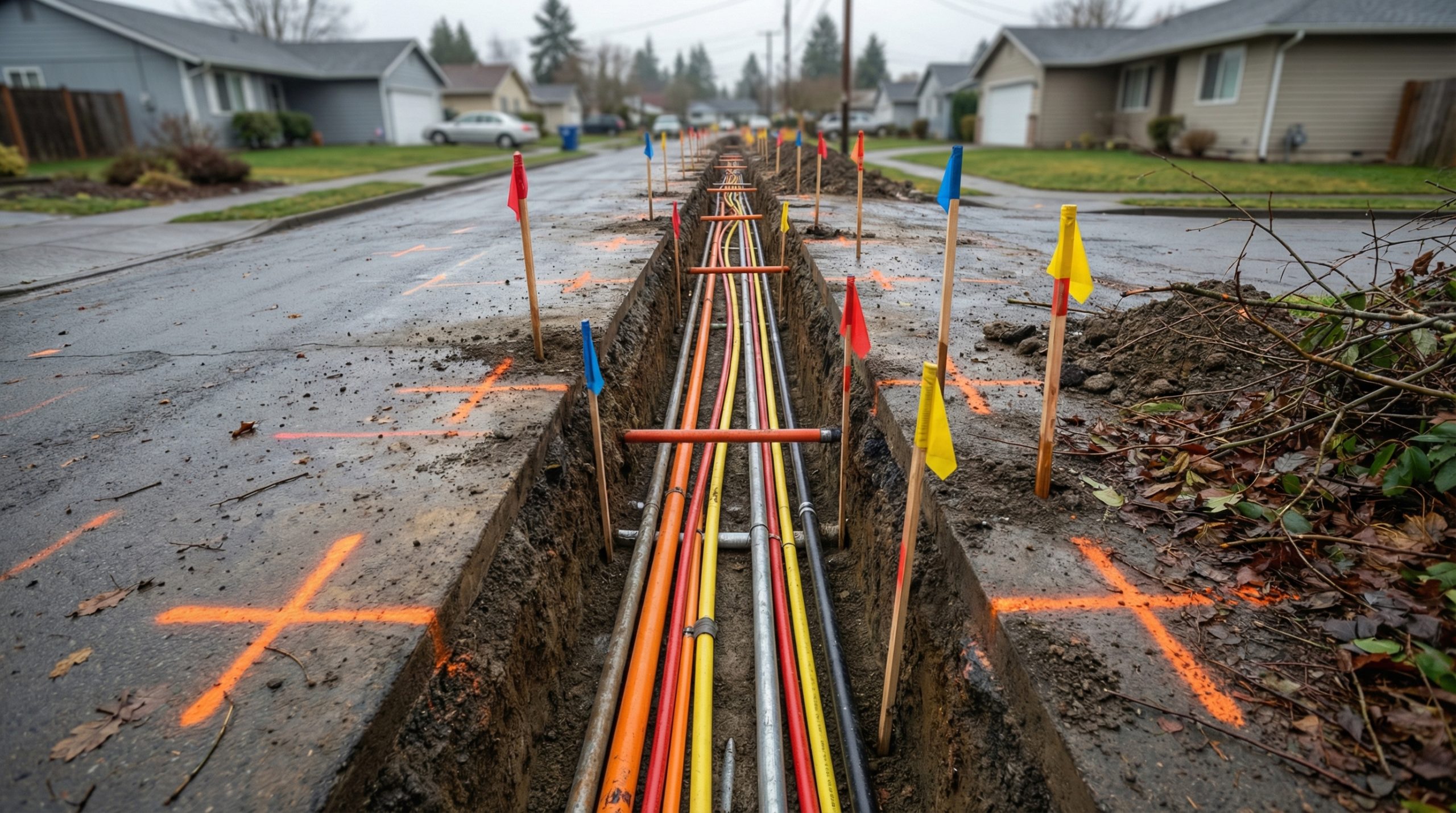
The ground beneath Damascus holds decades of accumulated utility infrastructure: original rural homestead water lines, agricultural irrigation pipe, electrical service from multiple eras, gas mains installed under varying standards, and septic systems in every configuration. Many of these lines were never surveyed to modern accuracy.
2. Cost Savings
In a community where construction is the largest industry sector, schedule delays from utility strikes ripple across multiple projects and subcontractor teams. Emergency gas shutoffs on a Damascus property halt work not just at the strike site but at every nearby parcel sharing that service line.
3. Precision in Tight Spaces
Damascus lots range from compact townhome pads at Crest View to fifty-acre hillside estates in Hillsview. Both present access constraints — narrow utility easements between townhome foundations, and steep wooded slopes on large parcels where heavy equipment cannot safely operate.
Our Vacuum Excavation Equipment and Methods
Our truck-mounted vacuum units generate over 5,000 CFM of suction combined with adjustable water-jet pressure. Damascus’s heavy clay demands higher operating pressures than the alluvial soils to the north, and we calibrate accordingly.
Being headquartered in Damascus means our equipment is already here. No mobilization fees, no transit delays. When a Damascus contractor encounters unexpected subsurface conditions at seven in the morning, our trucks can be on site before eight.
Our Utility Exposure Process
Every Damascus potholing project follows our proven four-step methodology, refined through years of work in this specific terrain.
Step 1: Site Assessment & Locating
We review OUNC locate markings for public and franchised utilities, then consult property records and owner knowledge for private infrastructure. In Damascus, where many parcels carry legacy installations from pre-disincorporation development attempts, we routinely supplement with electromagnetic tracing and ground-penetrating radar.
Step 2: Safe Excavation
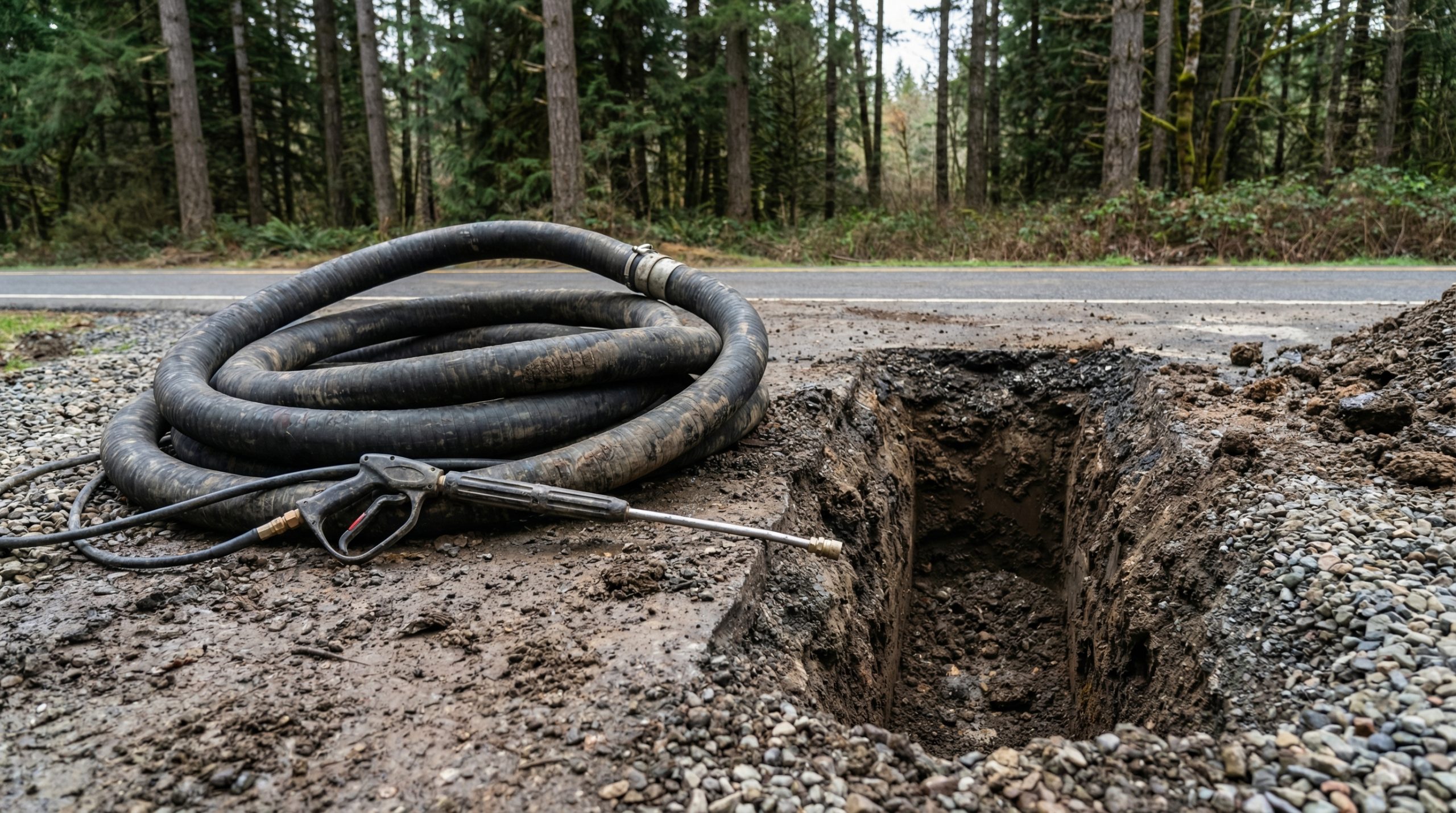
We create test holes using the hydro or air method appropriate to each location. Damascus’s clay-over-basalt profile often requires starting with moderate hydro pressure through the clay cap, then increasing power when volcanic rock is encountered.
Step 3: Verification
Every utility exposure is documented to engineering standards: measured depth below grade, horizontal offset from permanent surface features, pipe or conduit material, diameter, and condition notes. Photographs with GPS coordinates create a permanent record that integrates into site plans, Clackamas County permit submissions, and project engineering drawings.
Step 4: Backfilling & Site Cleanup
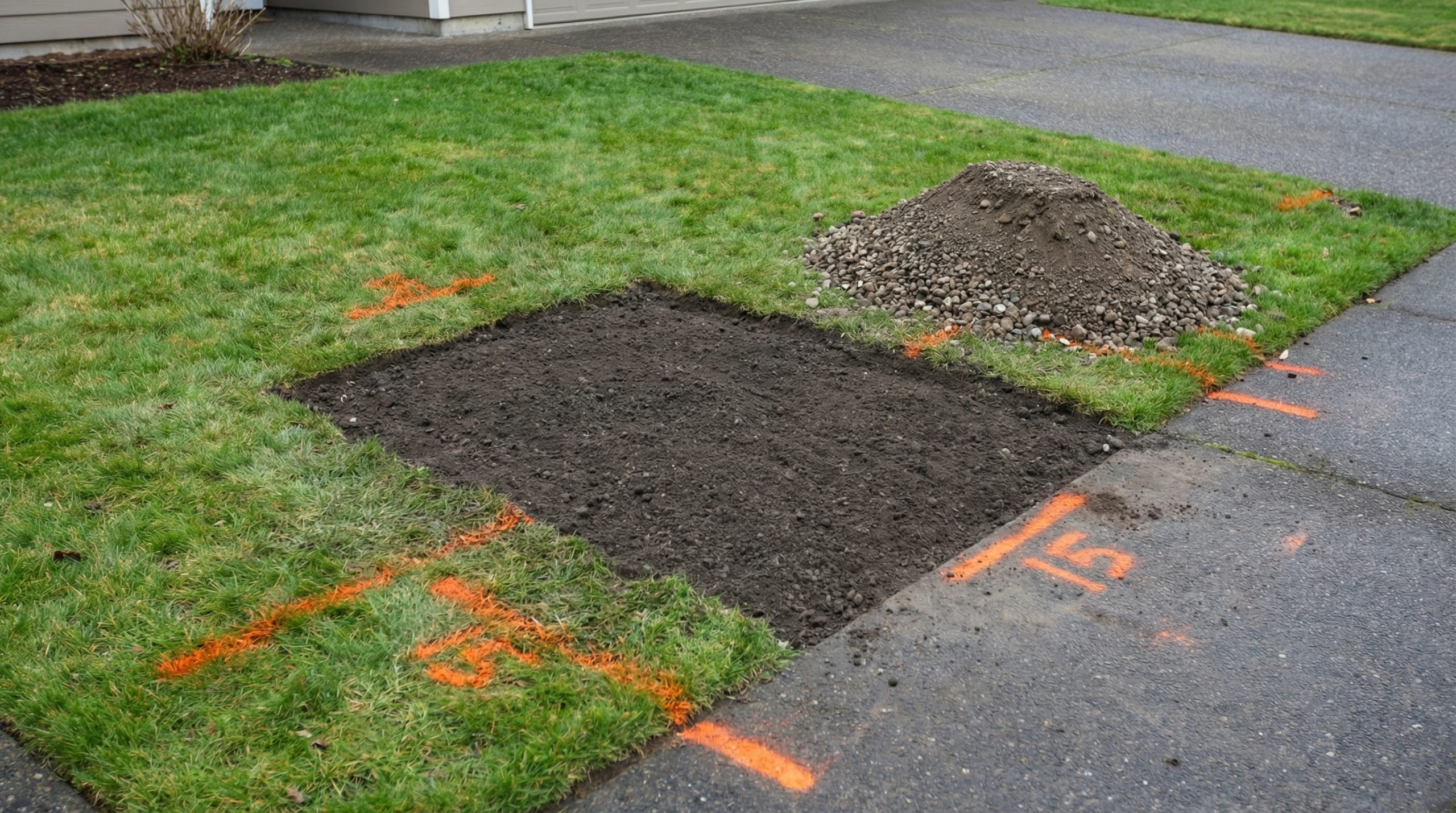
Excavated clay and rock material is returned to the hole in controlled lifts, compacted to match surrounding soil density. Damascus’s heavy clay requires careful compaction to prevent settlement.
Trusted Excavation Experts in Damascus
Prodan Construction LLC (CCB #176278) is Damascus’s own excavation contractor, serving homeowners, builders, engineers, and developers from our base on Highway 212. We also provide demolition, land clearing, and retaining wall construction — complete site preparation from your local contractor.
No other potholing provider knows Damascus like we do. We have worked this clay, broken through this basalt, and navigated these hillsides for years. When your Damascus project requires subsurface verification, you are calling the team that already understands your ground.
Frequently Asked Questions About Potholing & Soft Digging in Damascus
How does Damascus’s heavy clay affect vacuum excavation?
Damascus clay is dense and cohesive, requiring higher water pressure than lighter soils. When dry, it fragments into hard clods; when wet, it becomes plastic and sticky. Our operators adjust pressure and nozzle selection to match seasonal conditions.
Does Clackamas County require potholing before construction in Damascus?
The county does not universally mandate potholing, but OUNC notification is required before any excavation. Many contractors and engineers require verified utility positions as standard practice, and projects involving directional drilling, deep foundations, or work near marked utility corridors benefit significantly from potholing verification.
How far down can you pothole through basalt in Damascus?
Our equipment routinely reaches fifteen feet or deeper, even through Boring Lava basalt. Rotary cutting nozzles and high-pressure hydro excavation fragment vesicular basalt without transmitting damaging force to adjacent utilities.
What is the turnaround time for scheduling potholing in Damascus?
Because we are headquartered in Damascus, our response times are the fastest available. Standard projects are typically scheduled within one to two business days. Emergency utility exposure for active sites or suspected damage can often happen same-day.
Schedule Your Utility Potholing Service in Damascus Today
From Crest View townhome developments to hillside estate construction in Hillsview, from Sunnyside Road commercial projects to rural land clearing along Foster Road, Prodan Construction provides Damascus with the most responsive and experienced utility potholing service available. We are your neighbors, your local contractor, and the team that knows this ground better than anyone.
Call us at (503) 773-6949 or send us a message to request your free utility potholing estimate in Damascus.
Quick Links
Services
Contact Us
- Address:
20500 SE Hwy 212, Damascus, OR 97089 - Phone:
503-773-6949 - Email:
[email protected]

Oregon CCB # 176278