
- Email us at
[email protected] - Questions? Give us a call
503-773-6949
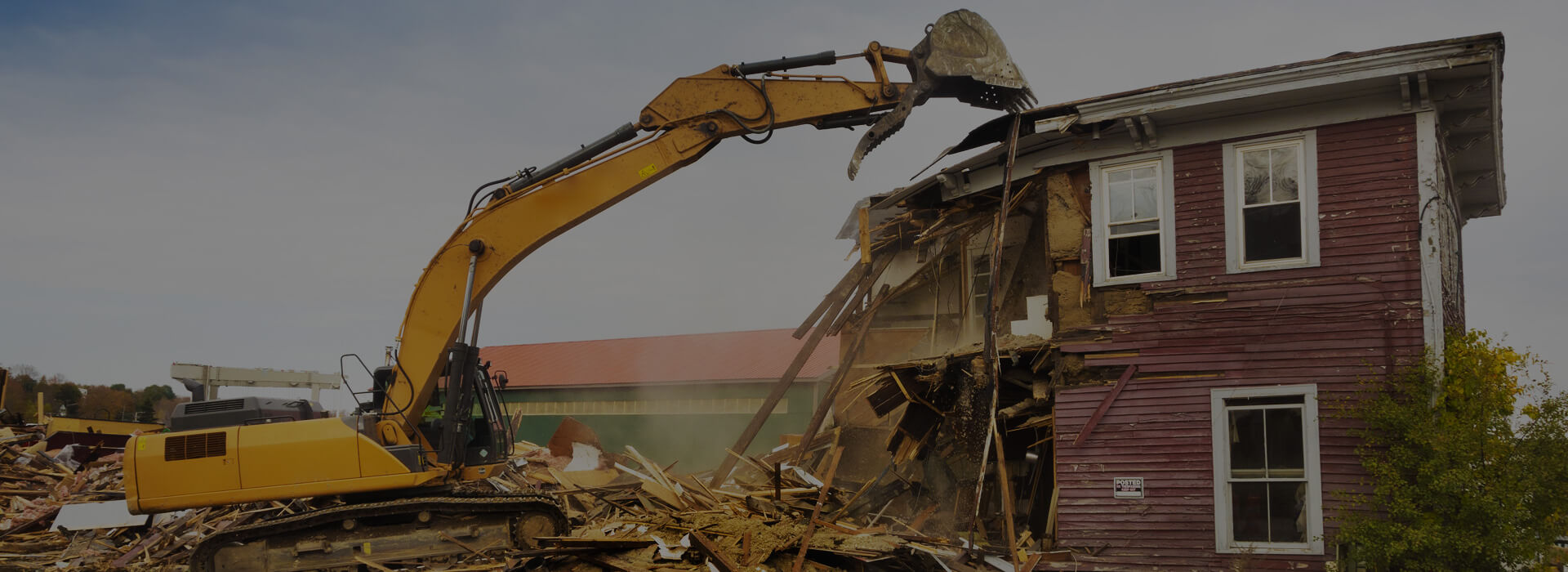
Safe Utility Potholing – Vacuum Excavation in Beaverton, OR
Non-Destructive Underground Utility Exposure for the Portland Metro’s Newest 100K City
Beaverton recently crossed 100,000 residents, cementing its position among Portland’s largest suburbs. That growth packed decades of utilities beneath Tualatin Valley Highway and Murray Boulevard while new lines extend into Cooper Mountain’s expanding frontier. Prodan Construction provides utility potholing and vacuum excavation across Beaverton, exposing buried infrastructure in the valley’s challenging clay.
- Licensed Oregon contractor — CCB #176278 — fully bonded and insured
- Non-destructive vacuum excavation protects gas, water, electric, and telecom lines
- Serving all Beaverton neighborhoods from Damascus, roughly 35 minutes via US-26 and OR-217
What Is Utility Potholing?
Utility potholing means excavating a small opening to physically see a buried utility and confirm its position. Vacuum extraction draws soil away under suction — no blade, no contact with buried assets. In Beaverton, where corridors along Allen and Walker contain gas, water, sewer, power, and fiber in narrow easements, this contactless technique is the standard.
Soft digging loosens soil using pressurized water (hydro) or compressed air ahead of the vacuum. Hydro excavation fragments Beaverton’s dense clay, which forms an impervious matrix when dry and becomes adhesive when wet. Air excavation is specified near live conductors or fiber splice points because air poses no conductivity risk.
For Beaverton contractors, potholing converts an approximate locate mark into a measured, GPS-referenced data point. Whether connecting water in the Cooper Mountain expansion, verifying sewers along Farmington Road, or confirming gas depth beneath Sexton Mountain, physical exposure replaces assumption with evidence.
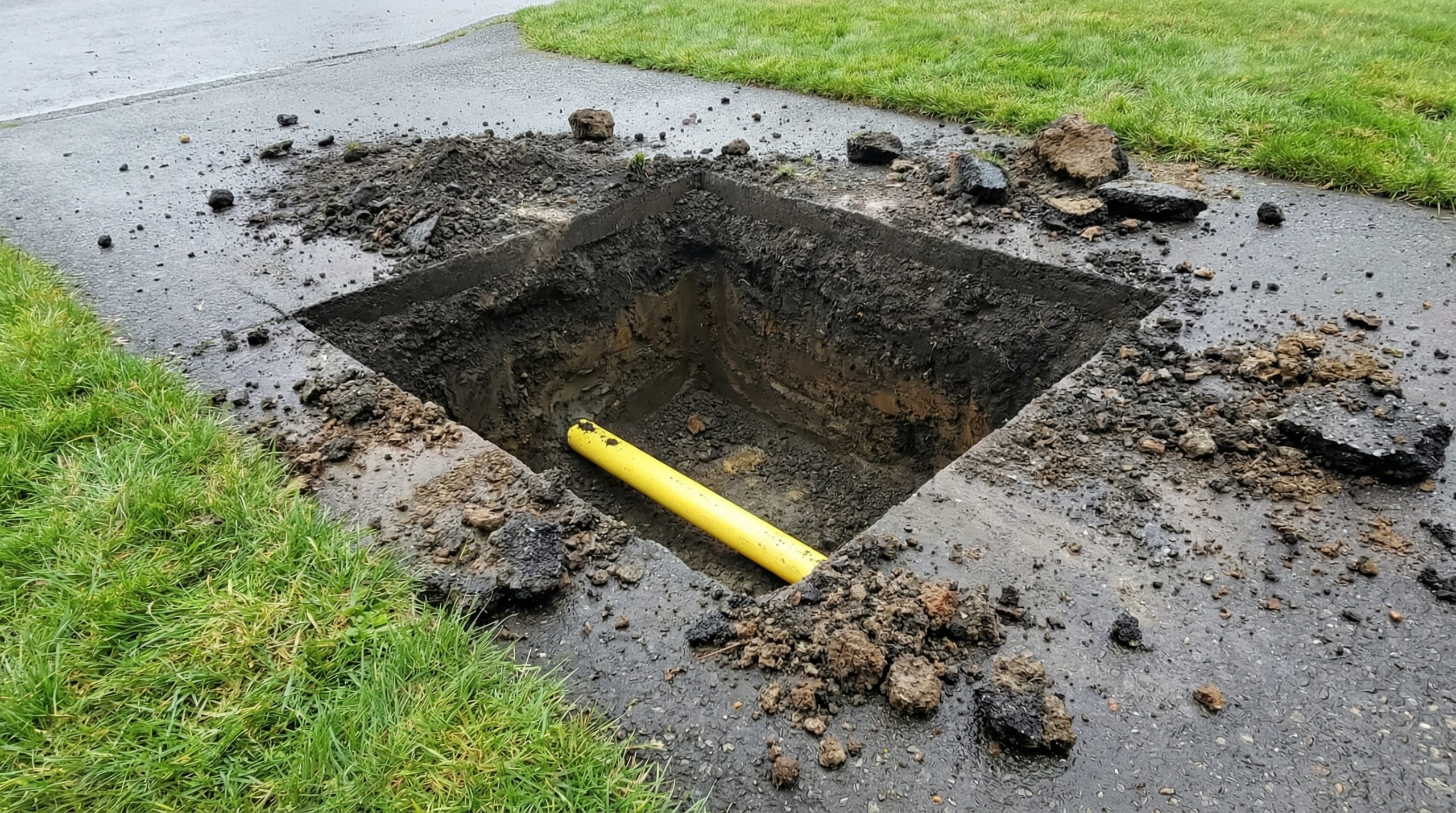
Potholing vs. Daylighting Utilities: Key Differences for Beaverton Projects
Both services use vacuum-assisted excavation, but scope differs. Selecting the right approach depends on whether your project requires a single point confirmation beneath Hall Boulevard or a continuous exposure along a Fanno Creek utility crossing for repair work.
1. Targeted Utility Potholing
Targeted potholing creates a focused opening roughly twelve to eighteen inches across, centered above a suspected utility to verify depth, material, and horizontal location. Before directional drilling along commercial corridors, we place potholes at critical crossings to ensure bore paths clear existing mains. In the valley’s heavy clay, individual test holes generally finish within forty-five minutes to an hour.
2. Utility Daylighting
Daylighting reveals a continuous length of pipe for inspection, condition assessment, or connection preparation. Many utilities installed during the suburban boom of the 1960s through 1980s are reaching end of life. Aging water mains in Vose and Greenway and deteriorating sewer laterals along TV Highway frequently require daylighting before replacement can proceed. Our vacuum exposes the full circumference without jarring fragile joints.
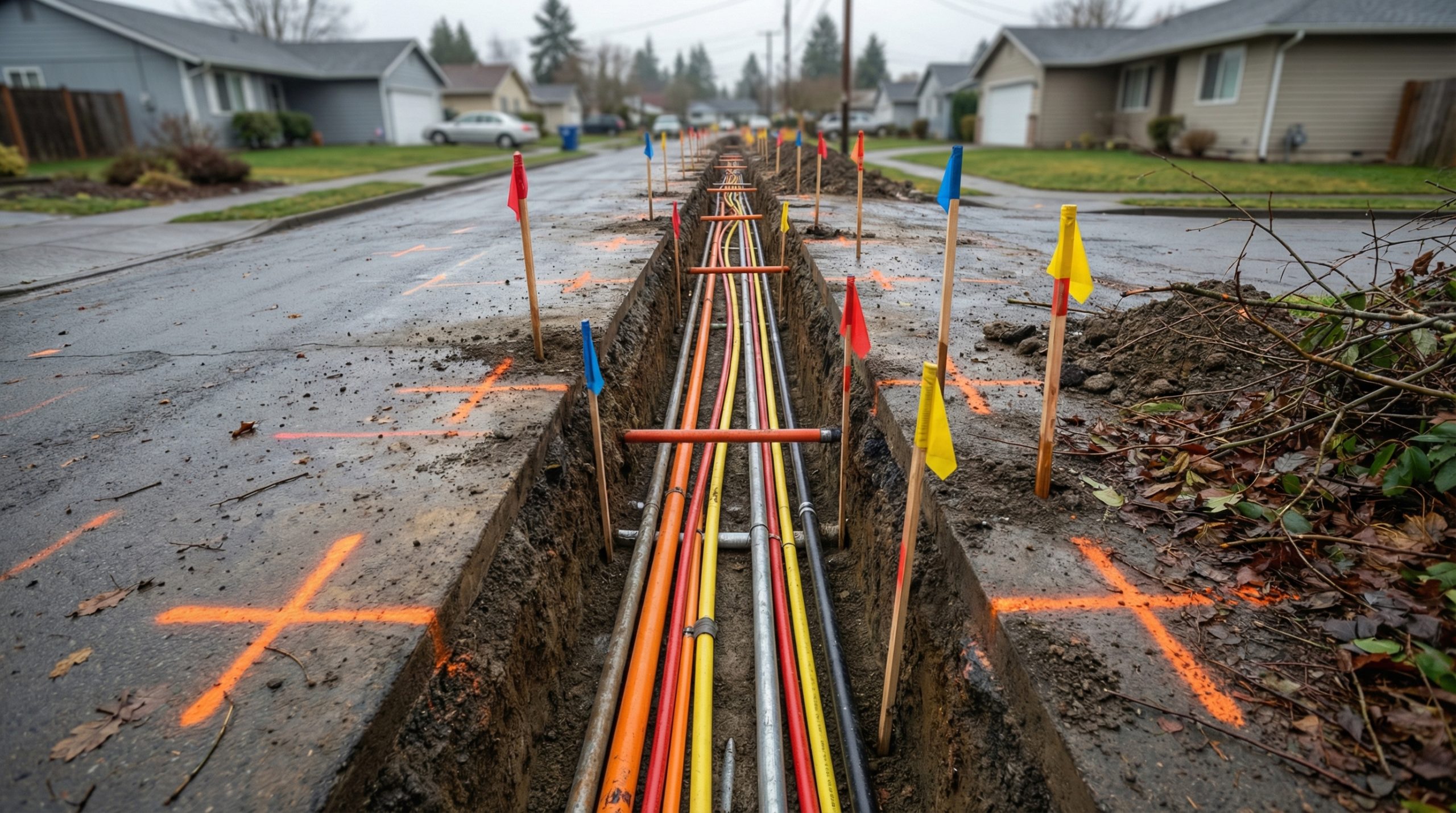
The Benefits of Non-Destructive Excavation
Every underground utility strike in Beaverton carries consequences beyond the excavation itself — service outages, emergency response, regulatory scrutiny, and project delays. Vacuum excavation eliminates the root cause: uncontrolled mechanical contact with buried infrastructure.
1. Damage Prevention & Safety
Under a typical Beaverton arterial you find gas lines, water mains, sewers, electrical conduit, and fiber — sometimes separated by inches. On Cooper Mountain’s basalt, rock ledges deflect buckets unpredictably. Vacuum extraction removes one layer at a time, never touching the utility. For crews near Murray and Allen or the Sunset corridor, this precision is non-negotiable.
2. Cost Savings
Striking a gas main triggers evacuations, fire standby, mandatory repair, and OSHA investigation — easily exceeding six figures. A pothole verification runs a fraction of that exposure. For homebuilders on Cooper Mountain or developers in Central Beaverton, systematic potholing prevents catastrophic overruns.
3. Precision in Tight Spaces
Beaverton’s infill projects involve narrow easements and zero-clearance conditions. The Round, projects near MAX stations, and middle-housing conversions demand methods fitting constrained footprints. Our flexible hose extensions thread between foundations and fences, placing potholes where rigid equipment cannot reach.
Our Vacuum Excavation Equipment and Methods
Our truck-mounted units generate over 5,000 CFM with adjustable water-jet pressure. Beaverton’s clay responds to moderate-high pressure that fractures cohesive soil while preserving bedding. On Cooper Mountain’s basalt, rotary nozzles fragment rock without percussion. Self-contained spoil tanks keep streets free of debris.
Extended wands and precision nozzle tips reach depths beyond ten feet through small surface openings. When verifying crossings under Scholls Ferry Road or investigating easements along Beaverton Creek, our equipment works through twelve-inch openings, minimizing surface disturbance and traffic control on heavily traveled arterials.
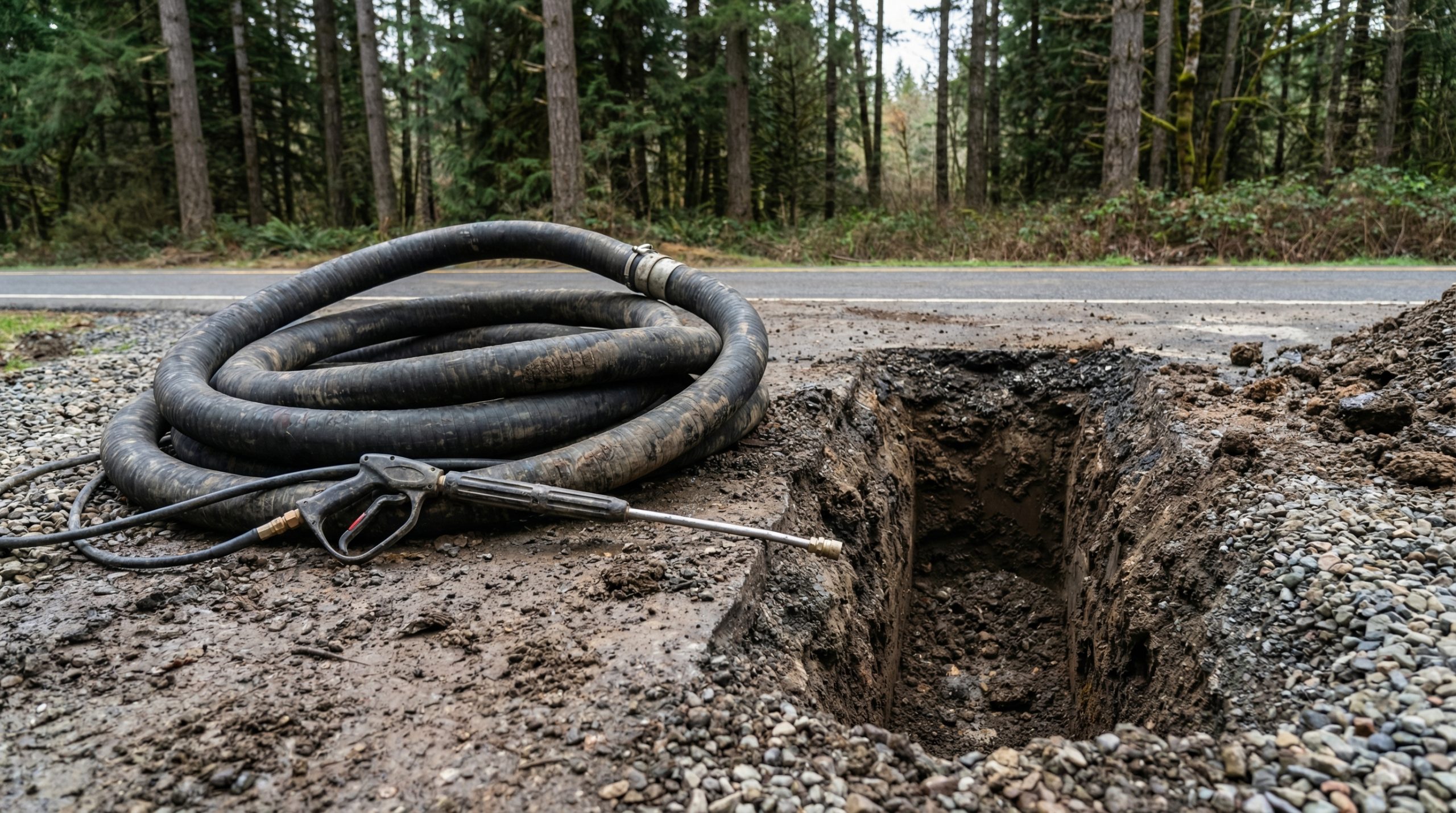
Our Utility Exposure Process
Every Beaverton potholing project follows a consistent four-step procedure producing documented results under rigorous safety controls.
Step 1: Site Assessment & Locating
We evaluate OUNC locate markings, as-built records, and GIS data from the City of Beaverton and Washington County. Electromagnetic and GPR scans supplement surface information. Beaverton’s clay retains variable moisture that affects signal propagation, so our technicians run multi-frequency sweeps — especially in saturated Fanno Creek zones where clay distorts readings.
Step 2: Safe Excavation
Test holes are opened using hydro or air methods appropriate to conditions. Along the valley floor, water pressure disaggregates clay while preserving utility bedding. On Cooper Mountain’s volcanic slopes, rotary nozzle tips handle basalt without percussion. Continuous vacuum extraction keeps the excavation clear for unobstructed operator visibility.
Step 3: Verification
Exposed utilities are measured for depth, horizontal offset, material type, diameter, and condition. Photographs and GPS coordinates compile into formal pothole reports that integrate with engineering software and satisfy Beaverton’s development review documentation requirements.
Step 4: Backfilling & Site Cleanup
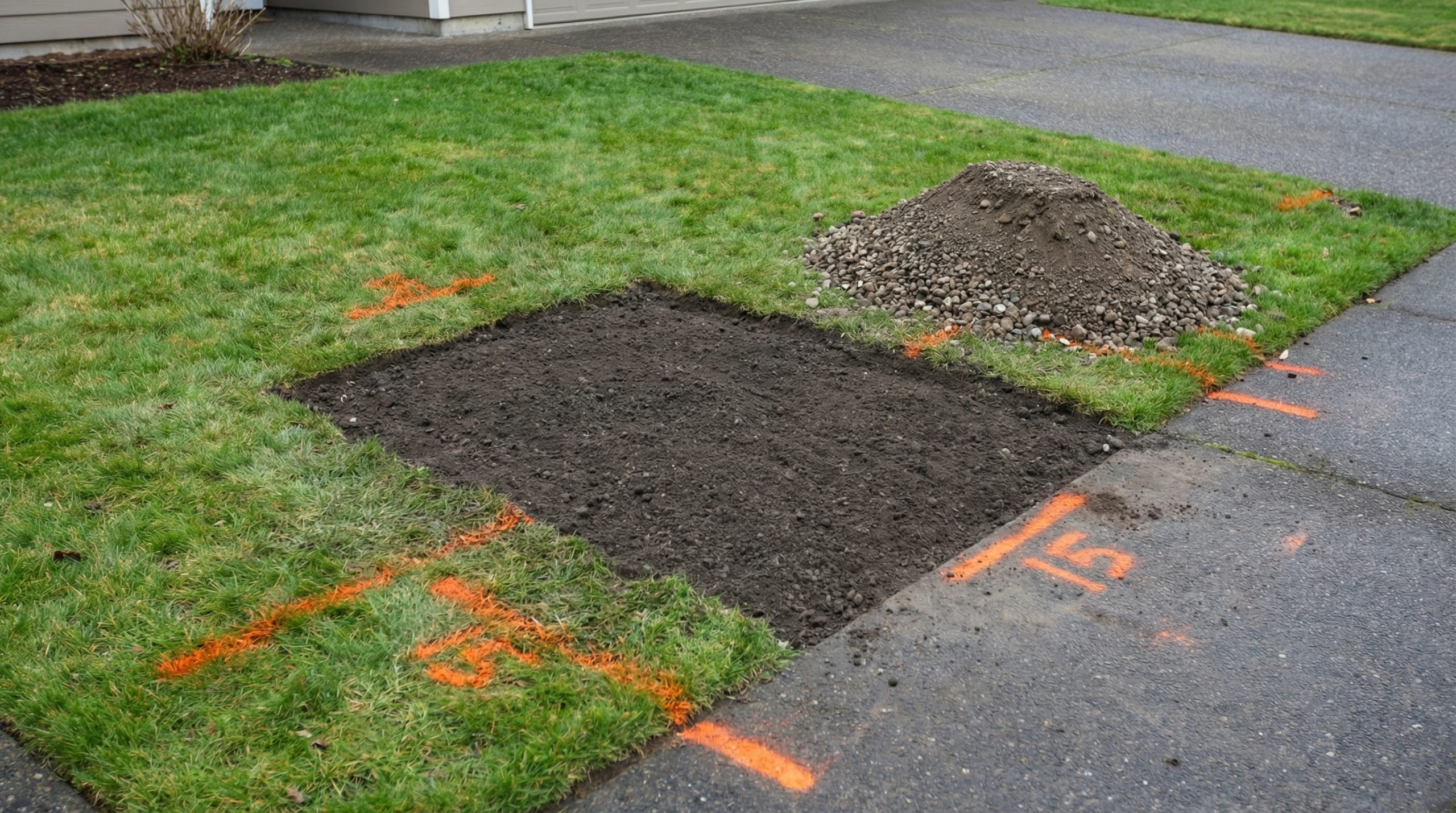
Backfill is placed in compacted lifts using screened soil or specified granular material. Asphalt receives cold-patch repair or is marked for permanent restoration. We leave every Beaverton site clean and fully restored — no open holes, no spoil material, no tire ruts on adjacent lawns or parking areas.
Trusted Excavation Experts in Beaverton
Prodan Construction LLC (CCB #176278) serves general contractors, engineering consultants, utility districts, and developers throughout Beaverton. We also provide demolition, land clearing, and retaining wall construction — one contractor covering the full scope of site preparation.
Our Damascus base places us roughly thirty-five minutes from Beaverton via US-26 and OR-217. Our operators know conditions from Cooper Mountain’s basalt outcrops to the Fanno Creek lowlands. When your Beaverton project needs verified utility locations, call Prodan Construction.
Frequently Asked Questions About Potholing & Soft Digging in Beaverton
Is potholing available for Cooper Mountain’s new development areas?
Yes. Cooper Mountain’s urban reserve expansion is generating significant residential construction. New trunk lines connecting these developments cross areas with basalt near the surface and limited as-built data. We provide pre-construction verification and ongoing potholing as subdivision phases progress and additional laterals are installed.
How does Beaverton’s clay soil affect vacuum excavation?
Tualatin Valley clay is among the most difficult soils in the metro area. When dry, it fractures into hard blocks; when wet, it becomes extremely sticky. Our hydro excavation jets are calibrated for this clay — sufficient pressure to break the cohesive matrix without eroding utility bedding. We maintain effective production rates year-round in these conditions.
Do you work near the MAX Blue Line and transit corridors?
Frequently. Transit-oriented development near Beaverton’s MAX stations involves dense utility corridors with limited access. We coordinate with TriMet right-of-way requirements and work within active transit zones. Our compact equipment and flexible hose extensions make potholing practical alongside live rail operations.
What is the typical turnaround for scheduling potholing in Beaverton?
We generally schedule within one to three business days. Urgent needs — such as verifying a utility before mechanical excavation already underway — can often be accommodated within twenty-four hours. Contact us at (503) 773-6949 to arrange service.
Schedule Your Utility Potholing Service in Beaverton Today
Beaverton’s evolution to a city exceeding 100,000 created an underground environment where 1960s utilities share space with modern fiber. Cooper Mountain adds new corridors into undeveloped ground. Whether verifying gas clearance on Sexton Mountain, confirming sewer tie-ins along Allen Boulevard, or mapping positions for Walker Road reconstruction, Prodan Construction delivers documented verification keeping your project on schedule.
Call us at (503) 773-6949 or send us a message to request your free utility potholing estimate in Beaverton.
Quick Links
Services
Contact Us
- Address:
20500 SE Hwy 212, Damascus, OR 97089 - Phone:
503-773-6949 - Email:
[email protected]

Oregon CCB # 176278