
- Email us at
[email protected] - Questions? Give us a call
503-773-6949

Safe Utility Potholing – Vacuum Excavation in Happy Valley, OR
Expert Underground Utility Location for Oregon’s Fastest-Growing City
Happy Valley’s explosive growth — over thirty percent since 2020 — has produced thousands of new homes, miles of freshly installed utility conduit, and a subsurface environment that changes with every phase of the Sunrise Corridor buildout. Beneath subdivisions rising along SE 172nd Avenue and Sunnyside Road lies a collision of brand-new gas mains and decades-old water service from the original valley-floor neighborhoods.
- Licensed Oregon contractor — CCB #176278 — fully bonded and insured
- Non-destructive vacuum excavation safeguards gas, water, electric, and fiber optic lines
- Based in Damascus, roughly ten minutes from Happy Valley Town Center
What Is Utility Potholing?
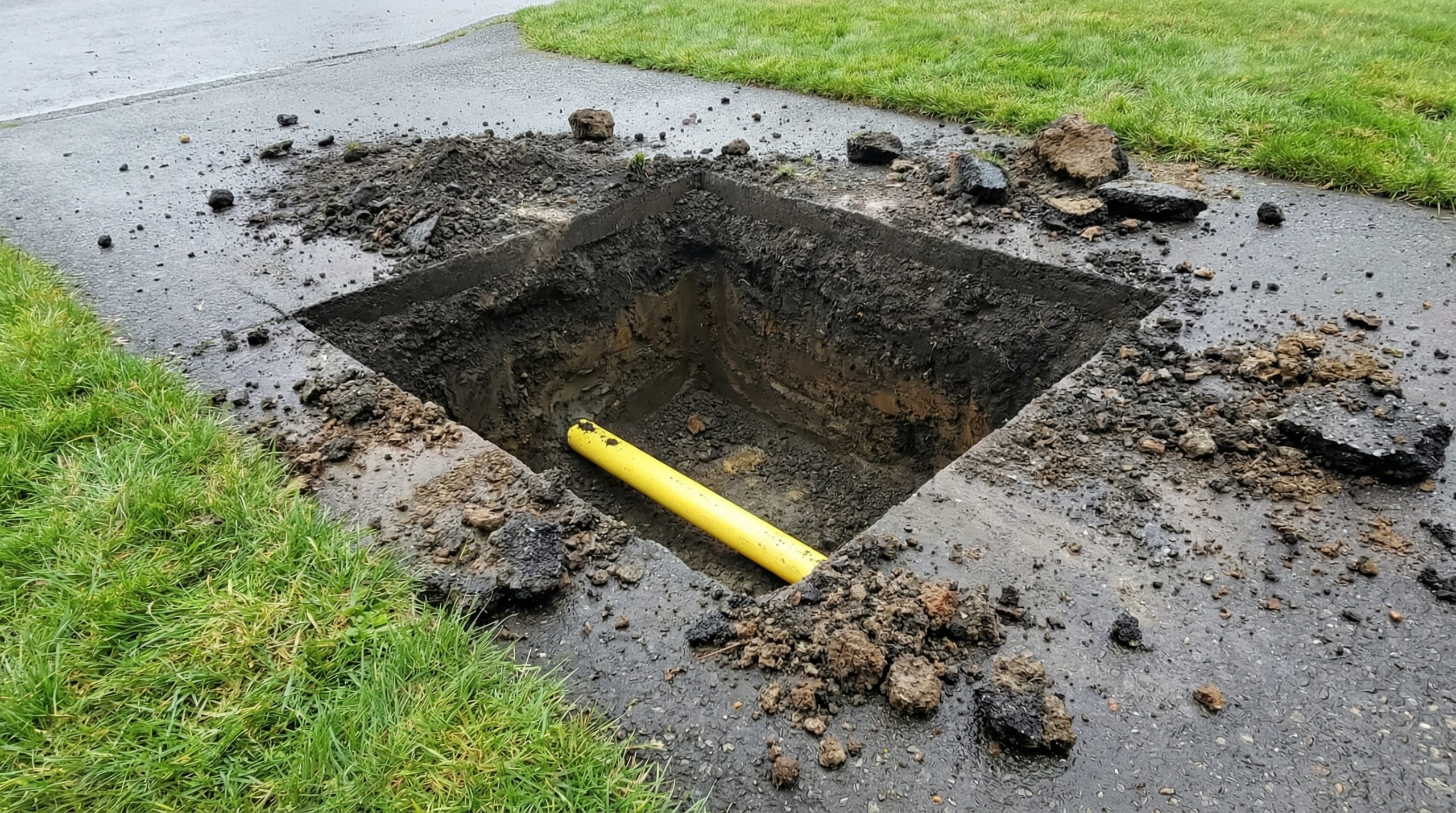
Utility potholing opens a controlled window into the ground so that buried pipes and conduit can be seen, measured, and photographed without risk of damage. Instead of scraping soil away with a steel bucket, vacuum excavation pulls loosened earth through a high-suction hose — no blade ever contacts the utility.
Soft digging uses two methods to loosen soil before vacuuming. Hydro excavation directs a focused water jet at the ground, cutting through Happy Valley’s dense red clay. Air excavation substitutes compressed air, making it safer near live electrical conduit and fiber optic trunk lines in the Sunrise Corridor. Both feed the same vacuum system, and crews switch between them as conditions change.
For builders in Pleasant Valley and North Carver, potholing delivers verified utility positions that as-built drawings cannot guarantee. Recently installed mains may not appear on GIS maps, while older ranch-era service lines predate digital records. Potholing closes that gap.
Potholing vs. Daylighting Utilities: What You Need to Know
Both terms describe non-destructive utility exposure, but scope and purpose differ. The correct approach depends on whether you need to verify a single crossing beneath King Road or expose a storm-drain run feeding a new Sunrise Corridor subdivision.
1. Targeted Utility Potholing
Targeted potholing produces a small opening — twelve to eighteen inches in diameter — directly above a suspected utility. The goal is to confirm depth, material, and horizontal position at a specific point. In Happy Valley, builders pothole before horizontal directional drilling so the bore path clears existing mains. A single verification hole in the city’s clay-over-basalt soil usually takes forty-five minutes to an hour.
2. Utility Daylighting
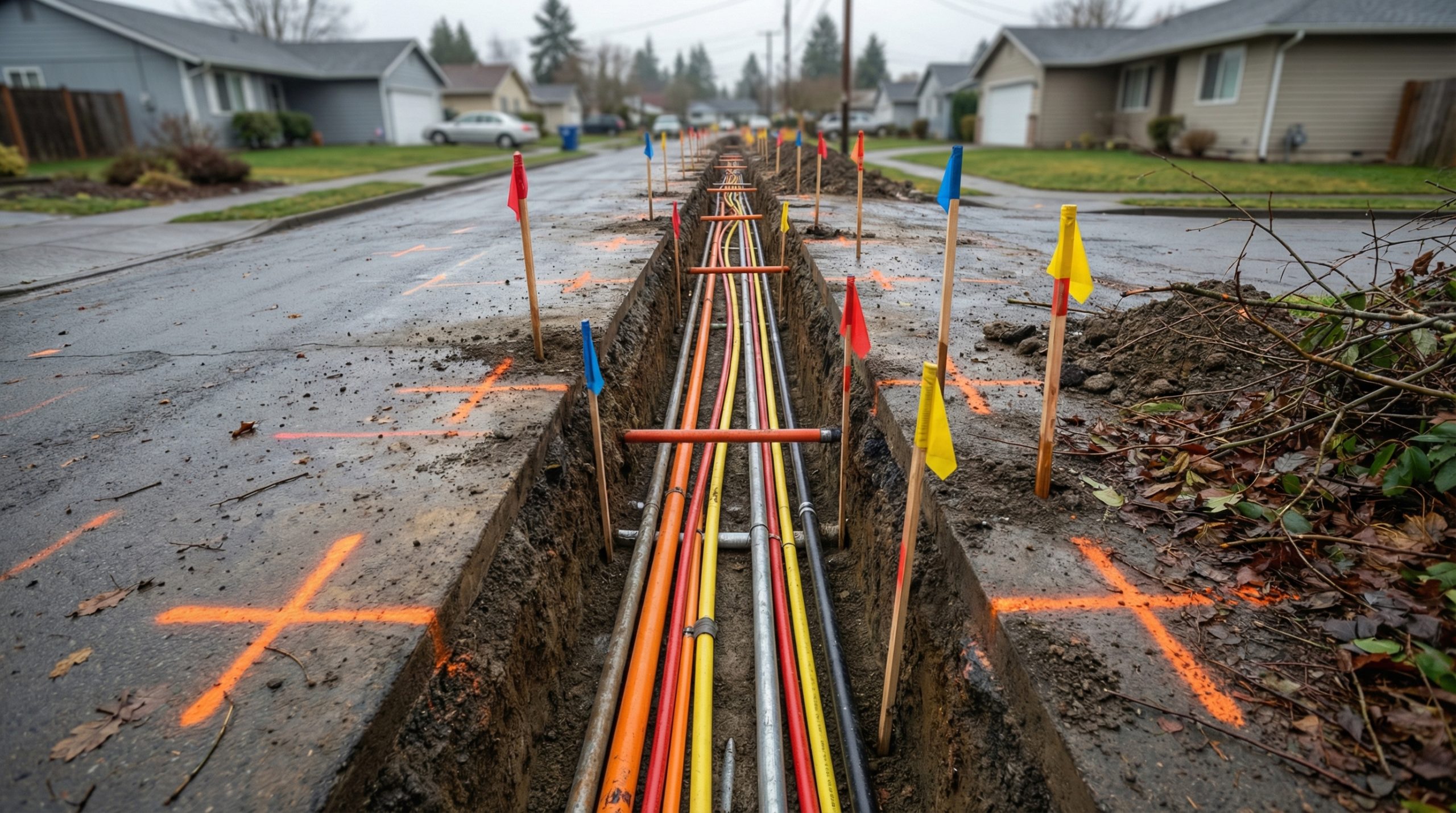
Daylighting uncovers a longer stretch of pipe or conduit so engineers can inspect condition, plan tie-ins, or design around it. The Sunrise Corridor’s phased rollout frequently calls for daylighting because new connections must align precisely with trunk lines from earlier phases. Our vacuum process reveals the full pipe circumference while leaving surrounding soil intact.
The Benefits of Non-Destructive Excavation
Underground utility strikes carry consequences that extend well beyond the immediate repair bill. In a fast-growing city where construction crews work on adjacent lots simultaneously, a single severed gas line can shut down an entire street. Prodan’s vacuum methods eliminate the root cause of most strikes — direct mechanical contact between excavator teeth and buried pipe.
1. Damage Prevention & Safety
Happy Valley’s layered subsurface presents a unique hazard. A new PVC water main may sit above a decades-old cast-iron lateral from the 1970s bowl neighborhood, separated by inches of clay. Vacuum excavation removes that clay grain by grain, never applying force to either line. Near Scouters Mountain and Eagle Landing, non-destructive methods are the only responsible choice.
2. Cost Savings
Emergency repair of a ruptured gas main triggers evacuation protocols, fire department response, and project shutdowns that can stretch for days. A single pothole costs a fraction of even a minor incident. Developers managing dozens of lots along the Sunrise Corridor treat potholing as a standard line item rather than an optional precaution — the math favors verification every time.
3. Precision in Tight Spaces
Hillside lots throughout Happy Valley Heights and Altamont feature steep grades, narrow building pads, and easements crowded with utilities. Full-size excavators cannot operate safely on many of these slopes.
Our Vacuum Excavation Equipment and Methods
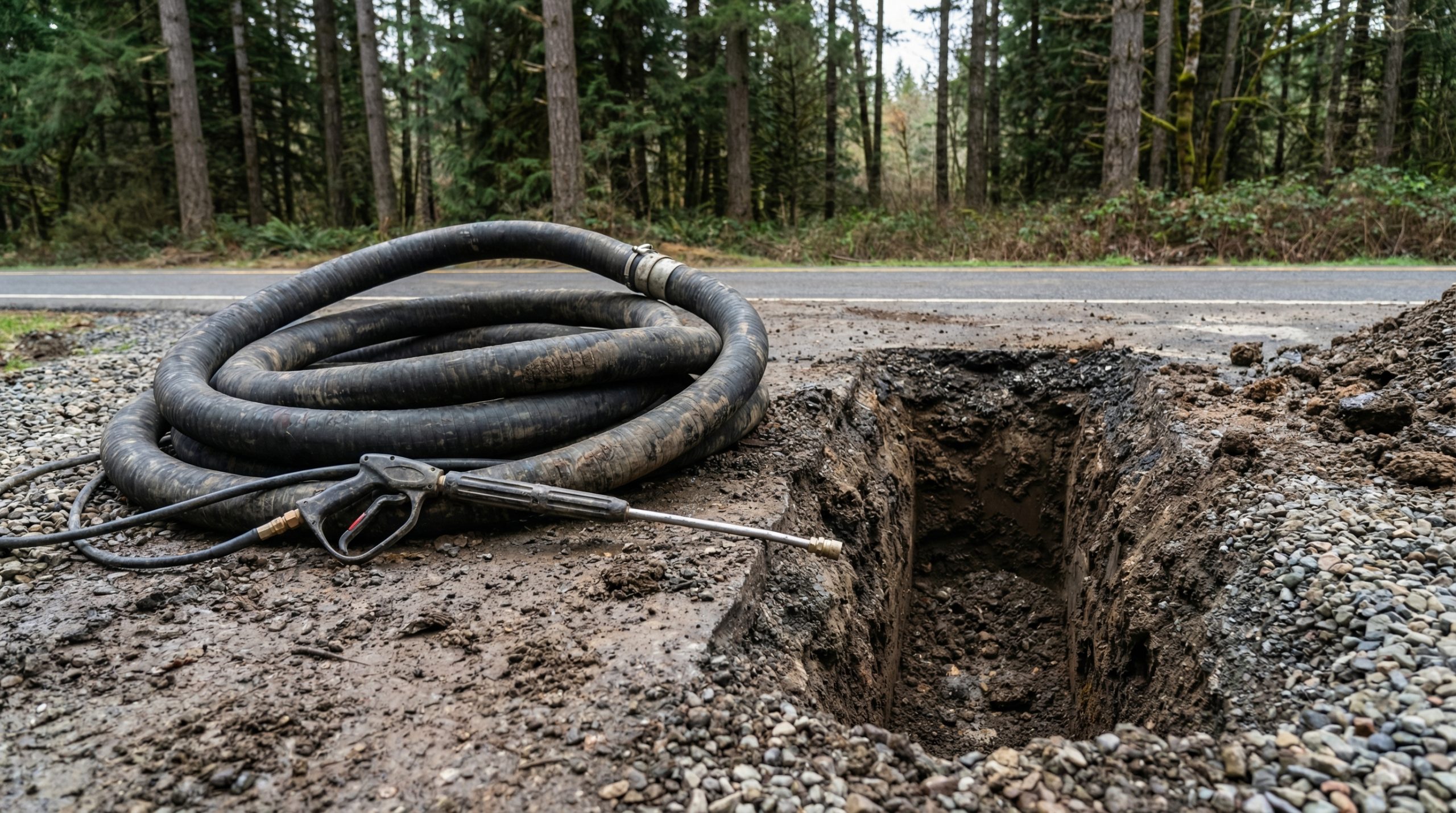
Our truck-mounted vacuum units produce over 5,000 CFM of suction with adjustable-pressure water jets. In Happy Valley, pressure changes within a project — lower near shallow fiber optic bundles along Sunnyside Road, substantially higher when cutting through basalt encountered at two to three feet in eastern expansion areas.
Specialized nozzle tips and flexible extension wands handle the tight utility corridors in Happy Valley’s newer subdivisions. Our equipment accesses targets through compact surface openings, minimizing traffic disruption and restoration costs.
Our Utility Exposure Process
Every Happy Valley potholing engagement follows a structured four-step protocol designed to deliver accurate results while meeting the city’s high construction-safety standards.
Step 1: Site Assessment & Locating
We review OUNC locate markings, developer as-built drawings, and GIS data. In the Sunrise Corridor, where multiple builders share adjacent infrastructure, we cross-reference utility plans to identify conflicts.
Step 2: Safe Excavation
Test holes use hydro or air excavation based on conditions. Heavy clay above basalt in the bowl neighborhood responds to moderate hydro pressure. Eastern parcels with fractured basalt near the surface require higher pressure and rotary nozzles.
Step 3: Verification
Each exposed utility is documented with precise measurements — depth below grade, horizontal offset from surface reference points, pipe diameter, material type, and observable condition. Photographs and GPS coordinates accompany every record.
Step 4: Backfilling & Site Cleanup
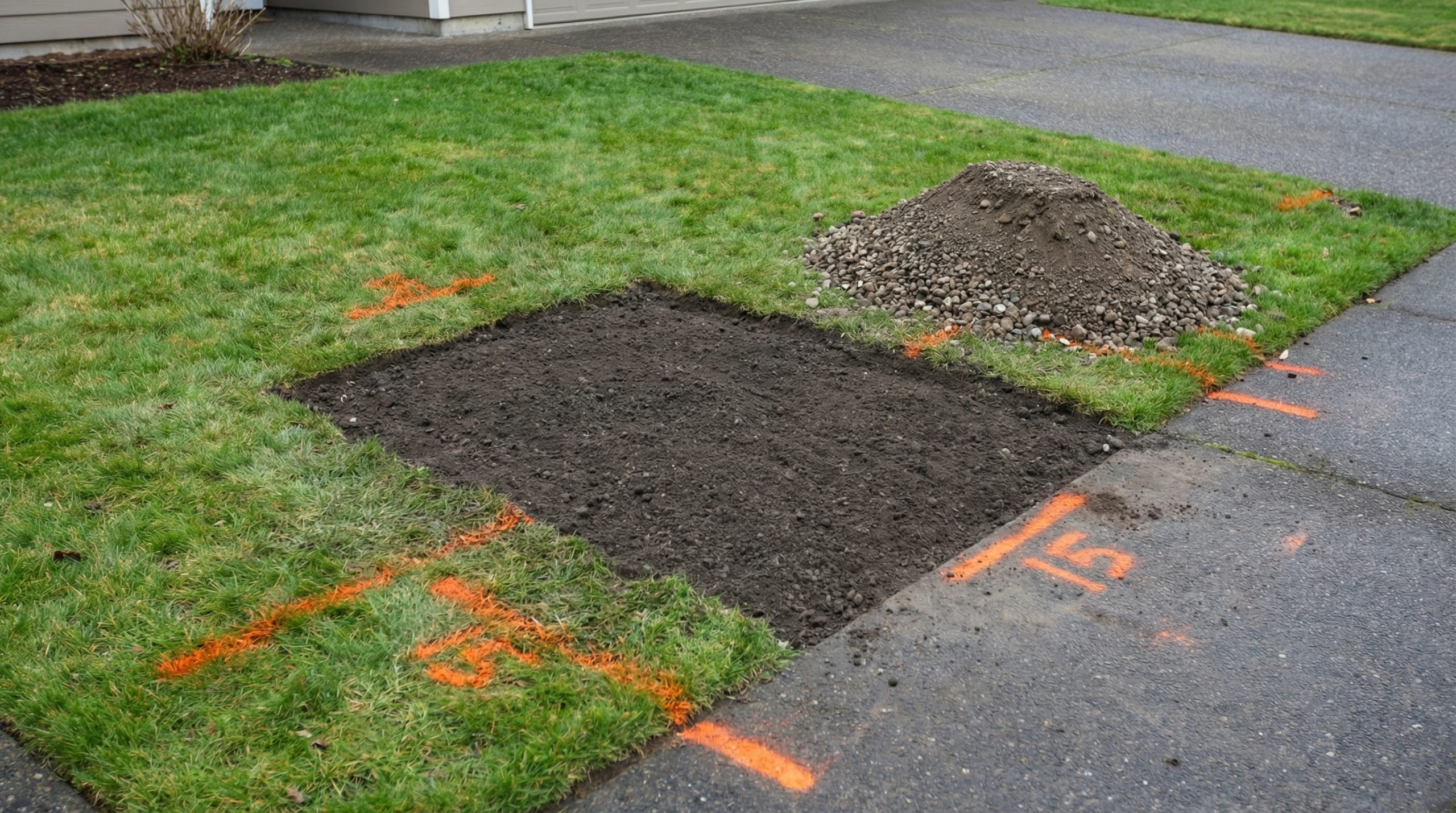
Excavated material is replaced in controlled lifts, compacted to match surrounding density. Paved surfaces receive cold-patch repair or are flagged for coordinated asphalt restoration with the paving contractor.
Trusted Excavation Experts in Happy Valley
Prodan Construction LLC (CCB #176278) works with general contractors, civil engineers, utility installers, and municipal agencies throughout Happy Valley. Beyond potholing, we provide demolition, land clearing, and retaining wall construction — giving builders a single-source contractor for site preparation on hillside and flatland lots alike.
From our Damascus yard, roughly ten minutes south on OR-212, we mobilize quickly to any Happy Valley neighborhood. Our operators know the city’s basalt-laden soils from multiple Sunrise Corridor phases. When you need verified utility clearance, call Prodan Construction.
Frequently Asked Questions About Potholing & Soft Digging in Happy Valley
How does shallow basalt in Happy Valley affect vacuum excavation?
Boring Lava basalt can appear within two to three feet of the surface in eastern Happy Valley. Our hydro excavation equipment operates at elevated pressure with rotary nozzles to cut through fractured basalt effectively. While the rock slows production compared to clay or silt, our equipment handles it without difficulty.
Is potholing necessary for new subdivisions in the Sunrise Corridor?
Absolutely. Even in new developments, utility plans from adjacent phases may be incomplete or inaccurate. Freshly installed mains can shift during backfill settlement, and builders sharing trunk infrastructure must verify tie-in locations.
Which method works better near live electrical lines — hydro or air?
Air excavation is the preferred choice near energized conductors. Compressed air cannot conduct electricity or damage cable jacketing, making it inherently safer than water when working adjacent to high-voltage lines.
How soon can Prodan schedule a potholing project in Happy Valley?
Standard projects are typically scheduled within two to three business days. Emergency utility exposure for active construction or suspected line damage can often be arranged within twenty-four hours. Call us at (503) 773-6949 to discuss your project timeline.
Schedule Your Utility Potholing Service in Happy Valley Today
Happy Valley’s rapid growth means more utilities enter the ground every month. Whether preparing pad sites in the Sunrise Corridor, extending sewer through Pleasant Valley, or verifying gas-line clearance near Scouters Mountain, Prodan Construction delivers the accurate, non-destructive potholing that Happy Valley demands.
Call us at (503) 773-6949 or send us a message to request your free utility potholing estimate in Happy Valley.
Quick Links
Services
Contact Us
- Address:
20500 SE Hwy 212, Damascus, OR 97089 - Phone:
503-773-6949 - Email:
[email protected]

Oregon CCB # 176278