
- Email us at
[email protected] - Questions? Give us a call
503-773-6949
Safe Utility Potholing – Vacuum Excavation in Boring, OR
Non-Destructive Utility Exposure in the Type Locality of the Boring Lava Field
Boring sits at the geographic heart of the volcanic formation that bears its name. The Boring Lava Field — over eighty volcanic vents spread across the Portland Basin — was first identified and named after this Clackamas County community, and the basaltic bedrock here is among the most challenging subsurface material in the metro region.
- Licensed Oregon contractor — CCB #176278 — fully bonded and insured
- Specialized equipment for basalt bedrock and heavy volcanic clay soils
- Based in Damascus, just 8 minutes west on OR-212 — the fastest response in East Clackamas County
What Is Utility Potholing?
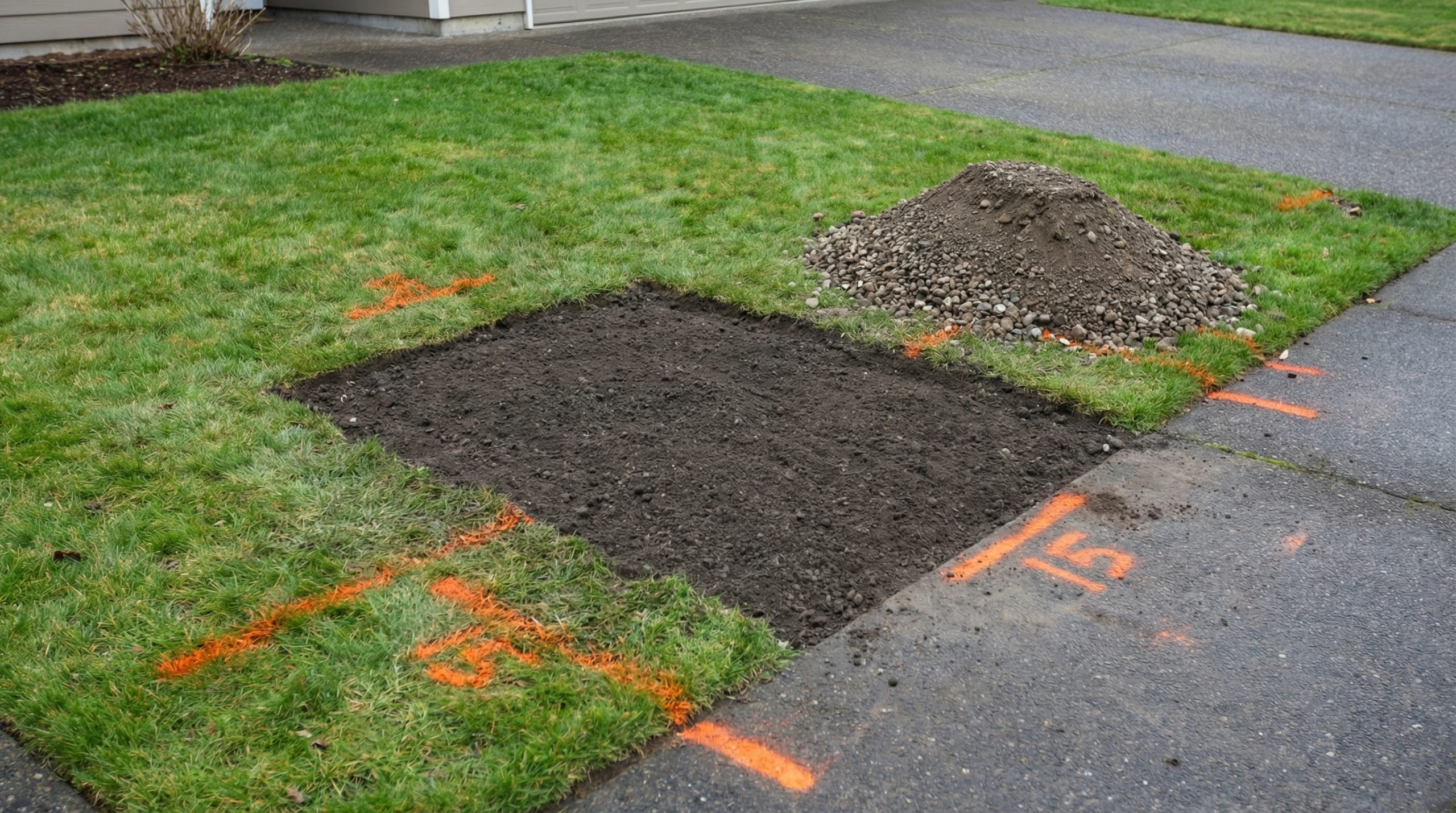
Utility potholing creates a controlled, narrow opening in the ground to visually verify the exact position of a buried utility line. Instead of mechanical digging that risks severing pipes and cables, potholing employs vacuum extraction — removing soil with high-powered suction.
Soft digging encompasses both hydro and air vacuum excavation techniques. Hydro excavation directs pressurized water at the ground, breaking apart soil and rock fragments while a vacuum simultaneously pulls the slurry into a debris tank.
For property owners on Boring’s rural acreage, potholing resolves a persistent uncertainty: where do my private utility lines actually run? Many Boring homes were built decades ago with hand-drawn site plans and minimal utility documentation. Before installing a new well, extending a septic field, or clearing land for an outbuilding, potholing provides hard data that prevents expensive damage to existing services.
Potholing vs. Daylighting Utilities: What You Need to Know
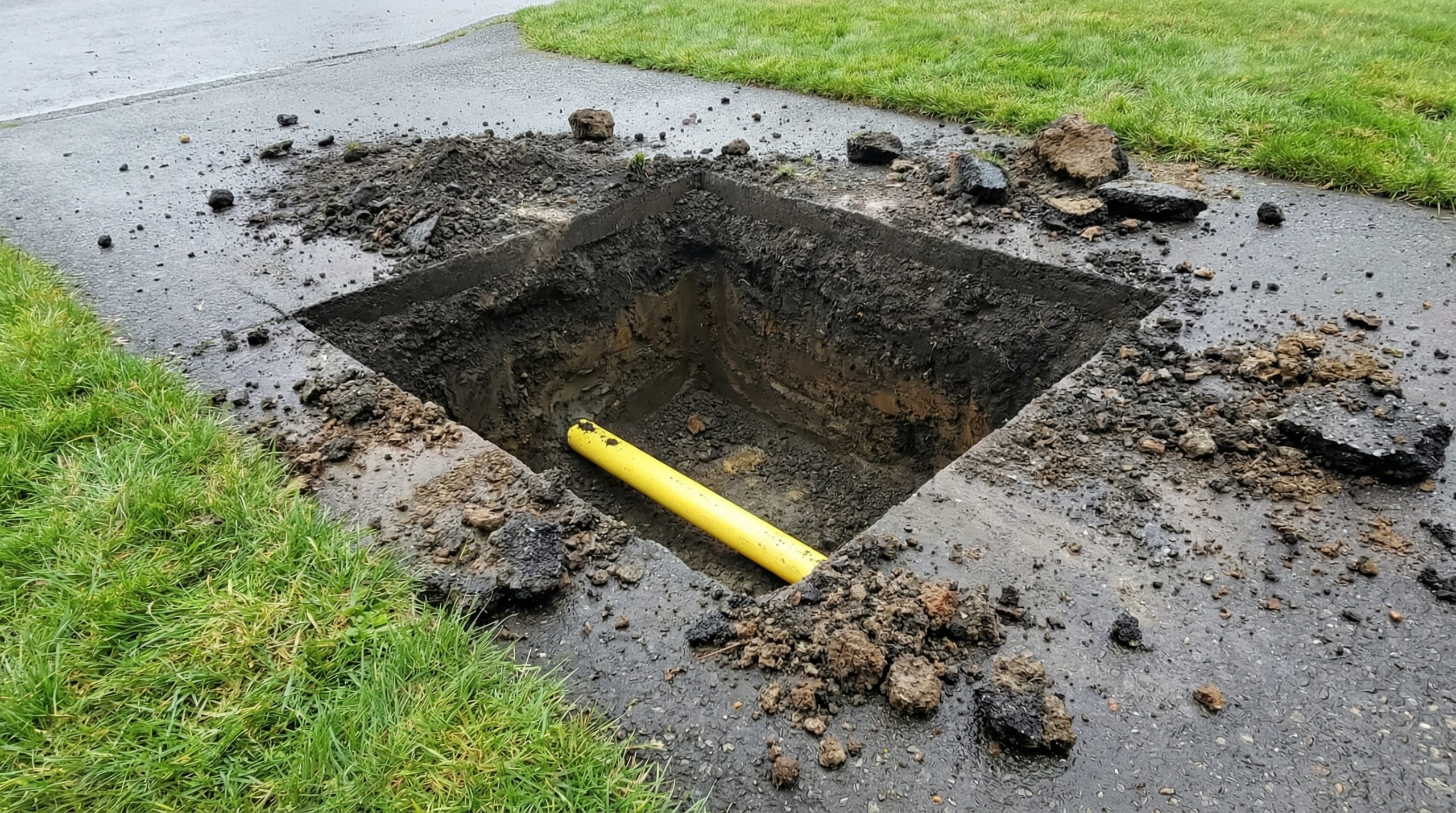
These two terms describe overlapping but distinct scopes of non-destructive excavation. In Boring, the choice between targeted potholing and full daylighting depends on whether you need to verify a single gas crossing beneath your driveway or expose an entire length of aging water line for evaluation before replacement.
1. Targeted Utility Potholing
A targeted pothole is a small-diameter test hole — twelve to eighteen inches across — placed directly over a suspected utility. The goal is to confirm depth, material type, and alignment at a specific point.
2. Utility Daylighting
Daylighting exposes a continuous section of buried utility along its length. This technique is common when evaluating the condition of older water service lines, preparing for tie-in connections, or mapping an entire utility corridor for a land-clearing project.
The Benefits of Non-Destructive Excavation
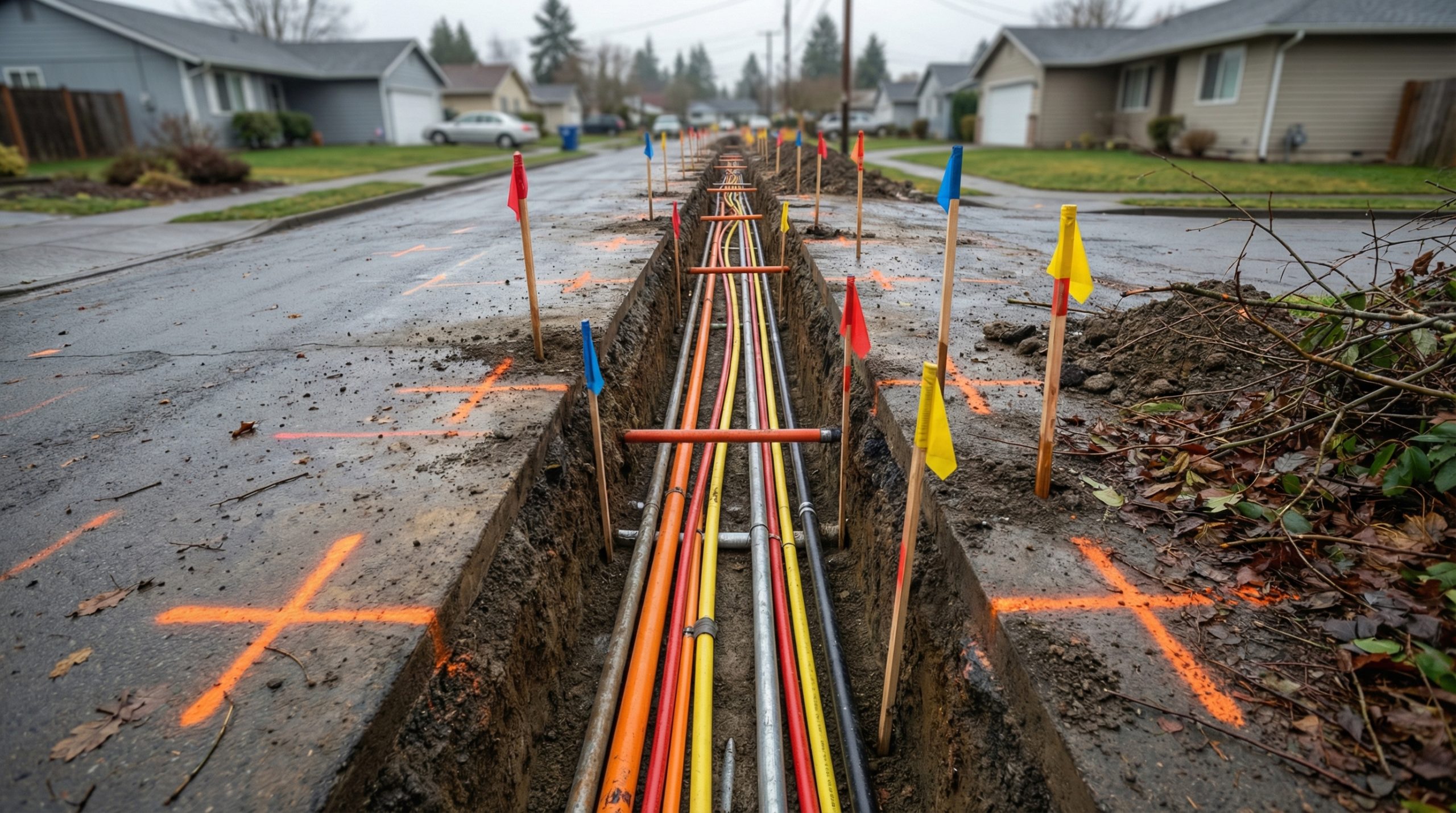
Utility strikes on Boring properties carry consequences beyond the immediate repair bill. A ruptured gas line on a rural parcel can take hours to isolate when service valves are distant. A severed septic lateral contaminates soil that may require remediation. Our vacuum methods eliminate the mechanical contact that causes these incidents.
1. Damage Prevention & Safety
Boring’s subsurface hosts an unpredictable mix of shallow basalt, volcanic clay, private well casings, septic lines, propane service, and electrical conduit — often without accurate records. A backhoe blade cannot distinguish between compacted clay and the wall of a buried pipe.
2. Cost Savings
Replacing a severed private water line on a rural Boring property involves trenching, plumbing, well system depressurization, and potentially days without service. Emergency gas repair in a remote area compounds costs with extended crew mobilization.
3. Precision in Tight Spaces
Rural Boring parcels present unique access challenges. Driveways thread through dense timber, outbuildings crowd utility corridors, and private well heads sit close to service lines.
Our Vacuum Excavation Equipment and Methods
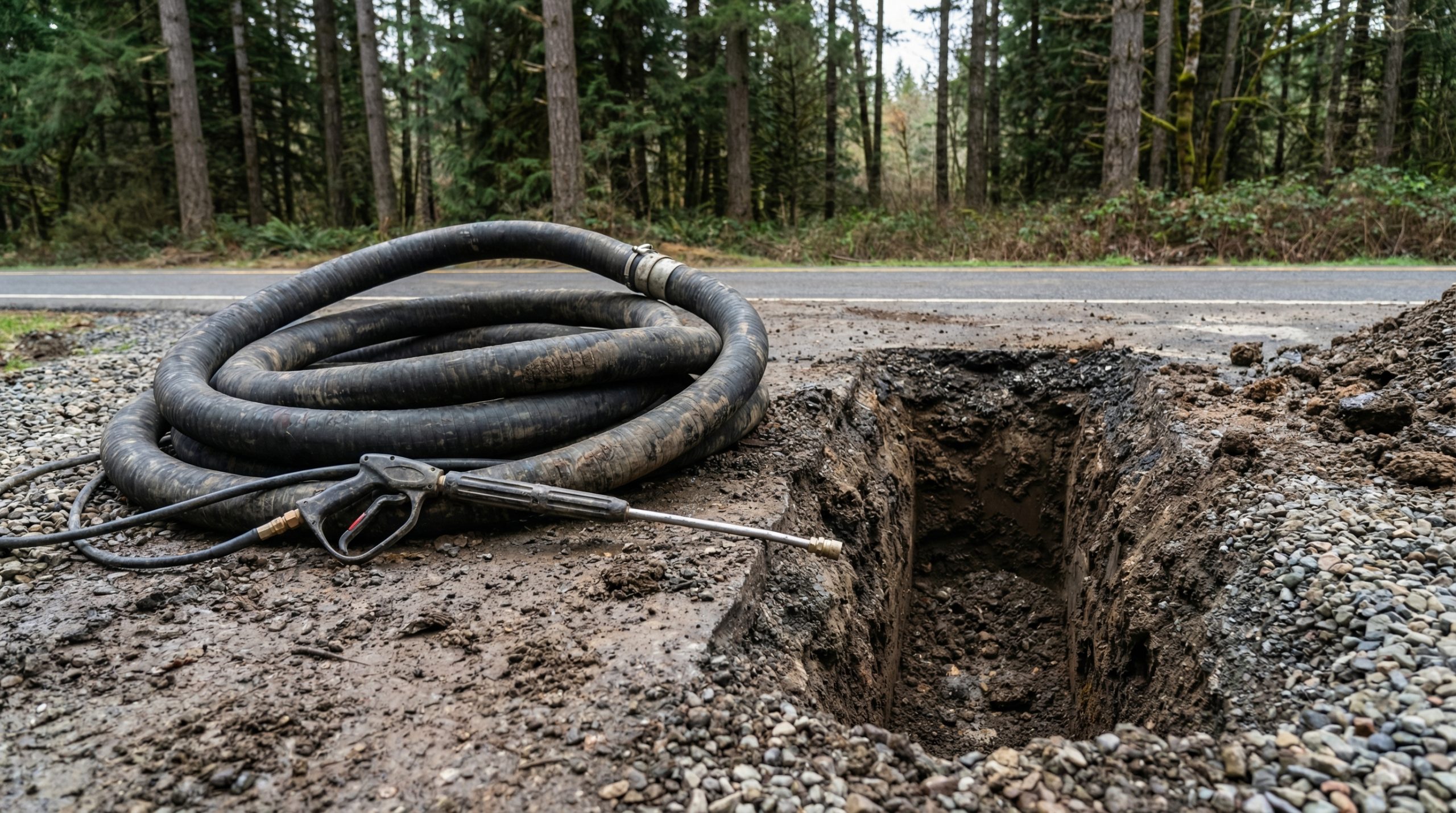
Our truck-mounted vacuum units deliver over 5,000 CFM of suction paired with variable-pressure water jets. In Boring’s basalt-heavy ground, we increase water pressure and deploy rotary cutting nozzles that fragment vesicular basalt without transmitting impact to adjacent utility lines.
Extension wands reach beyond fifteen feet in depth — critical in areas where basalt bedrock forced original installers to route utilities at unusual depths. Self-contained debris tanks hold excavated material for backfill reuse or offsite disposal.
Our Utility Exposure Process
Every Boring potholing project follows a disciplined four-step process designed for the unique conditions of volcanic rural terrain.
Step 1: Site Assessment & Locating
We review Oregon Utility Notification Center (OUNC) locate data for public utilities and consult property owners about private infrastructure. In Boring, private wells, septic systems, and propane lines often lack OUNC coverage, so we supplement with electromagnetic line tracing and ground-penetrating radar to identify unmarked routes through basalt and clay.
Step 2: Safe Excavation
Test holes are excavated using the hydro or air method matched to subsurface conditions. Boring’s vesicular basalt requires elevated water pressure and specialty nozzles that break apart volcanic rock without generating the shock waves associated with mechanical breakers.
Step 3: Verification
Each exposed utility is meticulously documented: depth below existing grade, horizontal offset from fixed surface features, material composition, diameter, and visual condition assessment. Photographs paired with GPS coordinates create a permanent record that integrates into project plans, county permit applications, and future maintenance records for the property.
Step 4: Backfilling & Site Cleanup
Excavated material is replaced in controlled lifts, compacted to restore original ground density. Gravel driveways and unpaved surfaces are regraded to match surrounding contours. Paved areas receive cold patch or are scheduled for permanent asphalt restoration.
Trusted Excavation Experts in Boring
Prodan Construction LLC (CCB #176278) serves homeowners, contractors, engineers, and developers throughout Boring and rural East Clackamas County. We also provide demolition, land clearing, and retaining wall construction — offering complete site work from a single contractor.
Our Damascus base sits just eight minutes west on OR-212, making Prodan the closest professional potholing service to Boring. Our operators know this ground — the basalt, the clay, the springs at the rock-soil interface — because we work here every week. When you need utility exposure in Boring, call Prodan Construction.
Frequently Asked Questions About Potholing & Soft Digging in Boring
Can vacuum excavation penetrate Boring’s basalt bedrock?
Yes. Our high-pressure hydro excavation equipment with rotary cutting nozzles fragments vesicular basalt effectively. While basalt slows production compared to soft soils, it does not prevent successful potholing. We routinely expose utilities encased in or routed along basalt formations throughout the Boring Lava Field.
Are private well and septic lines covered by OUNC locates?
No. OUNC covers public and franchised utility infrastructure. Private wells, septic systems, propane lines, and irrigation systems are the property owner’s responsibility to identify. We use electromagnetic tracing and ground-penetrating radar to supplement OUNC data and locate private utilities before excavation begins.
How does seasonal rainfall affect potholing in Boring?
Saturated clay soils can slow excavation and increase the risk of sidewall slumping. We manage this by adjusting water pressure downward in already-wet conditions and using air excavation when standing water is present. Scheduling during drier months is ideal for large projects, but our equipment handles year-round conditions effectively.
What does a typical potholing project cost in Boring?
Costs depend on the number of potholes, depth requirements, and soil conditions. A single verification pothole in accessible soil may take under an hour. Basalt-heavy ground or deep utilities increase time and cost. Contact us at (503) 773-6949 for a free estimate tailored to your specific property and project.
Schedule Your Utility Potholing Service in Boring Today
From verifying well-line clearances on a Kelso Road acreage to mapping utility corridors before land clearing along Tickle Creek, Prodan Construction delivers accurate, non-destructive potholing built for Boring’s volcanic terrain. Our proximity and experience in this ground make us the natural choice for any project requiring subsurface certainty.
Call us at (503) 773-6949 or send us a message to request your free utility potholing estimate in Boring.
Quick Links
Services
Contact Us
- Address:
20500 SE Hwy 212, Damascus, OR 97089 - Phone:
503-773-6949 - Email:
[email protected]

Oregon CCB # 176278