
- Email us at
[email protected] - Questions? Give us a call
503-773-6949
Safe Utility Potholing – Vacuum Excavation in Wood Village, OR
Non-Destructive Underground Utility Location for East Multnomah County’s Compact Community
Wood Village covers barely one square mile, yet beneath its streets runs an aging utility grid originally installed to serve Reynolds Aluminum workers in the 1940s. Gas mains, water service, and electrical conduit laid during the post-war construction era now share corridors with modern fiber optic and cable installations.
- Licensed Oregon contractor — CCB #176278 — fully bonded and insured
- Non-destructive vacuum excavation protects gas, water, electric, and telecom lines
- Serving Wood Village from Damascus, approximately 20 minutes south via I-84 and OR-212
What Is Utility Potholing?
Utility potholing opens a small, controlled window into the ground to confirm the exact horizontal and vertical position of buried utility lines. Rather than tearing into the earth with a backhoe bucket, potholing relies on vacuum extraction — pulling soil out with powerful suction while leaving pipes and cables untouched.
Soft digging is the broader category encompassing both hydro and air vacuum methods. Hydro excavation directs a focused jet of pressurized water to loosen soil, while a simultaneous vacuum draws the slurry into an onboard debris tank.
For contractors working on commercial redevelopment around Wood Village Town Center or residential infill along Arata Road, potholing eliminates guesswork about what lies below. Verified utility positions let engineers finalize foundation designs, trench routing, and boring paths with confidence rather than assumptions drawn from decades-old as-built records.
Potholing vs. Daylighting Utilities: What You Need to Know
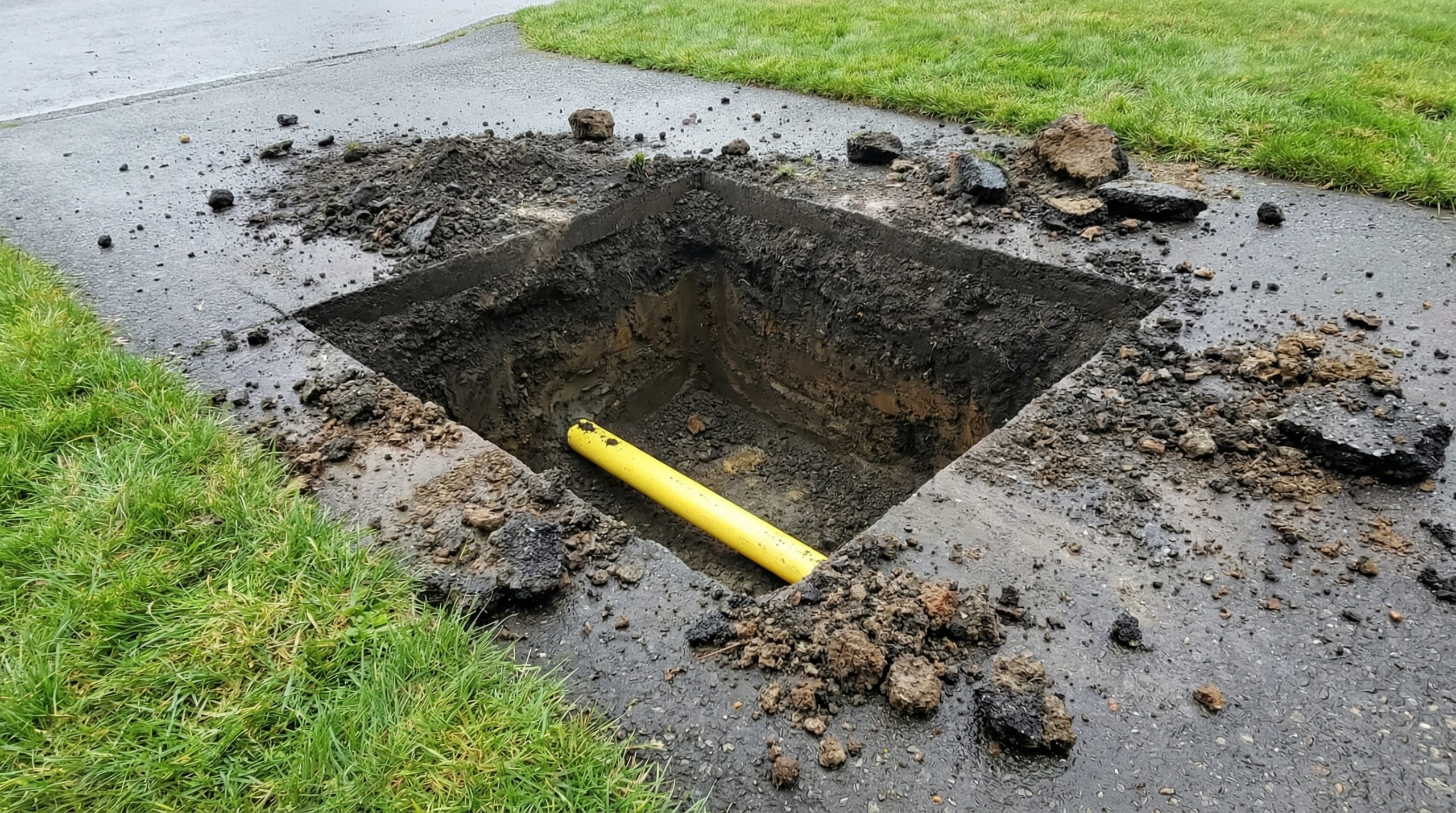
Both terms describe non-destructive methods for uncovering buried utilities, but they serve different scopes. The right approach in Wood Village depends on whether you need to verify a single crossing beneath Halsey Street or expose an entire run of aging water main for replacement evaluation.
1. Targeted Utility Potholing
Targeted potholing creates a compact test hole — typically twelve to eighteen inches in diameter — directly over a suspected utility to confirm its depth, material, and alignment. We frequently perform targeted potholes before horizontal directional drilling projects where the bore path must clear existing mains.
2. Utility Daylighting
Daylighting exposes a longer continuous section of a buried utility for visual inspection, condition assessment, or tie-in preparation. Along the Halsey Street commercial corridor, aging cast-iron water mains occasionally need evaluation before redevelopment can proceed.
The Benefits of Non-Destructive Excavation
Accidental utility strikes cost Oregon contractors millions annually in repairs, fines, and project delays. In a compact city like Wood Village, where homes sit close together and utility runs are tightly spaced, the consequences of a single strike can cascade across an entire block.
1. Damage Prevention & Safety
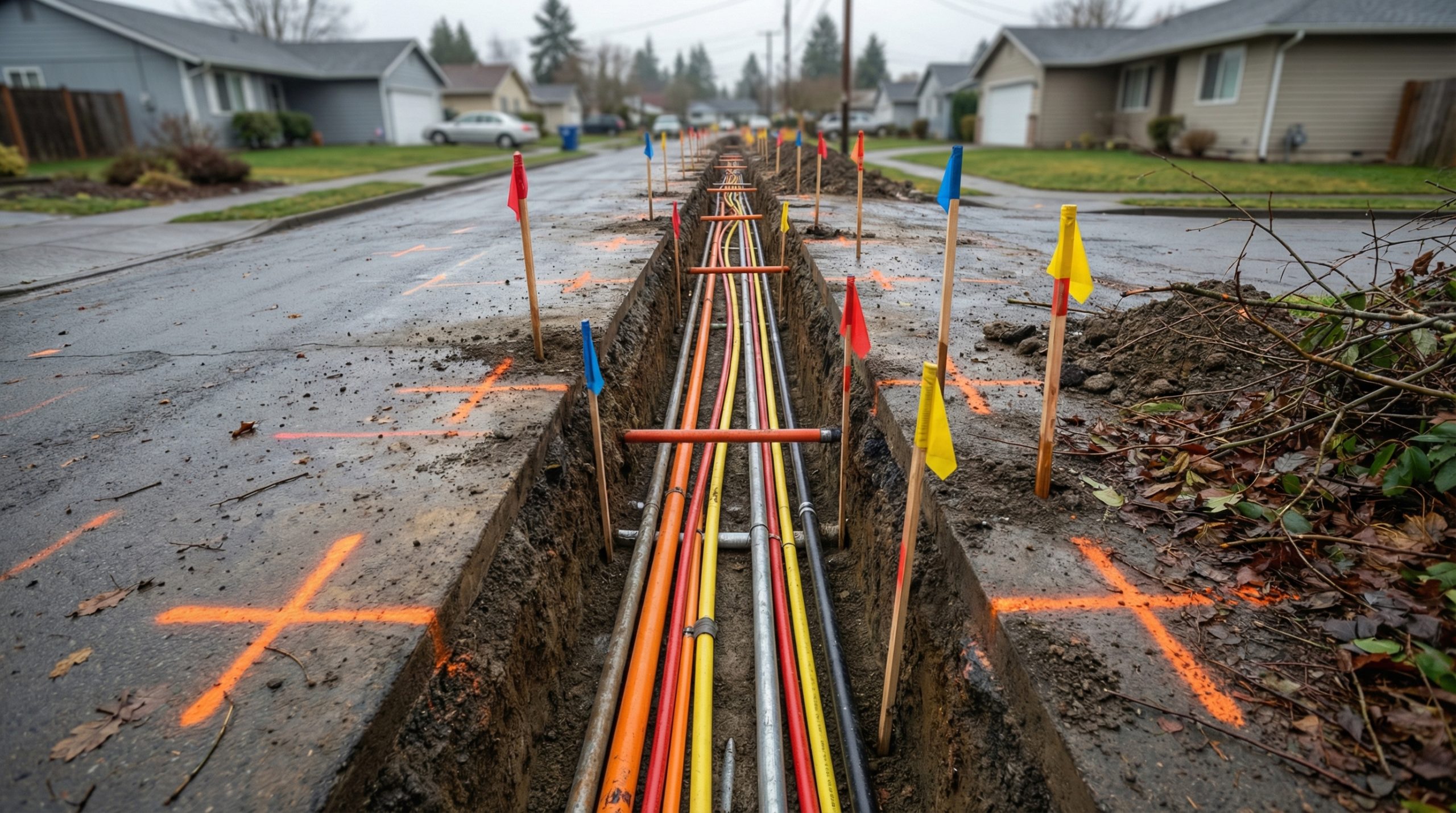
The post-war utility grid beneath Wood Village was not designed with today’s density in mind. A single residential block may contain a 1940s gas service line, a copper water lateral, a clay sewer connection, and modern cable television — all within a few feet of each other horizontally and vertically.
2. Cost Savings
A nicked gas line triggers emergency shutoffs, evacuation protocols, and repair bills that dwarf the cost of any potholing project. Insurance deductibles, OSHA citations, and schedule disruption compound the financial impact.
3. Precision in Tight Spaces
Wood Village lots are compact by metro-area standards, with many homes on parcels under 6,000 square feet. Backhoe access is often impossible between structures, along narrow side yards, or within easements running behind commercial buildings at the Town Center.
Our Vacuum Excavation Equipment and Methods
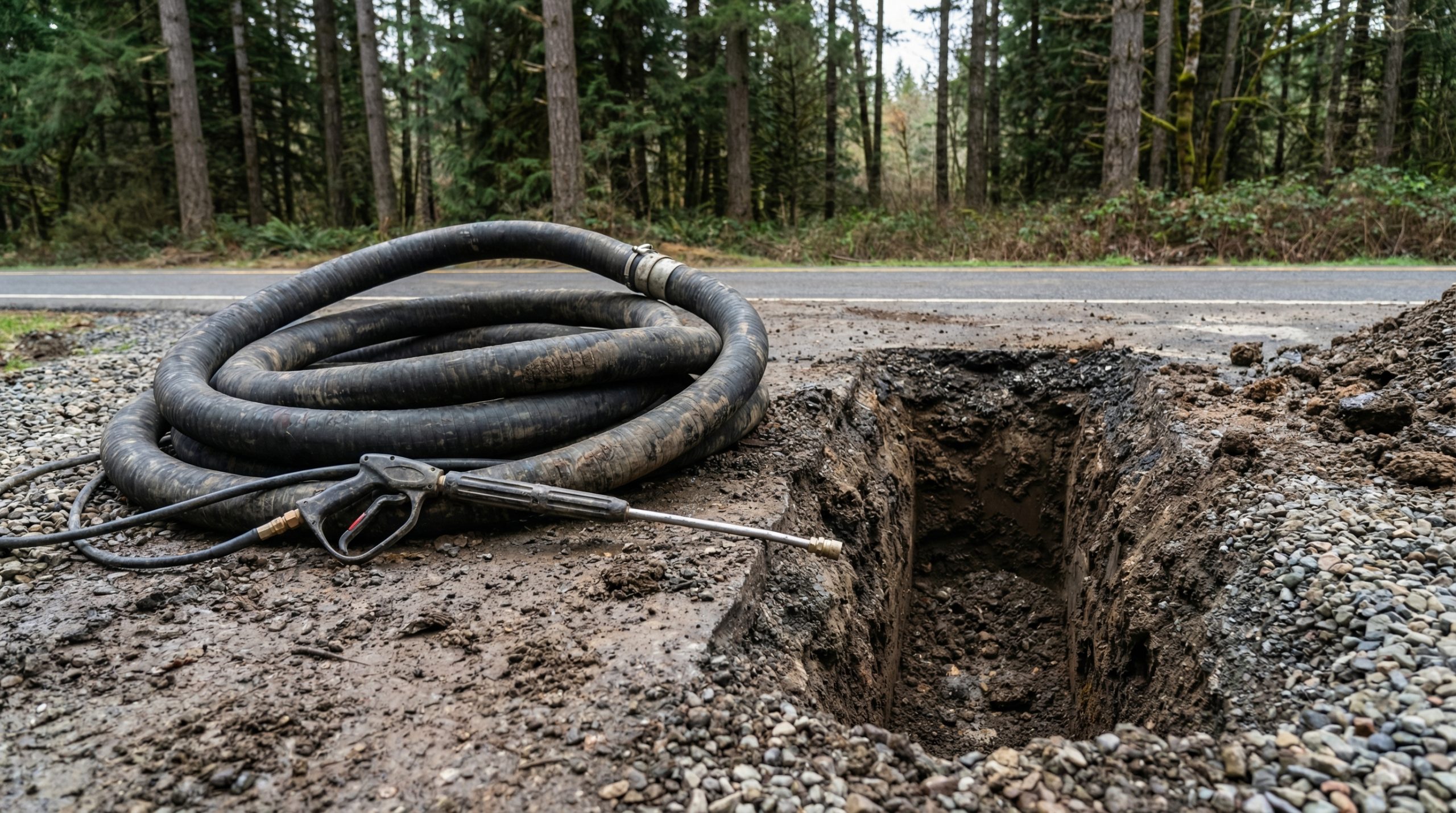
Our truck-mounted vacuum units produce over 5,000 CFM of suction with adjustable water-jet pressure. On Wood Village’s soft alluvial soils, lower pressure settings efficiently loosen material without over-excavating, while higher settings handle the cemented Troutdale Formation gravel layers that appear at moderate depths.
Extension wands and specialty nozzle attachments allow precision work at depths exceeding ten feet. When potholing beneath the I-84 corridor or along Wood Village Boulevard, our equipment accesses the target utility through a small surface opening — typically under two square feet — minimizing traffic disruption and surface restoration requirements.
Our Utility Exposure Process
Every Wood Village potholing project follows a structured four-step process that ensures accurate results while maintaining the highest safety standards.
Step 1: Site Assessment & Locating
We begin by reviewing Oregon Utility Notification Center (OUNC) locate markings, historical as-built drawings, and any available GIS utility maps. In Wood Village, original Reynolds-era infrastructure may not appear on modern records, so we supplement with electromagnetic locating and ground-penetrating radar when discrepancies arise between marked positions and field conditions.
Step 2: Safe Excavation
Using the hydro or air method best suited to local conditions, we create test holes at each target location. Wood Village’s sandy alluvial soils typically excavate quickly with moderate water pressure.
Step 3: Verification
Every exposed utility is documented with precision — depth below grade, horizontal offset from surface reference points, pipe or conduit material, diameter, and observable condition. Photographs and GPS coordinates accompany each pothole record, integrating directly into project engineering drawings and utility conflict matrices.
Step 4: Backfilling & Site Cleanup
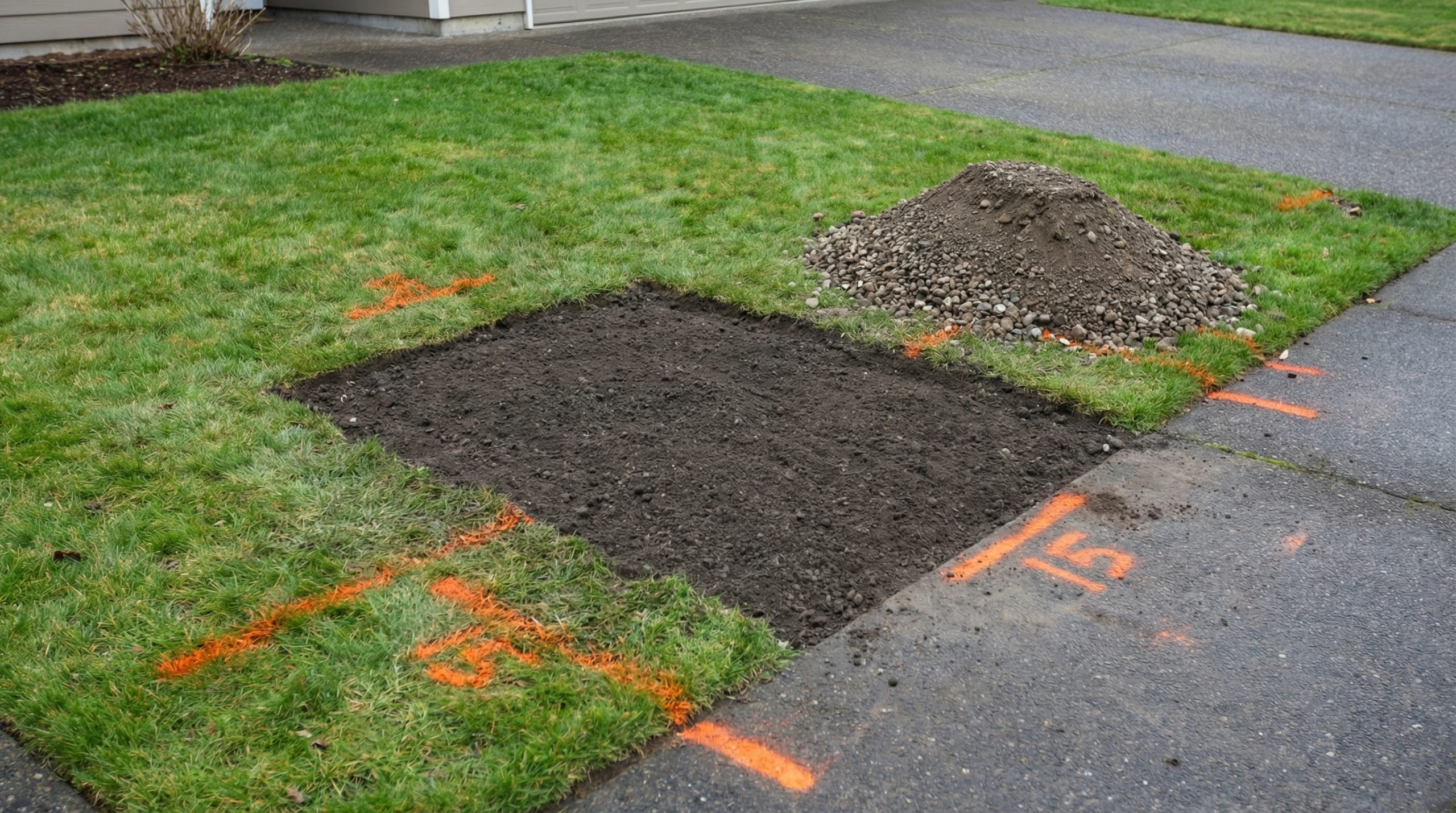
Excavated material is returned to the hole in controlled lifts, compacted to match surrounding density. Paved surfaces receive cold patch or are coordinated with asphalt restoration crews. Every Wood Village site is returned to pre-work condition — no open holes, no debris, no equipment marks on adjacent landscaping.
Trusted Excavation Experts in Wood Village
Prodan Construction LLC (CCB #176278) serves general contractors, civil engineers, municipal utilities, and developers across Wood Village and East Multnomah County. Beyond potholing, we provide demolition, land clearing, and retaining wall construction — a single-source contractor for complete site preparation.
From our Damascus headquarters, we reach Wood Village in about twenty minutes via I-84. Our crews understand the alluvial soils, the compact lot configurations, and the aging infrastructure that define this unique community. When you need potholing in Wood Village, call Prodan Construction.
Frequently Asked Questions About Potholing & Soft Digging in Wood Village
How does Wood Village’s alluvial soil affect vacuum excavation?
The Missoula Flood deposits underlying Wood Village are relatively soft and well-suited to vacuum excavation. Sandy and silty soils loosen quickly with moderate water pressure.
Do I need potholing before digging on a Wood Village residential lot?
Oregon law requires calling OUNC before any excavation, but surface paint marks only approximate utility positions. Potholing provides verified depth and alignment data that surface locating cannot deliver.
What is the difference between hydro excavation and air excavation?
Hydro excavation uses a focused water jet to loosen soil; air excavation uses compressed air. Both methods pair with vacuum extraction. Hydro excavation works faster in Wood Village’s alluvial material, while air excavation is preferred near live electrical conduit because compressed air cannot conduct current or damage cable insulation.
How quickly can Prodan mobilize for a potholing project in Wood Village?
We typically schedule within two to three business days for standard projects. Emergency utility exposure for active construction sites or suspected utility damage can often be arranged within twenty-four hours. Call us at (503) 773-6949 to discuss your timeline.
Schedule Your Utility Potholing Service in Wood Village Today
Whether you are redeveloping commercial property near Wood Village Town Center, running new service lines through residential neighborhoods, or verifying clearances for a directional bore along Halsey Street, Prodan Construction provides the accurate, non-destructive potholing Wood Village contractors rely on. Contact our team today.
Call us at (503) 773-6949 or send us a message to request your free utility potholing estimate in Wood Village.
Quick Links
Services
Contact Us
- Address:
20500 SE Hwy 212, Damascus, OR 97089 - Phone:
503-773-6949 - Email:
[email protected]

Oregon CCB # 176278