
- Email us at
[email protected] - Questions? Give us a call
503-773-6949
Safe Utility Potholing – Vacuum Excavation in Portland, OR
Precision Underground Utility Location for Oregon’s Largest City
Portland’s underground utility network is among the densest in the Pacific Northwest. Beneath streets serving 640,000 residents lies a tangled web of gas mains, water lines, telecom conduit, and century-old sewers — many installed before modern mapping existed. Prodan Construction provides utility potholing and vacuum excavation throughout Portland, safely exposing buried infrastructure in volcanic basalt and compacted Missoula Flood silt.
- Licensed Oregon contractor — CCB #176278 — fully bonded and insured
- Non-destructive vacuum excavation protects gas, water, electric, and telecom lines
- Serving all Portland neighborhoods from Damascus, about 30 minutes from downtown
What Is Utility Potholing?
Utility potholing creates small, controlled openings to visually confirm the exact position of buried utility lines. Unlike backhoe excavation, potholing relies on vacuum extraction — removing dirt with suction rather than force. In Portland, where gas lines run alongside century-old clay sewer laterals, this precision prevents costly damage and dangerous service disruptions.
Soft digging uses pressurized water (hydro excavation) or compressed air to break apart soil while a vacuum extracts the loosened material. Hydro excavation cuts through compacted red clay near Mt. Tabor and Rocky Butte efficiently. Air excavation is preferred near fiber optic lines or live electrical conduit in the Pearl District because air cannot conduct electricity or damage cable sheathing.
For Portland contractors, potholing provides certainty that mechanical digging cannot. When installing water service in Cully, extending sewers in Woodstock, or routing telecom along Division Street, you need verified utility positions before excavation begins. Portland’s Bureau of Development Services increasingly requires utility verification near high-density zones.
Potholing vs. Daylighting Utilities: What You Need to Know
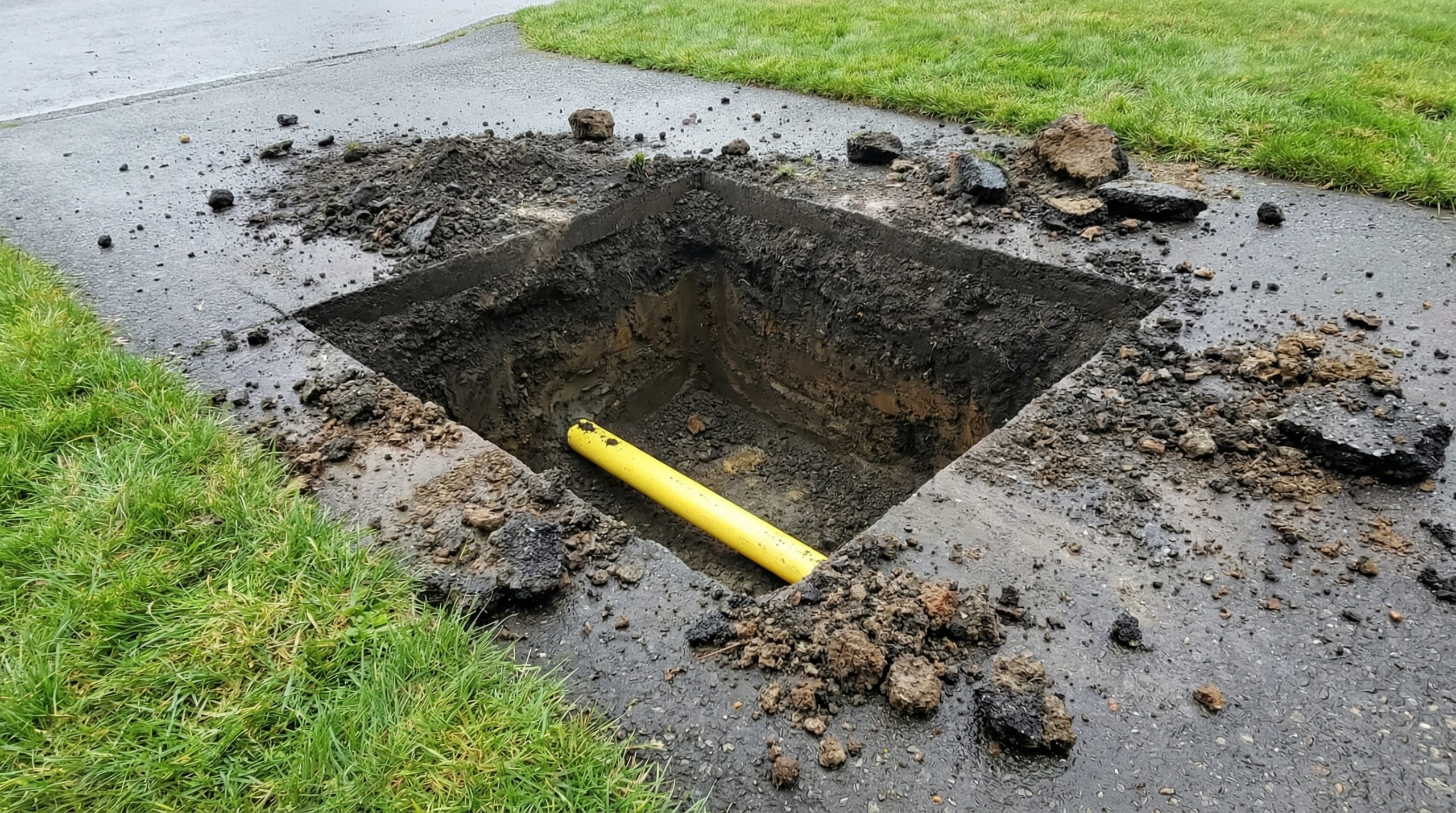
Portland contractors often use both terms interchangeably, but potholing and daylighting serve distinct purposes. The right choice depends on whether you need to confirm a single gas line crossing beneath Powell Boulevard or uncover an entire utility corridor for a South Waterfront development.
1. Targeted Utility Potholing
Targeted potholing creates a small test hole — twelve to eighteen inches across — directly over a suspected utility to confirm depth, material, and alignment. We frequently perform this before horizontal directional drilling where the path must clear existing mains. A single pothole takes under an hour on most Portland soils.
2. Utility Daylighting
Daylighting exposes a longer section of buried utility for inspection, repair, or tie-in work. Portland’s aging infrastructure creates frequent demand, especially in St. Johns and Kenton where cast-iron water mains from the early 1900s need evaluation. Our vacuum process uncovers the full pipe circumference without vibration or displacement.
The Benefits of Non-Destructive Excavation
Thousands of underground utility strikes occur across Oregon every year. In a city as densely serviced as Portland, consequences extend far beyond the immediate job site. Our vacuum methods eliminate the primary cause — direct mechanical contact with buried infrastructure.
1. Damage Prevention & Safety
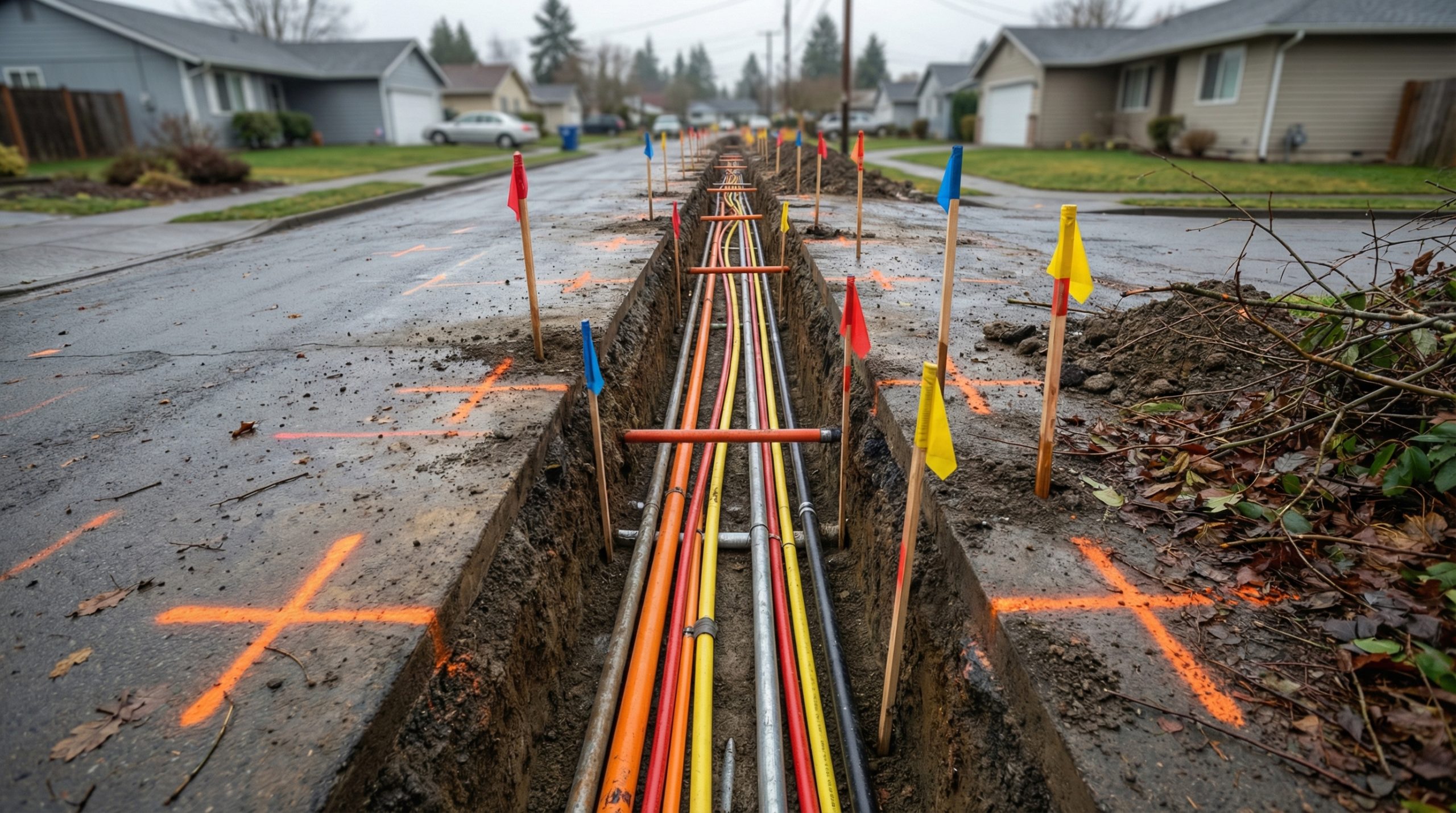
Beneath a single Southeast Portland street you may find a 1950s gas main, a 1920s clay sewer lateral, copper water service, and modern fiber optic — all within feet of each other. Vacuum excavation removes soil with suction, never blade contact. For crews in Hawthorne, Alberta, and the inner eastside, this is the only method providing genuine safety assurance.
2. Cost Savings
Repairing a damaged gas main costs tens of thousands in emergency response and fines, plus cascading project delays. A single pothole verification costs a fraction of even a minor strike. For developers on tight budgets along 82nd Avenue or Foster-Powell, potholing is straightforward risk management.
3. Precision in Tight Spaces
Narrow setbacks in Sellwood-Moreland, zero-lot-line Pearl District developments, and congested easements along Sandy Boulevard demand methods fitting confined footprints. Our flexible hose extensions reach where backhoes cannot — within two feet of foundations and between closely spaced utility poles across Portland’s dense neighborhoods.
Our Vacuum Excavation Equipment and Methods
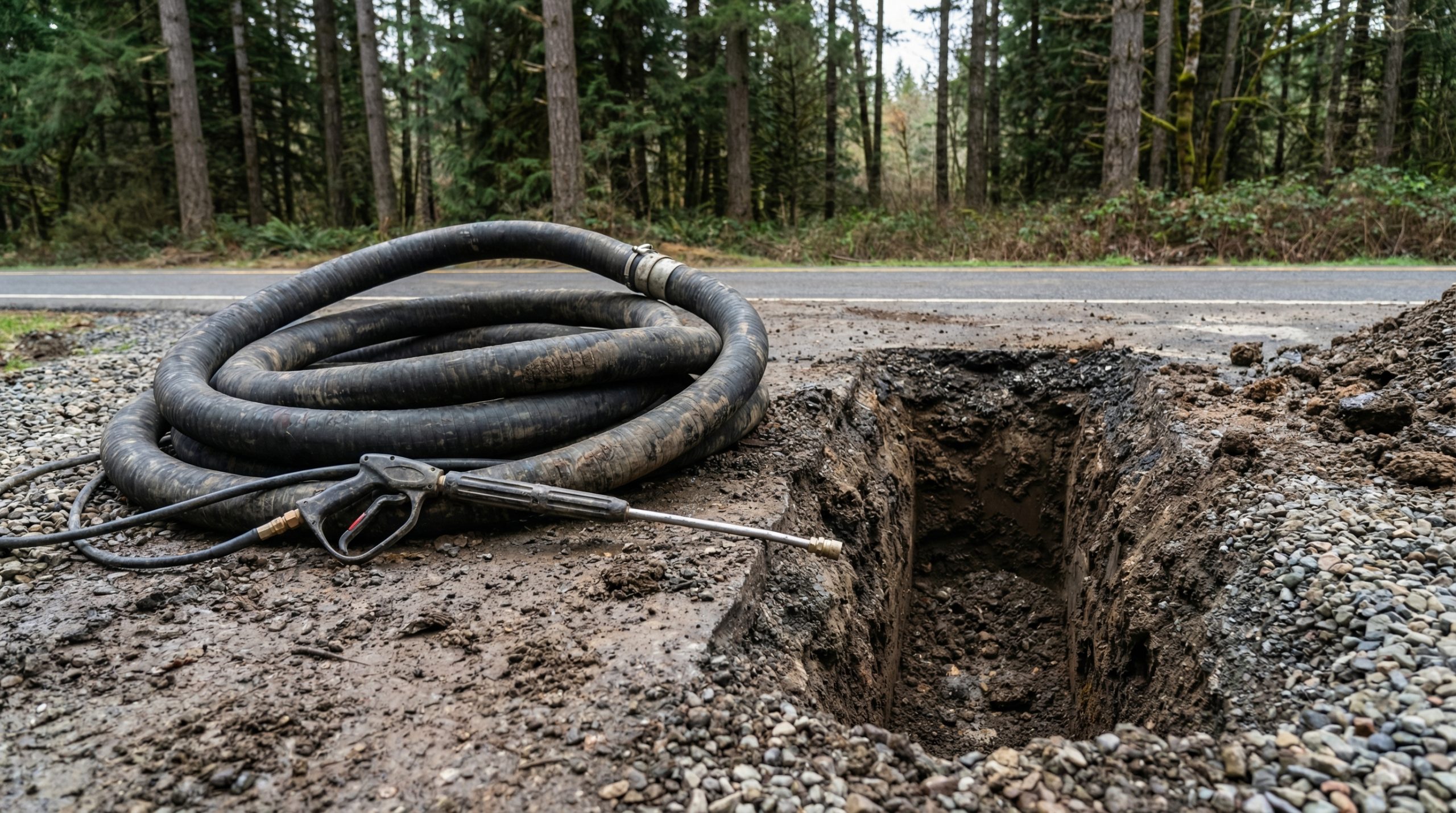
Our truck-mounted units generate over 5,000 CFM with variable-pressure water jets. Pressure adjusts on the fly — lower near telecom cables downtown, higher for volcanic basalt near Kelly Butte and Powell Butte. Each truck carries a self-contained debris tank for disposal or backfill reuse.
Specialized nozzle attachments and extension wands enable precision work at significant depths. When potholing beneath a Burnside corridor roadway or along a Central Eastside utility run, our equipment accesses the target through a small surface opening, minimizing traffic disruption.
Our Utility Exposure Process
Every Portland potholing project follows a four-step process delivering accurate results under the highest safety standards.
Step 1: Site Assessment & Locating
We review OUNC locate markings, as-built drawings, and GIS maps, supplementing with electromagnetic and ground-penetrating radar scans as needed. Special attention goes to older neighborhoods — Ladd’s Addition, Irvington, and Willamette-adjacent areas where flood-related soil movement has shifted utility alignments over decades.
Step 2: Safe Excavation
Test holes are created using the hydro or air method suited to site conditions. In volcanic basalt zones near Mt. Tabor, higher water pressure and rotary nozzles are used. In softer alluvial areas along Johnson Creek, lower pressure prevents over-excavation. The vacuum continuously extracts material for clear operator sightlines.
Step 3: Verification
We document each utility’s exact position — depth, horizontal offset, material type, pipe diameter, and condition — referenced to permanent surface features. Detailed pothole reports with photographs and GPS coordinates integrate directly into project engineering drawings.
Step 4: Backfilling & Site Cleanup
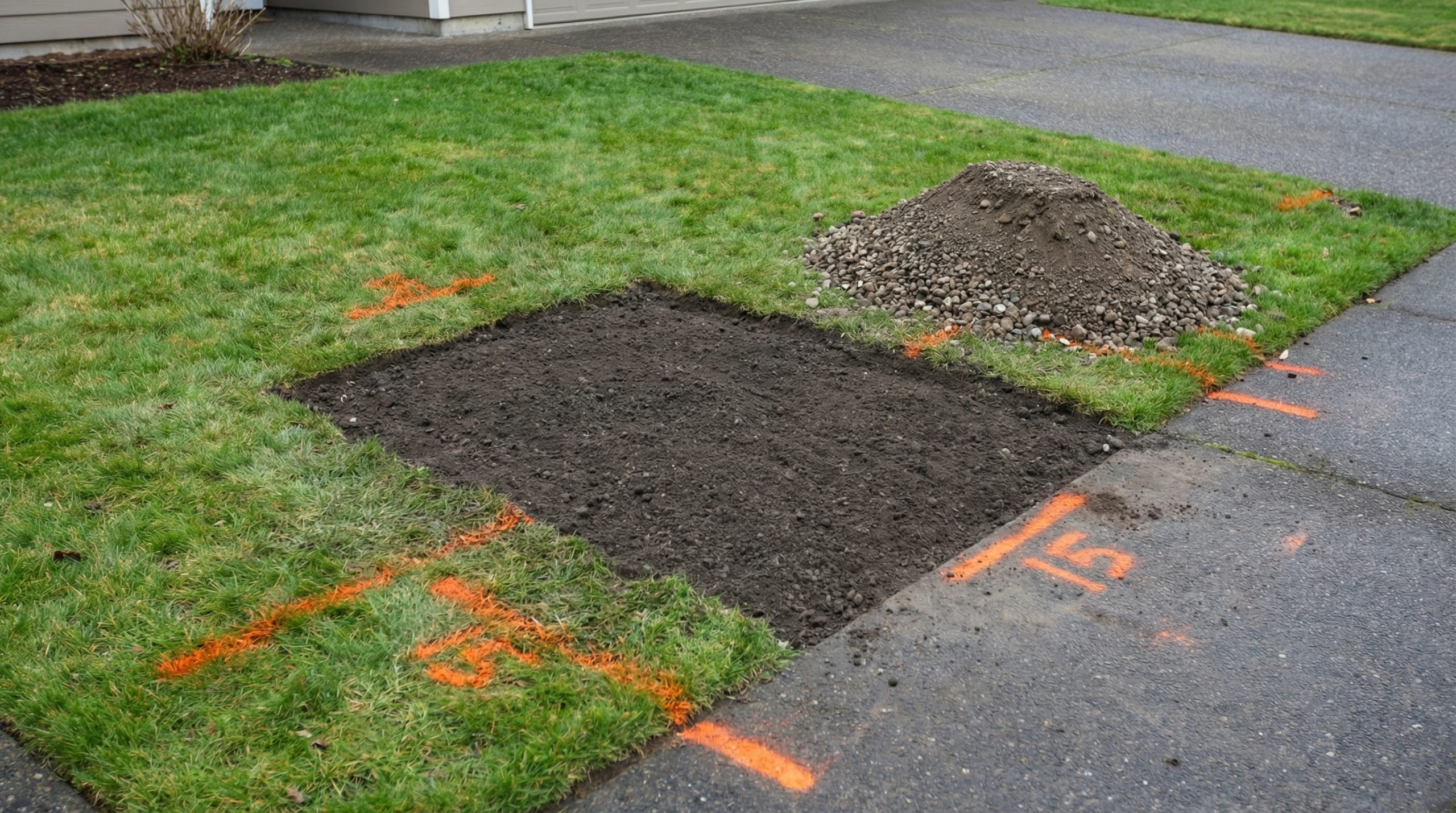
We backfill in controlled lifts using excavated material or approved fill. Paved areas are restored with cold patch or coordinated asphalt restoration. Every Portland site is left with no debris, no open holes, and no equipment marks.
Trusted Excavation Experts in Portland
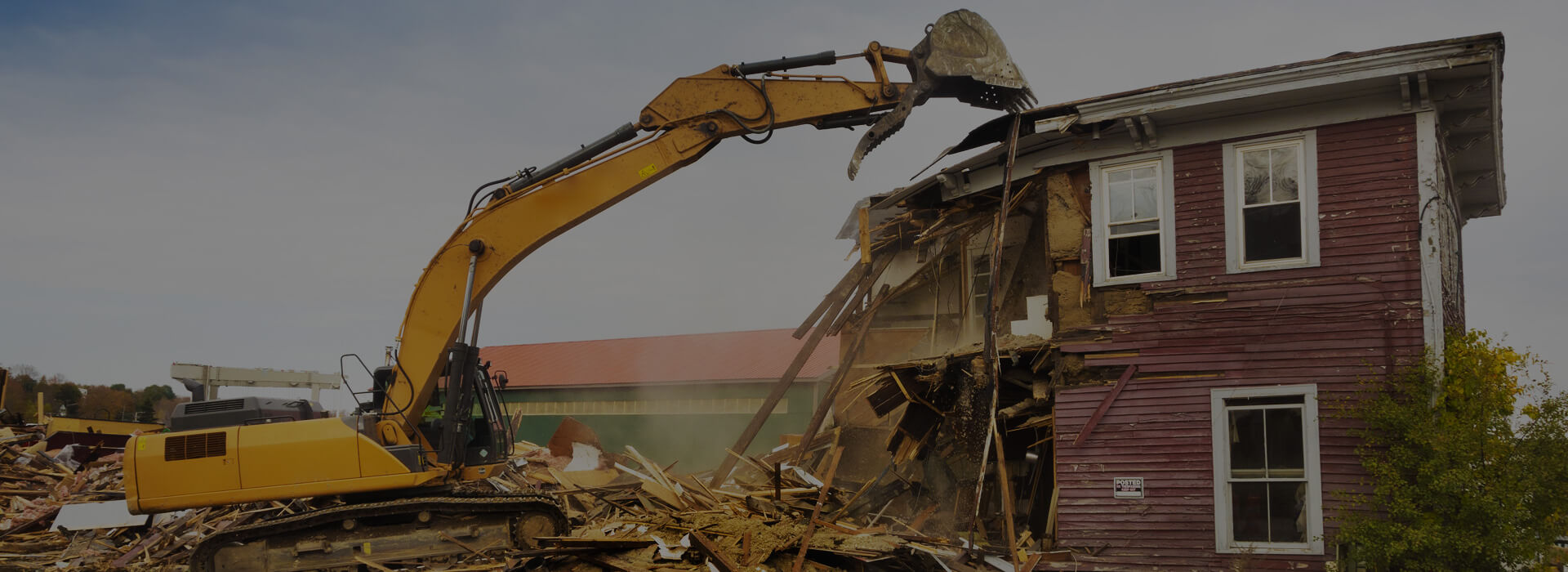
Prodan Construction LLC (CCB #176278) serves general contractors, engineers, municipal utilities, and developers across Portland. We also provide demolition, land clearing, and retaining wall construction — a single-source contractor for site preparation.
From Damascus, thirty minutes from downtown, we mobilize same-day to any neighborhood. Our crews know the ground from North Portland’s river terraces to Mt. Tabor’s volcanic hillsides. When you need potholing in Portland, call Prodan Construction.
Frequently Asked Questions About Potholing & Soft Digging in Portland
How deep can vacuum excavation reach in Portland’s volcanic basalt?
Our equipment routinely reaches fifteen feet or more in basalt-influenced soils. The dense volcanic rock requires higher water pressure and specialized nozzles but does not prevent effective potholing. Contact us for a free on-site assessment.
Is potholing required by Portland building codes?
Not universally mandated, but the Bureau of Development Services and OUNC strongly recommend non-destructive verification near utility corridors. Many contractors require it as standard practice. Projects involving directional drilling or deep foundations typically need documented utility clearance.
What is the difference between hydro and air excavation?
Hydro uses pressurized water; air uses compressed air. Hydro cuts through Portland’s clay and basalt faster. Air is preferred near live electrical lines because it cannot conduct electricity. Our trucks carry both, switching mid-job as conditions change.
How long does a typical potholing project take?
A single pothole takes thirty to sixty minutes in standard Portland soil. Multi-hole corridor projects may require a full day or more. Emergency potholing can usually be scheduled within twenty-four hours.
Schedule Your Utility Potholing Service in Portland Today
Portland’s underground network grows more complex with every development and infrastructure project. Whether preparing for excavation in the Pearl District, routing new service in East Portland, or verifying sewer alignments in North Portland, Prodan Construction delivers accurate, non-destructive potholing. Contact our team today.
Call us at (503) 773-6949 or send us a message to request your free utility potholing estimate in Portland.
Quick Links
Services
Contact Us
- Address:
20500 SE Hwy 212, Damascus, OR 97089 - Phone:
503-773-6949 - Email:
[email protected]

Oregon CCB # 176278